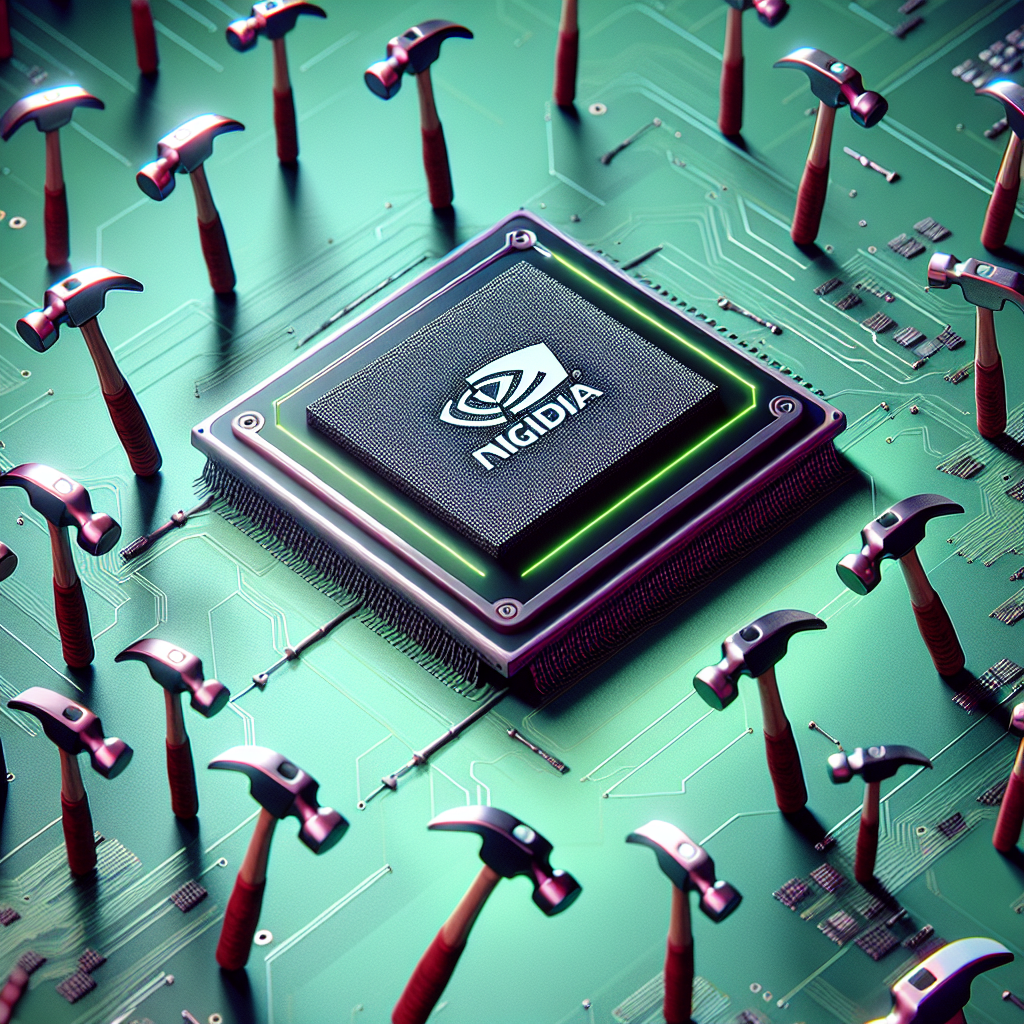
GPUhammer was the first documented technique that caused bit flips in the onboard memory of GPUs, and it is very likely not the last to be discovered or adapted for new attack vectors. Inspired by Rowhammer, which targeted DRAM memories in traditional systems, GPUhammer demonstrates that modern GPUs, including Nvidia chips, can be viable targets for attacks that alter data integrity in memory and compromise GPU-accelerated workloads.
The basic mechanism is familiar: by forcing a pattern of repeated accesses to rows of physical memory, electrical disturbances are generated that can flip bits in adjacent rows. In GPU environments, this means that malicious kernels, compromised drivers, or processes in multi-user environments can induce bit flips in AI model buffers, graphics textures, or critical memory segments that affect confidentiality and integrity.
The fact that Nvidia chips were the first to be documented as vulnerable to Rowhammer variants in GPUs is a wake-up call for cloud service providers, custom software developers, and companies deploying enterprise AI. In infrastructures where GPUs are shared among clients or on inference platforms, a bit flip can produce erroneous model results, information leakage, or privilege escalation.
Mitigation measures involve a combination of actions: applying firmware and driver updates provided by manufacturers, enabling ECC memory when available, hardening hypervisors and sandboxing, isolating client workloads, and monitoring memory integrity and anomalous behavior. In some cases, fixes require architectural changes in DRAM refresh management or patches to the GPU microarchitecture.
At Q2BSTUDIO, we understand the impact that attacks like GPUhammer can have on projects using GPU acceleration for artificial intelligence and data analysis. We are a custom software and application development company specializing in artificial intelligence, cybersecurity, and AWS and Azure cloud services. We offer security audits, penetration testing oriented to GPU environments, design of secure architectures for enterprise AI, and cloud deployments that minimize operational risks.
Our services include custom software development and custom applications optimized for GPU-accelerated environments, integration of AI agents for automation and control, and business intelligence services with Power BI for visualization and decision-making. We combine expertise in custom software and artificial intelligence with cybersecurity practices to protect models, data, and inference pipelines.
If your organization relies on GPUs for critical workloads, consider preventive measures: review AWS and Azure cloud service configurations, apply isolation and quota policies, enable logging and anomaly detection, and use redundant architectures and integrity checks in models. Q2BSTUDIO can help with secure cloud migration, performance optimization for AI, and deployment of AI agents that monitor and respond to incidents.
In an ecosystem where threats evolve and techniques like Rowhammer and GPUhammer adapt to new surfaces, the combination of responsible software development, secure cloud architecture, and proactive vigilance is key. Contact Q2BSTUDIO to assess risks, design custom software solutions, and protect your artificial intelligence projects and AWS and Azure cloud services with advanced cybersecurity practices, business intelligence services, enterprise AI, AI agents, and Power BI.