SSH or Secure Shell is the backbone of secure remote access and server administration. Choosing the right key type affects security, performance, and compatibility. In this article, we explain the history of SSH key types, compare the most common alternatives, and recommend the ideal modern option for most cases.
Brief history and why choosing well matters. Early SSH systems started using RSA and DSA. RSA became popular for its simplicity and compatibility, while DSA fell out of favor due to key size limits and security concerns. With the advent of elliptic curve cryptography, ECDSA emerged and later Ed25519, which offers clear advantages in performance and resistance against modern attacks.
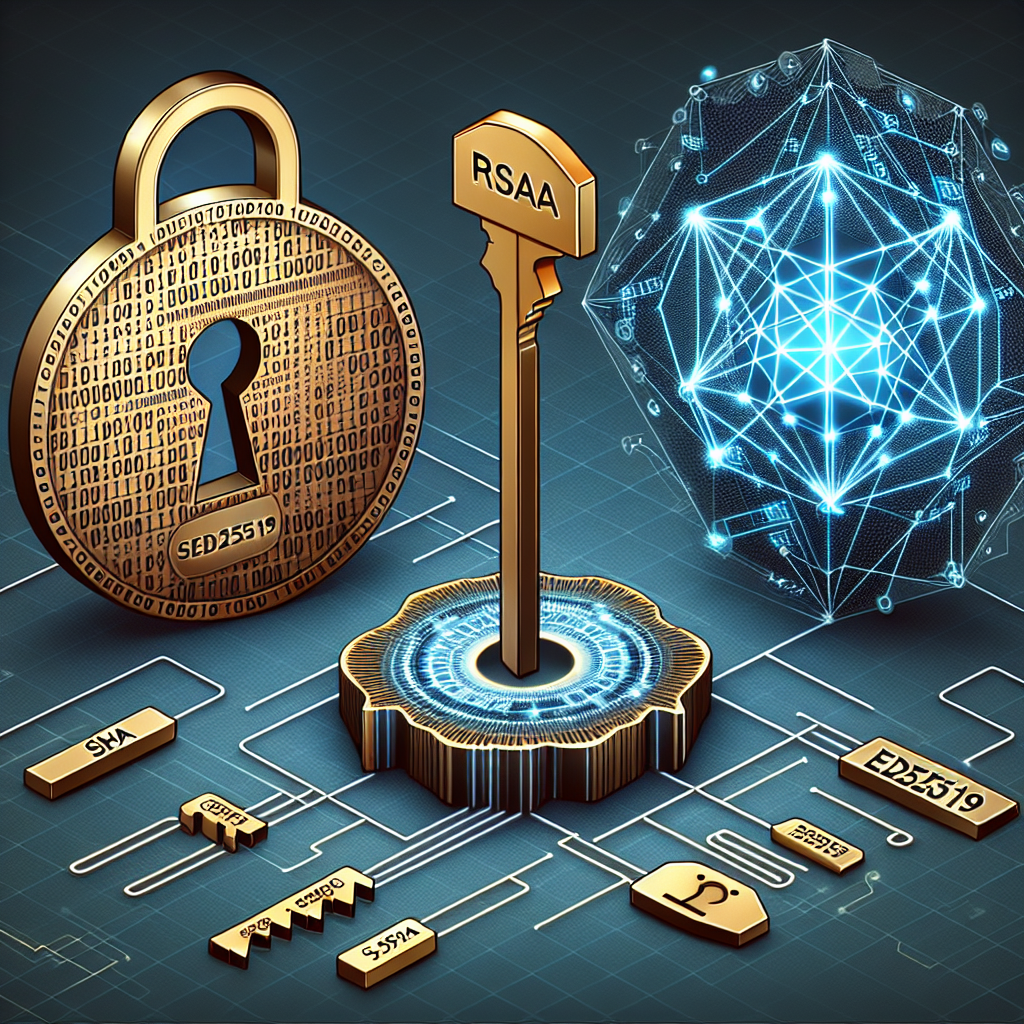
Key types and their main characteristics. RSA remains widely compatible and acceptable when using key lengths of 3072 or 4096 bits, but it is slower in signing and verification. DSA is no longer recommended for security and technical limitations. ECDSA reduces key size and improves speed compared to RSA, but it depends on curves and implementations that can complicate interoperability. Ed25519 provides fast signatures, small keys, resistance to typical implementation errors, and is the sweet spot for most modern users.
Advantages and disadvantages in practice. If you need maximum compatibility with legacy systems, RSA 3072 or 4096 is a valid option. If you seek performance, lower consumption, and ease of key management, Ed25519 is superior. ECDSA can be useful in environments that already use elliptic curve cryptography as a standard. Avoid DSA except in very specific and legacy cases.
Modern recommendation. For most administrators and developers, the best current choice is Ed25519 due to its excellent balance between security, size, and speed. Generating an Ed25519 key is simple and is supported by OpenSSH and major cloud platforms. For environments requiring broad compatibility, keep an RSA key of 3072 or 4096 bits as a backup.
Additional best practices. Always use a strong passphrase, manage keys with SSH agents or secure hardware, rotate keys periodically, and limit access through authorized keys files and access control policies. Combine SSH with identity and access management solutions in the cloud for AWS and Azure environments, and monitor key usage through business intelligence services and tools like Power BI for audits and visibility.
How we can help you. Q2BSTUDIO is a custom software and application development company specialized in artificial intelligence, cybersecurity, and AWS and Azure cloud services. We offer custom software, custom applications, and security services to implement robust SSH practices in modern infrastructures. Our business intelligence and Power BI services allow correlating access events and detecting anomalies, while our AI solutions for businesses and AI agents automate responses and strengthen cybersecurity.
Practical services from Q2BSTUDIO. We design secure integrations for deployments on AWS and Azure cloud services, create AI agents that manage keys and access, develop custom software that incorporates identity management, and offer consulting in artificial intelligence and business intelligence to improve operational security. All with a focus on custom applications and scalable solutions.
Quick summary. For most: use Ed25519 as the first option, keep RSA 3072 or 4096 for compatibility if necessary, avoid DSA, and evaluate ECDSA based on compatibility. Apply good key management practices, combine with cloud services and business intelligence tools, and consider support from cybersecurity and artificial intelligence specialists like Q2BSTUDIO to design, audit, and automate secure remote access policies.