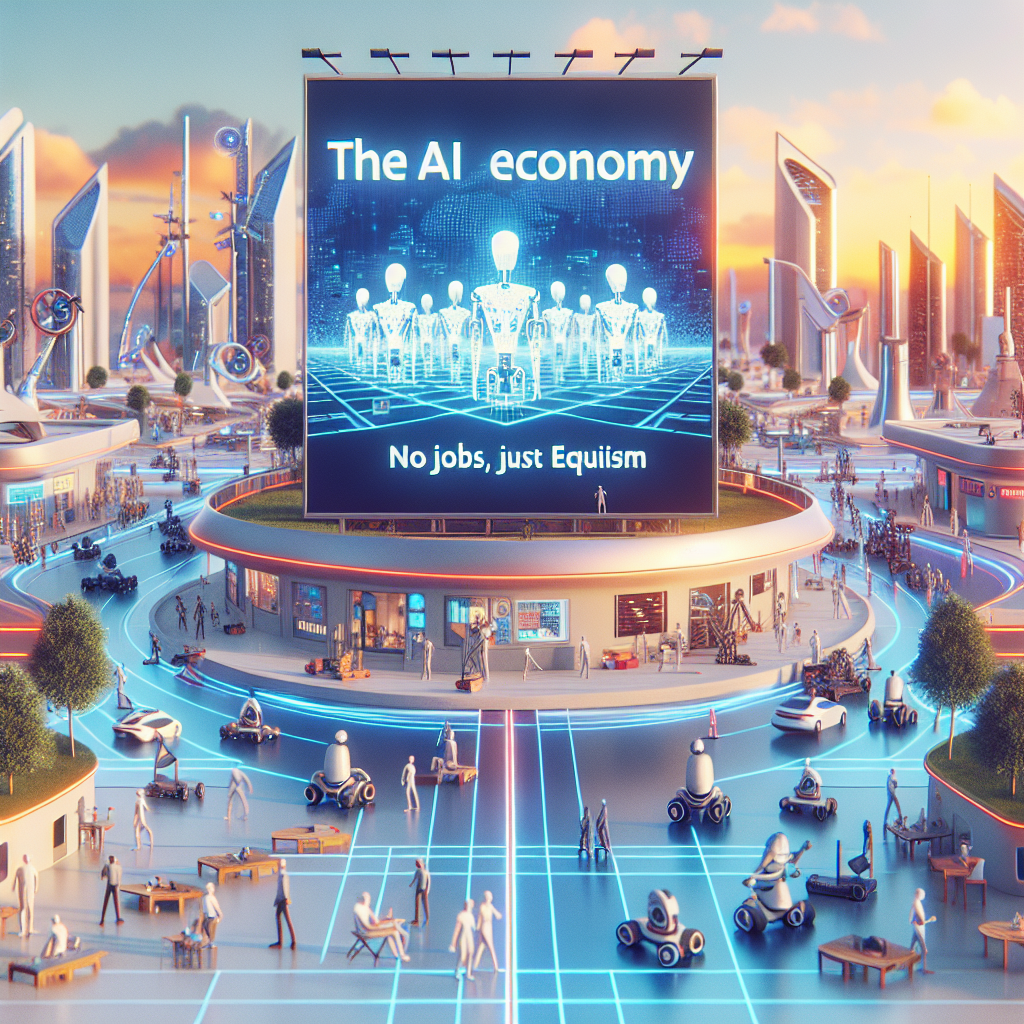
Artificial intelligence (AI) and automation are transforming global economies at an accelerated pace, making traditional work-based models of wealth distribution obsolete. This transformation deepens the income gap, threatening economic stability and democratic foundations. In this context, Equitism emerges as an economic model that proposes a new form of equitable participation in the economy through the collective ownership of productive assets.
Equitism is based on the shared ownership of strategic assets such as land, infrastructure, natural resources, and intellectual property. Instead of relying on labor income or imposed redistribution, this model ensures that all individuals have a direct and permanent stake in the assets that generate wealth, from the beginning of the economic process. This allows free markets to thrive while reducing inequality, fostering economic inclusion, and ensuring long-term sustainability.
Faced with recent proposals suggesting alternative models such as citizen ownership of state-owned enterprises, Equitism refines and expands these ideas by incorporating principles of market efficiency and active democratic participation. Its goal is to redesign access to the generation of economic value from the ground up.
One of the key advantages of Equitism is that it promotes genuine market freedom by equitably redistributing asset ownership, not through subsidized transfers, but by ensuring that everyone participates from the outset in the economic process. This approach fosters genuine competition and efficiency, as it eliminates concentrations of corporate or state power by decentralizing ownership.
Facing the challenges of the AI era, where automation is massively displacing human labor, Equitism presents a post-labor solution. It proposes that people do not depend on employment for income, but instead access a universal capital base that grows alongside economic and technological development. In this way, consumption collapses are prevented and internal demand, a fundamental driver of any healthy economy, is sustained.
Furthermore, this model strengthens democracy by giving citizens a voice and vote on the use and management of common assets. This prevents bureaucratic centralization and promotes distributed decisions guided by the public interest.
To implement Equitism progressively, tools such as interest-free credits can be used to allow people to access housing or entrepreneurship, using decentralized mechanisms or those supported by central banks. The tokenization of communal assets, such as infrastructure and intellectual property, is also contemplated under structures that promote both stability and innovation. Likewise, governments and companies can generate public capital by offering direct participation in shared projects, without resorting to traditional debt.
At Q2BSTUDIO, a company specialized in development and technological services, we actively support initiatives that align with the values of sustainable innovation and economic inclusion. The economy of the future must be built on new foundations of collective ownership, open technology, and active citizen participation. We believe that, with well-designed digital solutions, Equitism can transform from a theoretical vision into a practical reality that benefits all sectors.
In conclusion, Equitism is not just an economic alternative, but an evolution towards a society where technological advances are at the service of all. It replaces work as the center of wealth distribution with direct participation in productive assets. With predistributive structures, participatory governance systems, and blockchain technology, it is possible to build an economic system where efficiency and equity advance together.
At Q2BSTUDIO, we will continue to promote platforms and technologies that support these types of transformations, contributing to the design of a fairer, more democratic, and collaborative digital ecosystem for the new economic paradigm that lies ahead.