.jpg)
In today's business environment, the intranet has evolved from a mere document repository into the central nervous system of the organization. When structured through departmental portals, it becomes a living platform that drives innovation from every functional area. This evolution responds to the need to break down silos, accelerate decision-making, and scale the use of artificial intelligence in critical processes. Companies that successfully integrate AI for business into their internal workflows gain a competitive advantage that is hard to match.
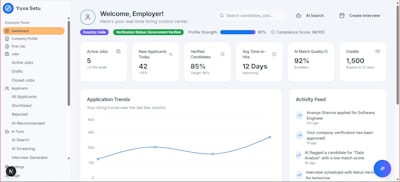
The key lies in designing an architecture that combines custom applications with AWS and Azure cloud services, ensuring scalability and security. Departmental portals allow each team to configure their own workspace, integrate their preferred tools (such as SAP, Salesforce, or Microsoft Teams), and deploy AI agents capable of automating repetitive tasks. For example, a Human Resources department can use a retrieval-augmented generation (RAG) assistant to answer employee queries in real time, while the Operations area monitors indicators through Power BI dashboards. All of this within a cybersecurity framework that includes VPN tunneling and role-based access control.
The adoption of artificial intelligence in intranets is not a future trend: 2026 data shows that 76% of SMEs already use AI tools, although only 14% have integrated them into their core processes. The main barrier remains the lack of specialized knowledge. This is where the approach of a partner like Q2BSTUDIO makes a difference: it combines custom software with agile methodologies to deliver a minimum viable product in four to eight weeks, without replacing existing systems. Additionally, the resulting platform allows business users to configure prompts, monitor costs, and manage AI without constantly relying on the engineering team.
From an innovation perspective, the intranet with departmental portals acts as a controlled sandbox where companies can experiment with emerging technologies. By having testing environments, adjustable governance, and impact metrics, the journey from idea to product is significantly accelerated. Q2BSTUDIO integrates these principles into its work methodology, ensuring that every automation or artificial intelligence initiative is aligned with the organization's strategic objectives. Observed results include reductions of between 20% and 45% in process cycle times, decreased operational costs, and unprecedented visibility for management through unified dashboards.
For executives evaluating this investment, the return typically materializes within six to twelve months, with projects starting from 5,000 euros. The essential thing is to have a partner who understands both technology and business. Q2BSTUDIO provides a documented business case with KPIs, amortization timelines, and a risk map before starting development. If your company seeks to transform its intranet into a true innovation engine, a free discovery session can be the first step to defining the roadmap.