.jpg)
In today's corporate ecosystem, the intranet has ceased to be a mere document repository and has become the operational core of the organization. However, its effectiveness depends on a critical factor: accessibility for non-technical profiles. When we talk about departmental portals integrated into an intranet, the question every manager should ask is not how much technology it includes, but whether their team can use it without constantly relying on engineers or external consultants.
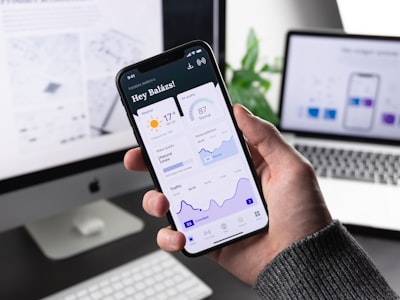
The short answer is yes, provided the design is based on an architecture of custom applications that prioritizes user experience from the discovery phase. This involves much more than a pretty interface: it requires step-by-step guided flows, dashboards adapted to each employee's role, contextual help, and a visual language that eliminates ambiguity. A well-executed project not only delivers a departmental portal but also gives users real autonomy to manage processes, consult indicators, and activate automations without friction.
This is where the combination of custom software with modern artificial intelligence capabilities comes into play. For example, integrating RAG-based assistants or AI agents that answer frequently asked questions directly from the corporate knowledge base drastically reduces the need for training. Furthermore, these systems can be configured by department heads themselves through simple administration panels, without writing a single line of code. The key is that AI for businesses does not become a black box: the user must understand what they can ask, how to interpret the response, and, above all, how to correct it if necessary.
For an intranet to be truly useful for non-technical users, it must also integrate with the tools they already use. It is not about replacing SharePoint, Teams, or SAP, but about extending them with a unified layer that centralizes notifications, tasks, and data. This requires a solid foundation of AWS and Azure cloud services that ensures secure connectivity via VPN and private tunnels, especially when artificial intelligence needs to access on-premise systems. Cybersecurity is non-negotiable: role-based access, audit logging, and GDPR compliance must be integrated from day one, not as a later patch.
Another aspect that makes a difference is visibility for management. A well-designed departmental portal offers business intelligence services through unified dashboards that executives can consult in real time. Here, Power BI and other reporting tools become allies, but the important thing is that data flows automatically from automated workflows, without manual intervention. In fact, companies that integrate AI agents into their core processes achieve up to five times greater impact than those that keep isolated experiments, according to recent industry studies.
At Q2BSTUDIO, we approach each intranet project with departmental portals from a pragmatic perspective: we first map current workflows, identify bottlenecks, and define baseline KPIs. Then we deliver a functional MVP in a matter of weeks, not months. Our approach to custom software development and artificial intelligence allows end users to participate in usability tests from the first prototype, iterating until the team can operate the platform with confidence and minimal assistance. The result is up to a 45% reduction in process cycle times and a 35% reduction in operational costs in target workflows, with management visibility that was previously unthinkable.
In short, an intranet with departmental portals can and should be easy for non-technical users. The issue is not whether the technology allows it, but whether the provider building it understands that success is measured by real adoption, not by the number of features. When design focuses on people, technology takes a back seat and business value skyrockets.