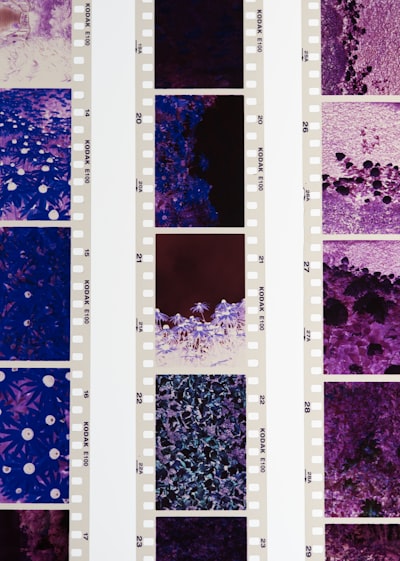
The preservation of cinematographic heritage faces a fundamental problem: original copies of old films are physically degraded and no pristine versions exist to serve as a reference. This makes traditional restoration approaches, based on labeled data, unfeasible, since real before-and-after pairs are not available. To overcome this limitation, synthetic pipelines capable of generating realistic degradations have been developed, such as the recent AbsoluteDegradation, which models the analog-digital process through a structured composition of artifacts, including signal-dependent granularity, parametric scratches, and temporally coherent camera motion. This type of system not only allows training more robust restoration models, but also offers a controlled benchmark to evaluate performance under real conditions.
The need to generate high-fidelity synthetic data is not exclusive to the film domain. In the business world, when labeled datasets are lacking to train artificial intelligence models, simulation and data augmentation techniques become an indispensable resource. Companies like Q2BSTUDIO, which develop custom software and artificial intelligence solutions for businesses, apply similar principles to create controlled training environments. Their AI agents can be trained with synthetic scenarios that replicate adverse conditions, thus improving their generalization ability in real environments.
Furthermore, the massive processing of frames required by a benchmark like AbsoluteDegradation —with over 81,000 high-resolution images— is only viable thanks to scalable cloud infrastructures. AWS and Azure cloud services provide the necessary computational power to train complex models and store large volumes of data. Q2BSTUDIO precisely offers AWS and Azure cloud services so that companies can deploy their own restoration or image analysis solutions without investing in their own hardware. Similarly, its cybersecurity capabilities ensure the protection of sensitive digital assets throughout the project lifecycle.
Another relevant aspect is the evaluation of restoration quality. Current benchmarks reveal systematic failure modes in existing methods, underscoring the need for objective metrics and monitoring tools. This is where business intelligence comes into play: using Power BI, it is possible to visualize model performance, compare versions, and detect anomalies in results. The business intelligence services offered by Q2BSTUDIO allow technical teams to make informed decisions based on data, something essential both in film restoration and in any AI process applied to industry.
Ultimately, initiatives like AbsoluteDegradation not only represent a significant advance for the conservation of audiovisual heritage, but also illustrate a methodology transferable to many other fields where the scarcity of real data is an obstacle. The combination of realistic synthesis, rigorous benchmarks, and analysis tools such as those provided by Q2BSTUDIO —from custom software to AI agents and cloud computing— opens the door to more reliable and reproducible solutions in the world of digital restoration and beyond.