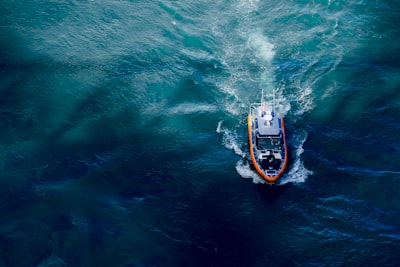
In the world of autonomous robotics, one of the most persistent challenges is getting the same control system to work on platforms with radically different dynamic characteristics. Autonomous surface vehicles, for example, exhibit notable differences in their hydrodynamics, propulsion, and response to maneuvers. Traditionally, engineers adjust specific controllers for each model, which involves a costly calibration process and limits operational versatility. However, recent advances in adaptive reinforcement learning are opening the door to a new generation of controllers capable of transferring between platforms without the need for retraining, a concept known as 'zero-shot' deployment.
The key to this approach lies in treating dynamic uncertainty as a problem of partial observability. Instead of assuming the controller knows the vehicle's equations of motion in advance, it is provided with the history of recent interactions — actions taken and observed responses — so that it can infer a latent model of the current dynamics in real time. This internal representation is learned through a teacher-student architecture, where a separate neural module encodes the interaction signals and feeds them to the control policy. During training in simulation, the agent is subjected to a wide range of randomized hydrodynamic parameters, forcing it to generalize beyond any fixed configuration.
Experimental results on two real platforms show that this adaptive policy outperforms non-adaptive baseline methods by 58% in terms of mean absolute position error, even approaching the performance of a controller custom-designed for each vehicle. And it does so without resorting to high-fidelity hydrodynamic simulators, relying instead on a simple analytical model. This finding underscores a relevant lesson: adaptability based on interaction history can compensate for a lack of precision in physical modeling.
For companies developing autonomous systems, this methodology represents a strategic opportunity. Integrating adaptive artificial intelligence capabilities into their products allows for drastically reducing setup times and expanding the range of applications without needing to redesign the software each time. At Q2BSTUDIO, as a company specialized in custom applications, we understand that multiplatform flexibility is a key differentiator. Our services range from implementing AI agents that learn from experience to integrating with cloud infrastructures such as AWS and Azure, as well as cybersecurity solutions that protect communication between vehicles and control centers. Additionally, continuous performance monitoring can be enhanced with business intelligence tools like Power BI, transforming operational data into actionable information.
The path toward standardization of control in autonomous robotics involves abandoning the obsession with perfect dynamic models and embracing systems that learn on the fly. The combination of adaptive reinforcement learning, robust cloud services, and custom software will enable the deployment of heterogeneous fleets of autonomous vehicles — from underwater drones to surface vessels — with a single intelligence core. At Q2BSTUDIO, we work to make that vision an operational reality, offering AI for businesses that not only understands the environment but adapts to it.