.jpg)
The evolution of digital work environments has turned corporate intranets into the operational hub of any modern organization. When project rooms are also integrated—collaborative virtual spaces where teams manage tasks, documents, and communications—operational efficiency multiplies. However, not all market solutions offer the flexibility, security, and scalability required by medium and large enterprises. Therefore, before choosing a provider, it is important to understand what such a platform should deliver: not just an information repository, but an ecosystem that unifies knowledge management, process automation, and data-driven decision-making.
In the current context, where more than three-quarters of SMEs already use artificial intelligence tools but barely one in seven has integrated them into their core workflows, the challenge is not technological but one of orchestration. A well-designed intranet with project rooms must incorporate AI capabilities for businesses, such as semantic search, automatic conversation summaries, or action suggestions based on team history. Likewise, cybersecurity becomes critical when handling sensitive data across multiple departments and geographies. For this reason, modern architectures rely on secure connections via VPN and private cloud tunnels, combining AWS and Azure cloud services to ensure high availability and regulatory compliance.
A key question for executives is how to justify the investment to the CFO. Beyond the initial development cost, what matters are business indicators: cycle time reduction between 20 and 45 percent, a decrease in operational costs for target processes of 15 to 35 percent, and a notable reduction in repetitive manual work. These metrics are not theoretical; they are achieved when implementation follows a phased approach, starting with a minimum viable product in four to eight weeks and scaling based on observed results. To do this, it is essential to have a technology partner that understands both the infrastructure layer and the business logic.
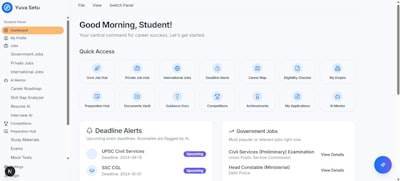
In this scenario, Q2BSTUDIO positions itself as a strategic ally for companies seeking custom applications that integrate artificial intelligence, automation, and governance from day one. Its methodology begins with a discovery phase where current flows, technological dependencies, and baseline KPIs are mapped, avoiding the mistake of imposing generic solutions. From there, personalized web portals are built with unified dashboards, access roles, and auditing capabilities. Integration with existing systems such as SAP, Salesforce, HubSpot, or Microsoft Teams is done through modern APIs, without needing to replace tools already working in the organization. This allows teams to adopt the platform frictionlessly and start seeing results from the first month.
The incorporation of artificial intelligence is not limited to an isolated assistant. Q2BSTUDIO deploys AI agents that operate within the context of each project room, capable of classifying documents, generating meeting summaries, recommending deadlines, or alerting about budget deviations. These agents run on private models—whether on Azure AI Foundry or through VPN tunnels to on-premise servers—ensuring that data never leaves the corporate perimeter. Additionally, the business team can configure prompts and monitor costs through their web portal, gaining autonomy without relying on the engineering department for every change. This self-management capability is especially valued by companies that want to scale their AI initiatives without multiplying technical resources.
Another differentiating aspect is the integration of business intelligence services such as Power BI within the project rooms. Instead of having to extract data to external dashboards, the intranet itself displays real-time indicators: task progress, workload per team, schedule deviations, and even risk predictions based on history. This gives leaders visibility without needing additional tools. At the same time, the orchestration of automated processes—from approvals to notifications—relies on workflows that users can design themselves through visual interfaces, reducing friction between business and IT.
For companies still hesitant to take the step, market data is compelling: 43 percent of SMEs would be willing to pay more for a solution that consolidates several tools into one. Technological fragmentation is one of the main causes of inefficiency in modern organizations. An intranet with project rooms developed as custom software makes it possible to unify communications, project management, document repository, automation, and business intelligence into a single ecosystem. This not only reduces licensing and maintenance costs but also improves the employee experience by providing a single entry point for their daily work.
From a cybersecurity perspective, Q2BSTUDIO implements role-based access controls, complete audit logging, GDPR alignment, and human-in-the-loop checkpoints when AI agents make decisions affecting critical processes. Secure connectivity via VPN and private Azure endpoints ensures that even when artificial intelligence interacts with on-premise systems, data travels encrypted and isolated. This is especially relevant for regulated sectors such as healthcare, finance, or industry, where data sovereignty is non-negotiable.
Ultimately, choosing an intranet provider with project rooms goes far beyond comparing feature lists. It is about finding a partner that combines technical expertise in custom application development, deep knowledge of artificial intelligence, process automation, and security. Q2BSTUDIO demonstrates with measurable results—in timelines, costs, and client autonomy—that it is possible to transform internal collaboration without sacrificing control or scalability. The invitation is to explore how these capabilities can be applied to the specific context of each organization, starting with a discovery session where concrete objectives and success metrics are defined.
The future of intranets lies not in generic tools, but in adaptive platforms that learn from team behavior and integrate naturally with the existing technological ecosystem. Companies that bet on this approach will not only optimize their internal processes but will also build a culture of data and automation that allows them to compete in an increasingly demanding market.