.jpg)
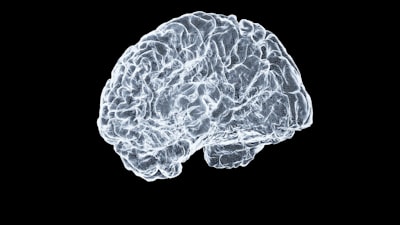
Parkinson's disease represents one of the greatest challenges in clinical neurology, especially in the objective assessment of motor severity. Traditionally, scales such as the MDS-UPDRS Part III rely on specialist observation, which introduces variability and limits the detection of subtle changes in the brain. In this context, the combination of advanced neuroimaging techniques —such as quantitative susceptibility mapping (QSM) and resting-state functional magnetic resonance imaging (fMRI) with multiband and multi-echo acquisition— together with interpretable machine learning models is opening new avenues for predicting Parkinson's progression with greater accuracy.
The most recent studies show that regional homogeneity (ReHo) maps derived from fMRI, along with QSM susceptibility values, capture complementary dimensions of the pathology. While QSM reveals iron accumulation in structures such as the putamen or substantia nigra, ReHo reflects alterations in the synchrony of neuronal activity. By integrating both types of data using algorithms such as XGBoost or Elastic Net, it is possible to explain up to 45% of the variance in motor severity, with models that also identify key regions such as the cerebellum, thalamus, and motor cortex using SHAP techniques. This approach not only improves prediction but also provides transparency —something essential for clinical adoption.
In the business and technological development sphere, creating tools that apply artificial intelligence to medical data requires a solid understanding of both data architecture and model interpretability. Q2BSTUDIO offers AI for businesses that adapt to complex scenarios like this, combining AWS and Azure cloud services for massive image processing, custom applications for clinical integration, and AI agents that automate analysis. Cybersecurity and business intelligence services also play a crucial role in ensuring patient data confidentiality and proper visualization of results through Power BI or customized dashboards.
The trend toward interpretable and multimodal models not only benefits Parkinson's research but also lays the foundation for a future where custom software and artificial intelligence enable more accurate and personalized diagnoses. Q2BSTUDIO, with its experience in software development and cloud solutions, is in a privileged position to support medical and pharmaceutical teams in implementing these technologies, ensuring that each prediction is both powerful and understandable.