.jpg)
Implementing a custom software-based after-sales management system transforms how companies handle warranties, repairs, spare parts inventory, and communication with their customers. Unlike generic solutions, a platform specifically designed for each organization's processes allows for seamless data integration with CRM and ERP, optimizing the service lifecycle. Experience shows that the success of such projects rests on detailed planning and collaboration with a technology partner who understands both the business logic and the technical demands of the industry.
During the implementation of custom applications for after-sales service, typical phases include a joint requirements discovery, user-centered design, configuration and integration with existing systems, rigorous testing, team training, and a progressive deployment with ongoing support. It is essential to assume there will be iterations — functional adjustments, interface refinements, and adaptations to operational workflows — as well as change management to align teams with the new tool. A reliable provider maintains transparent communication, establishes measurable milestones, and delivers the project in phases, so that progress can be validated and deviations corrected in time.
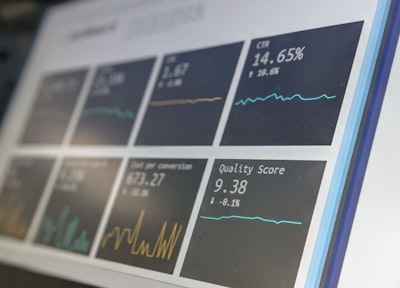
When adoption stabilizes, the benefits are tangible: reduced response times, greater accuracy in inventory management, increased customer satisfaction, and actionable data for continuous improvement. These systems are further enhanced by incorporating technologies such as artificial intelligence and AI for businesses to automate diagnostics, predict failures, or recommend actions; AI agents that handle recurring inquiries without human intervention; AWS and Azure cloud services that ensure scalability, availability, and resilience; business intelligence services with Power BI to visualize performance indicators; and cybersecurity as a cross-cutting layer to protect sensitive customer and operational data.
In this context, Q2BSTUDIO positions itself as a strategic ally for companies seeking to develop custom applications for their after-sales service, tailored to their products, channels, and business models. Its methodology combines in-depth needs analysis, iterative prototyping, and partial deliveries that reduce risks. Additionally, it naturally integrates artificial intelligence capabilities, process automation, and connectivity with cloud ecosystems. The result is a solution that not only covers daily operations but evolves with the company, offering clear metrics and a measurable return on investment. With Q2BSTUDIO, organizations can move from uncertainty to a predictable, efficient, and customer-centric after-sales service, knowing that each project phase is accompanied by realistic expectations and fulfilled commitments.