.jpg)
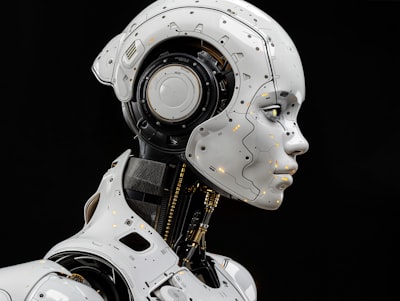
Personalization in human-robot interaction (HRI) promises to tailor behaviors, responses, and appearances to individual preferences, but this advancement carries ethical risks that are often overlooked. When a robot modifies its language according to the user's emotional state or remembers past interactions, user modeling processes are activated that can erode autonomy, generate biases, or even lead to manipulation. The key lies in designing systems that are not only efficient but also responsible from their conception. In this context, companies like Q2BSTUDIO understand that the balance between personalization and ethics requires AI for businesses that guarantees transparency and control. The integration of artificial intelligence into robotic platforms must be accompanied by continuous auditing mechanisms, something that is only possible if custom applications are developed with flexible and secure architectures.
The most immediate risk in robotic personalization is privacy violation. A robot that learns routines, conversations, and preferences generates a massive volume of sensitive data. If that data is not managed with robust safeguards, it becomes an attack vector. Therefore, any responsible personalization strategy must integrate cybersecurity from the design stage, preventing leaks or unauthorized uses. Furthermore, emotional manipulation arises when the robot exploits behavioral patterns to influence user decisions, something that can be mitigated through AI agents that operate under predefined ethical rules and human supervision. In this sense, custom software allows for implementing dynamic controls that limit the scope of personalization according to the context and sensitivity of the interaction.
From a business perspective, organizations deploying personalized robots need scalable and secure cloud infrastructures. AWS and Azure cloud services offer the ideal environment for processing interaction data in real time, but they require specific configurations to comply with privacy regulations. Q2BSTUDIO supports its clients in migrating and managing these platforms, ensuring that personalization does not compromise security. Likewise, interaction analytics benefits from business intelligence services like Power BI, which allow visualizing usage metrics and detecting ethical anomalies before they become problems.
An additional challenge is algorithmic bias. If personalization models are trained with historical data that reflects social inequalities, the robot can perpetuate discrimination (for example, treating users differently based on gender or origin). To avoid this, a multidisciplinary approach combining ethics, engineering, and human supervision is required. Here, artificial intelligence solutions must incorporate fairness and explainability techniques, aspects that Q2BSTUDIO integrates into its developments of custom applications for robots and virtual assistants.
Personalization can also dehumanize interaction if the robot simulates empathy without real understanding, generating false expectations in users. Therefore, it is crucial to define clear limits in the design: the robot must indicate when it is personalizing and to what extent, offering options to disable it. All of this requires a technical architecture that supports both personalization and transparency, something only achieved by combining AI agents with well-designed user interfaces, ethical testing, and continuous updates. Ultimately, personalization in HRI is not an end in itself, but a tool that must be handled responsibly. Companies that bet on conscious technological development —like Q2BSTUDIO— demonstrate that it is possible to innovate without sacrificing fundamental values, offering services ranging from cloud consulting to the implementation of business intelligence systems that monitor the real impact of these technologies.