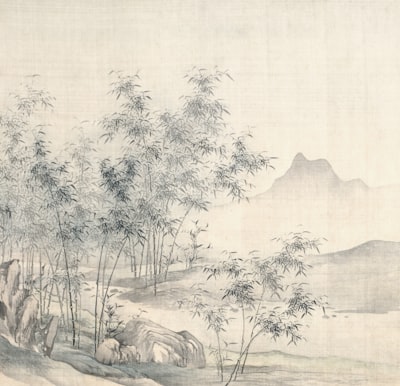
The semantic interpretation of ancient artworks represents one of the greatest challenges for contemporary artificial intelligence. While computer vision models have achieved remarkable performance on modern natural images, their application to traditional Chinese paintings (TCP) reveals profound limitations: the objects, symbols, and visual narratives of these works differ substantially from everyday photographs, and their correct identification requires expert knowledge that is rarely encoded in standard training datasets. This problem is not merely technical but directly affects disciplines such as archaeology and art history, where the ability to reliably extract and structure semantic relationships can transform research.
Faced with this need, proposals emerge that integrate intelligent models with human intervention to achieve trustworthy structured representations. A paradigmatic example is the approach known as VisTCP, a visualization framework designed to build knowledge graphs from Chinese paintings. The core idea is to combine an automatic object and relationship extraction model —trained with expert annotations— with a visual interface that reveals the system's uncertainties. Users, typically art historians, can inspect the differences between automatic predictions and reference annotations, iteratively refining both the graph and the model itself. This human-in-the-loop cycle achieves a precision that no algorithm could reach on its own, while documenting the tacit knowledge of specialists.
From a business and technological perspective, this paradigm illustrates a growing trend: the need for tailored applications that combine artificial intelligence with highly specialized knowledge domains. Deploying a generic object detection model is not enough; custom software is required that understands the domain ontology, visual conventions, and users' research questions. At Q2BSTUDIO, we understand that each sector poses unique challenges, and that is why we offer artificial intelligence solutions for businesses that integrate adaptive models, intuitive user interfaces, and collaborative workflows. Our team has developed platforms where experts not only validate results but actively participate in the continuous improvement of the model, an approach we apply in both the cultural field and industrial and financial sectors.
The technical architecture behind these solutions often relies on robust infrastructures. To handle massive volumes of high-resolution images and run complex vision models, it is common to turn to AWS and Azure cloud services, which offer scalability and on-demand computing power. In parallel, managing structured data —the resulting knowledge graphs— benefits from business intelligence tools like Power BI, which allow researchers to visually explore relationships between objects, styles, periods, and artists. In fact, at Q2BSTUDIO we natively integrate these services into our solutions, ensuring that the data generated by AI models is directly analyzable by research teams.
Furthermore, the security of these systems is not trivial. When working with digitized cultural heritage or sensitive research data, cybersecurity becomes a fundamental requirement. We implement access, encryption, and audit protocols to protect both the models and the annotated data. We apply this same level of rigor when developing AI agents that assist experts in repetitive annotation tasks or in suggesting non-obvious semantic relationships.
Ultimately, the VisTCP case demonstrates that symbiotic collaboration between humans and machines is not only possible but necessary to address complex visual interpretation problems. At Q2BSTUDIO, we are committed to this vision: we combine custom applications, cloud infrastructure, and AI for businesses to build systems that learn from their users and enhance their knowledge. If your organization faces the challenge of extracting meaning from complex visual data —whether ancient paintings, medical images, or industrial records— we invite you to explore our artificial intelligence solutions, where technology adapts to your domain, not the other way around.