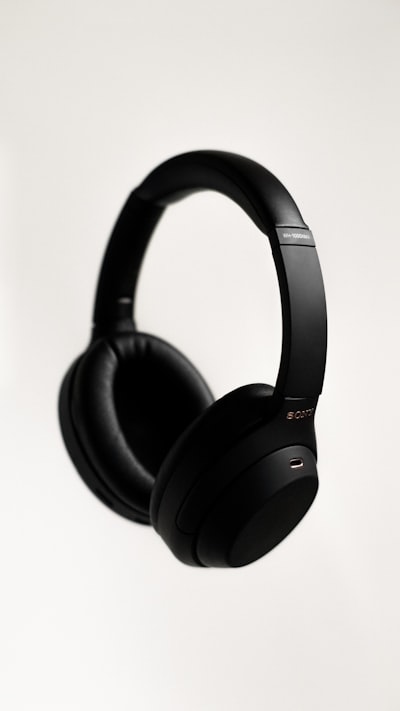
The launch of the Sony 1000X Collexion has generated an interesting debate in the world of consumer audio: to what extent are we willing to pay for premium design and exclusive materials when the technological base is practically the same as that of previous models? With a starting price of $649.99 and a significant first discount that leaves it at $599.99, these headphones represent a clear commitment to luxury within a segment that until now had focused more on performance than aesthetics. Beyond the commercial anecdote, however, Sony's move reflects a broader trend in the industry: the convergence between sophisticated hardware and intelligent software, where the user experience becomes the real differentiator.
From a technical point of view, the 1000X Collexion weighs 320 grams, 66 grams more than the WH-1000XM6, which is compensated for by thicker pads and a stainless steel harness instead of plastic. The inclusion of Bluetooth 6.0, the V3 processor and native support for Auracast point to futuristic connectivity, but the reduction of battery life to 24 hours - compared to 36 hours for the XM6 - raises questions about the design priorities. Active noise cancellation and audio quality remain virtually identical, suggesting that the real added value is in the tactile and visual experience, not the sound itself.
This phenomenon is not alien to other technological sectors. In software development, for example, more and more companies are looking for bespoke applications that not only solve basic functions, but offer polished interfaces, intuitive workflows, and seamless integration with existing ecosystems. The logic is the same: the end user values both the look and feel of use and the underlying power. In fact, the trend towards custom software has accelerated because generic solutions are no longer enough to retain increasingly demanding customers.
Going back to the headset, the inclusion of spatial processing mode for movies, games, and music is a nod to multisensory immersion. These types of characteristics require complex signal processing which, in the business environment, translates into the need for artificial intelligence and adaptive algorithms. Companies that want to deliver personalized experiences—whether in audio, web interfaces, or analytics platforms—are turning to enterprise AI and AI agents that can learn from user behavior and fine-tune the experience in real time. At Q2BSTUDIO, we've seen how integrating AWS and Azure cloud services allows you to scale those processes without compromising latency or security.
Cybersecurity also comes into play. A headset with Bluetooth 6.0 and Auracast connectivity opens new doors to wireless audio transmissions in public environments, but also exposes attack vectors. That's why any connected device – from headphones to an industrial sensor – must have protection measures in place from the design phase. In the development world, we offer cybersecurity and pentesting services to ensure that innovations do not compromise data privacy. Just as Sony strengthens physical materials, companies must strengthen their digital layer.
Beyond the technical performance, what really sets the 1000X Collexion apart is its positioning as an object of desire. Sony has understood that there is a niche of consumers willing to pay more for a careful aesthetic, a sense of solidity and an exclusivity that standard models do not offer. This same reasoning applies to corporate environments: a company that invests in business intelligence services such as Power BI is not only looking for data, but also visually appealing dashboards that facilitate decision-making. The quality of the information design is as relevant as the accuracy of the numbers. That's why, at Q2BSTUDIO, we help organizations implement power bi and other business intelligence tools with a focus on usability and aesthetics.
The Collexion's reduced battery life (24 hours) may be a drawback for frequent flyers, but it's enough for workdays or intensive study sessions. Here, the lesson is that no single product is perfect for every use case; Each solution must be adapted to a specific profile. Similarly, when a company requests custom applications or custom software, the Q2BSTUDIO team analyzes its needs, infrastructure, and goals before proposing a technology architecture. It is not a question of offering the most expensive or the most innovative, but the most appropriate.
From a business perspective, the launch of these headsets also illustrates how brands can segment the market with variants of the same base product. Sony keeps the WH-1000XM6 as a rational option (at about $398) and reserves the Collexion for those looking for exclusivity. This strategy is analogous to the one that many companies adopt with their digital platforms: they offer a standard version and a premium version with additional features, priority support, or customization. In this context, having AI for companies and AI agents allows personalization to be automated without increasing operational costs in a linear way.
Another aspect that deserves attention is the Auracast connectivity, a technology that allows audio to be transmitted to multiple devices simultaneously. This opens up possibilities in collaborative environments, such as meeting rooms, events or educational centers. For enterprises that manage these spaces, integration with AWS and Azure cloud services can facilitate centralized management of audio streams, device authentication, and storage of logs for auditing. Once again, consumer technology anticipates solutions that are then transferred to the corporate sphere.
In short, the Sony 1000X Collexion is not just an expensive headset; They're a barometer of where the industry is headed: toward the convergence of premium hardware, intelligent software, and personalized experiences. For companies that want to stay competitive, the lesson is clear: innovation is no longer just about the function, but about the way that function is integrated into the user's life. And to achieve this, there is nothing better than relying on technology partners who understand both code and design. At Q2BSTUDIO, we combine both disciplines to offer solutions ranging from artificial intelligence to process automation, always with a focus on generating real value.