
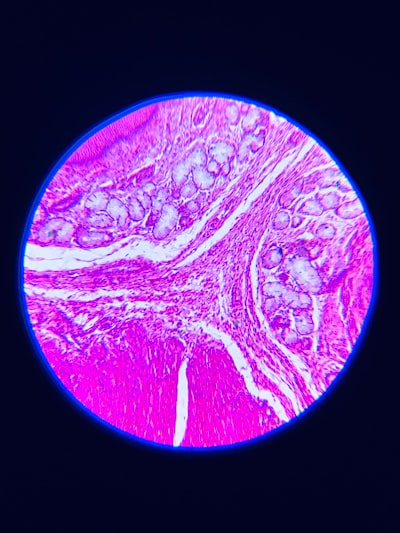
Artificial intelligence is transforming precision medicine, but its deployment in real clinical settings faces a persistent obstacle: variations between different hospitals. In the field of histopathology, where images of tissues stained with hematoxylin and eosin are analyzed by deep learning models, small differences in the staining process, scan, or protocol generate what is known as a 'domain shift'. This phenomenon degrades the performance of classifiers trained at one site and tested at another, limiting the widespread adoption of AI-based diagnostic tools. Until now, staining standardization techniques have attempted to mitigate these discrepancies, but with insufficient results. However, a novel approach called 'Data Alchemy' proposes a test-time calibration by learning templates, offering a robust and explainable solution that does not require retraining the models.
To understand the problem, consider an algorithm trained on images from hospital A. When faced with samples from hospital B, the difference in color intensity, contrast, or the presence of artifacts can cause the model to fail catastrophically. Conventional staining normalization adjusts color histograms so that images resemble a common reference, but rarely completely eliminates inter-site variations. In addition, these methods are often rigid and do not adapt to the specific conditions of each new sample. Data Alchemy addresses this limitation with a template learning framework that calibrates data at the time of inference, without modifying the weights of the normalization network or classifier. This is especially valuable in clinical settings where retraining models requires regulatory approvals and expensive computational resources.
The heart of Data Alchemy lies in its ability to generate explainable templates that represent the statistical characteristics of expected stains. During the test, the system compares the input image with the learned templates and applies an adaptive transformation that minimizes the distance to the training domain. This process not only improves visual consistency, but also provides an explanation as to which aspects of the stain are being corrected. Explainability is crucial in healthcare, where pathologists need to understand why a model issues a certain diagnosis. By disclosing the applied fixes, Data Alchemy builds trust in clinical users, a prerequisite for the adoption of AI in medicine.
The experimental results are conclusive. In tasks of classifying tumors from stained patches, the method managed to increase the area under the precision-recall curve (AUPR) from 0.545 to 0.710, a jump of 0.165 points. But the true strength of the framework is demonstrated by narrowing the gap between sites: by applying test-time calibration, the AUPR was further raised to 0.852, almost 0.31 points above the baseline. This means that pre-trained sorters can be deployed in new sites without the need for specific adjustments, significantly reducing operational costs and implementation times. Precision medicine becomes popular when tools are transferable, and Data Alchemy paves that way.
Behind solutions such as Data Alchemy is a technological development ecosystem that integrates artificial intelligence, automation and cloud services. Companies looking to embrace these innovations need robust platforms that enable everything from managing large volumes of images to securely deploying models in clinical environments. This is where the concept of AI for business becomes critical. Q2BSTUDIO, as a software and technology development company, offers bespoke applications that can integrate calibration algorithms such as Data Alchemy within hospital workflows. These solutions require a multidisciplinary approach that combines computer vision, data engineering, and regulatory compliance.
In addition to artificial intelligence, cloud infrastructure is a pillar to handle the intensive computing demanded by histopathology models. AWS and Azure cloud services enable you to scale image processing, store patient databases with high cybersecurity standards, and facilitate cross-site collaboration. Cybersecurity, in fact, is a critical aspect: medical data is sensitive and any breach can have legal and ethical consequences. Q2BSTUDIO integrates pentesting and data protection practices into all its developments, ensuring that applications comply with regulations such as HIPAA or GDPR. Likewise, business intelligence services, such as Power BI, can be used to visualize model performance metrics, hit rates, and usage patterns, helping clinical teams make informed decisions.
On the horizon of innovation, AI agents are emerging as components capable of orchestrating complex workflows. Imagine an agent that receives a histological image, automatically applies Data Alchemy calibration, queries a classifier model, and delivers a report with visual explanations. All this is orchestrated from a custom software platform developed by Q2BSTUDIO, with process automation capabilities and connectivity to hospital information systems. The combination of these elements accelerates the path towards personalized, accessible and reliable medicine.
In conclusion, Data Alchemy represents a significant advance for computational histopathology, demonstrating that it is possible to overcome domain shift barriers through test-time calibration techniques and learning explainable templates. However, its success depends on a robust technology ecosystem that spans everything from cloud infrastructure to cybersecurity to business intelligence. Companies like Q2BSTUDIO are ready to provide that ecosystem, offering custom software development services, artificial intelligence for enterprises, cloud data management, and advanced analytics. The synergy between innovative computational methods and robust technological platforms is what will ultimately bring precision medicine to every corner of the healthcare system.
.jpg)

.jpg)