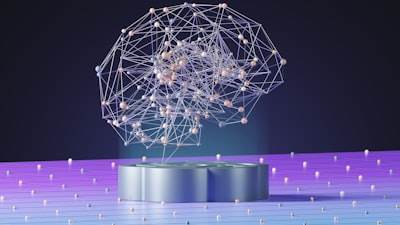
Intelligence, in its broadest sense, is not a monolith. For decades, computer science has tried to replicate it through formal logical models, inspired by Turing's foundational question: what can an immortal and unlimited agent calculate? However, nature poses a very different question: how can a finite agent, with limited resources and in a changing world, make decisions fast enough to survive? The answer, as we will explore in this article, lies in an inevitable coupling between two fundamental operators: computation and condensation. This analysis not only has profound theoretical implications, but it redefines how companies should approach software development, artificial intelligence, and digital transformation. At Q2BSTUDIO, we understand that true applied intelligence requires balancing these forces, and that's why we offer AI for companies that integrate both symbolic reasoning and experiential learning.
To understand the problem, you need to break down the two modes. Pure computation—the manipulation of symbols according to fixed rules—was formalized by Turing and reached its zenith with programming languages and expert systems. This approach is deterministic, complete in a limited sense, but it soon runs up against the limits of Gödel's incompleteness: no consistent formal system can prove all truths within itself. On the other hand, condensation—the process of compressing observed patterns into reusable tokens—is the foundation of machine learning and neural networks. Here, the obstacle is geometric in nature: gradient descent methods inevitably fall into saddle points, trapped at suboptimal minima that the error function topology forces. These two types of incompleteness are not mere analogies; they are two sides of the same coin, a fundamental constraint that no pure system can overcome on its own.
The key is in the coupling. For an intelligent agent to act effectively in a non-stationary environment—such as the business market, cybersecurity, or strategic decision-making—it must combine computation (which transforms structures toward closure) with condensation (which validates closed cycles and turns them into mental shortcuts). However, this union comes at a price: the hinge operation that connects the two modes—what we might call context identification, or the decision between recognizing and discovering—is undecidable. In other words, any system that tries to synchronize these two processes drags an irreducible error, a fundamental limit that cannot be eliminated, only managed. This is not a weakness, but an emergent property of real intelligence, visible from genes to cultures, as Anderson pointed out with his principle of 'more is different'.
In practice, this theoretical framework has direct consequences for business technology. Take, for example, custom app development. Software that only executes deterministic processes (pure computing) is fragile in the face of unexpected changes; one that only learns from data (pure condensation) lacks formal guarantees. The solution is a hybrid approach: systems that custom software design both explicit rules and adaptive models, balancing both incompletenesses. At Q2BSTUDIO, we apply this philosophy by combining artificial intelligence with robust architectures, relying on AWS and Azure cloud services to scale dynamically, and strengthening each solution with comprehensive cybersecurity. In addition, we integrate business intelligence services that allow companies to condense their operational data into actionable dashboards, such as those we built with Power BI, closing the loop between computation (analysis) and condensation (visualization).
Another key domain is AI agents. These autonomous systems must decide in real time whether to apply a predefined rule or explore a new strategy. That decision is precisely the undecidable hinge we are talking about. Our experience in developing intelligent agents has taught us that optimal architecture does not eliminate error, but rather limits and compensates for it with redundancy and feedback. Thus, we design solutions that learn from experience without losing logical traceability, which is essential in sectors such as finance, logistics or health. The key is to implement dynamic coupling, where computation and condensation feed back into each other in real time, as happens in biological systems.
From a business perspective, this framework also illuminates why digital transformation cannot be a purely top-down (computation) or purely bottom-up (condensation) process. Successful organizations are those that manage to synchronize their corporate strategy (rules) with the continuous learning of their teams (data). In that sense, the business intelligence services we offer at Q2BSTUDIO act as the business condensation mechanism: they take large volumes of transactions, compress them into key indicators, and present them in a way that management can apply its computational judgment. But how to manage irreducible error? This is where the culture of experimentation comes in: accepting that no decision will be perfect, but that the rapid cycle of testing and validation minimizes the impact. It's the same principle we apply in our custom application developments, where each iteration reduces uncertainty without eliminating it entirely.
Coupled incompleteness is not a limitation, but an opportunity. It forces companies to abandon the search for the perfect solution and embrace constant evolution. In a market where speed of adaptation makes the difference, combining AI for business with a custom software architecture and elastic cloud infrastructure (AWS and Azure cloud services) is the recipe for building intelligent systems that really work. At Q2BSTUDIO, we've internalized this lesson: we don't offer isolated tools, but ecosystems where computation and condensation are intertwined, creating value that exceeds the sum of its parts. Every project—whether it's a power bi dashboard, an autonomous agent, or a cybersecurity platform—is designed with this duality in mind.
In conclusion, intelligence, both natural and artificial, is born from a forced coupling between two apparently antagonistic modes. The theory of computation gave us the power of computation; Nature taught us the value of condensation. The fusion of both, with its irreducible error, is the engine of all significant progress. Companies that understand this and apply it through integrated technology solutions—like the ones we develop at Q2BSTUDIO—will be better prepared to navigate the uncertainty of today's world. Because, in the end, true intelligence does not consist in having all the answers, but in knowing how to combine rules and experience to find the best possible answer at any given moment.