
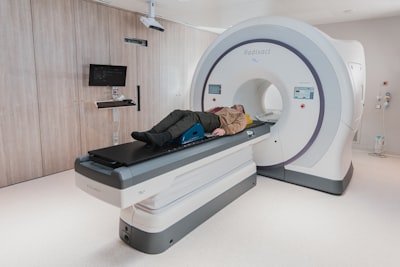
Federated learning has established itself as one of the most promising strategies to overcome the barriers that data privacy and clinical heterogeneity impose on the development of artificial intelligence in the healthcare field. In particular, when we talk about medical imaging that encompasses multiple organs and modalities, the need for a standardized evaluation framework becomes critical. It's not enough to prove that an algorithm works well on a single dataset; It is essential to understand their behavior in the face of real variability of patients, acquisition teams and pathologies.
In recent years, numerous studies have proposed federated learning solutions for tasks such as tumor segmentation, abnormality detection, or disease classification. However, most of these jobs are limited to a single organ — lung, brain, breast — or to a single imaging modality, such as MRI or CT scans. This lack of diversity makes it impossible to assess the true generalizability of the models and, more importantly, does not reflect the complexity of a real clinical environment where a hospital can handle studies of different parts of the body with different acquisition protocols.
To address this gap, there is a need for a comprehensive benchmark that not only incorporates cutting-edge algorithms, but also assesses dimensions such as computational efficiency, privacy-preserving ability, and performance in complex clinical scenarios. A benchmark of these characteristics must include datasets that cover a wide variety of organs – heart, liver, kidney, pancreas, among others – and that represent real conditions of heterogeneity: different brands of scanners, variations in acquisition parameters, different pathological processes and imbalances in the distribution of data among the participating nodes.
Benchmarking federated learning in multi-organ imagery cannot be limited to accuracy or area under the ROC curve. In a clinical context, it also matters how long it takes for the model to converge, how many network resources it consumes during communication between servers and clients, and what level of protection it offers against inference attacks or data poisoning. These additional metrics are what really determine the viability of a federated solution in a real hospital, where IT equipment can be limited and patient data must comply with strict privacy regulations such as GDPR in Europe or HIPAA in the United States.
Artificial intelligence for healthcare companies therefore requires an approach that combines the best of machine learning with a deep understanding of the clinical domain. It's not just about implementing an algorithm and waiting for results; It is necessary to design network architectures that minimize information leakage, optimize the balance between communication and accuracy, and validate models under conditions that mimic daily practice. This is where enterprise AI solutions come into play, offering robust and scalable platforms capable of integrating federated learning with existing infrastructures.
From a software development perspective, implementing a federated learning system for multi-organ imagery involves building custom applications that manage secure communication between nodes, model synchronization, and gradient aggregation. These applications must be modular, allowing new algorithms or data sources to be added without interrupting the clinical workflow. Likewise, computational efficiency becomes a differentiating factor: a model that requires hours of distributed training may be unfeasible in an environment where decisions must be made in minutes.
Cybersecurity plays a fundamental role in this ecosystem. Medical data is extremely sensitive and any vulnerability in the communication process between hospitals or research centers could expose confidential information. That's why federated learning solutions must incorporate encryption mechanisms, strong authentication, and techniques such as homomorphic encryption or differential privacy. Cybersecurity companies offer audits and penetration testing to ensure that the underlying infrastructure meets the highest standards of protection.
Another key aspect is the management of the cloud infrastructure. Hospitals and research centers often operate with heterogeneous computing resources and need platforms that are tailored to their capabilities. AWS and Azure cloud services provide the elasticity to scale on-demand training nodes, store large volumes of images, and deploy models to production with availability guarantees. A software company that offers AWS and Azure cloud services can help design a hybrid cloud architecture that minimizes latency and maximizes security, all integrated with federated learning solutions.
Business intelligence also plays a relevant role in this context. Once federated models are trained and validated, they need to be monitored in real-time, identify biases or drifts, and generate reports that help clinicians make informed decisions. Tools such as Power BI allow you to visualize the metrics of the models, the evolution of accuracy by organ or the distribution of data among the participating institutions. Business intelligence services, such as those offered by Q2BSTUDIO through Power BI, make this task easier and turn complex data into actionable dashboards.
On the horizon of the next decade, federated learning in multi-organ imaging will not only be a research tool, but an essential component of AI-assisted diagnostic systems. AI agents capable of collaborating across institutions without sharing sensitive data will open the door to much more robust and generalizable models. However, for this promise to materialize, it is essential to have exhaustive benchmarks that allow the different algorithmic proposals to be objectively compared, as well as an ecosystem of technology companies that offer the necessary support in terms of custom software development, cloud infrastructure and cybersecurity.
Collaboration between hospitals, research centres and technology companies is the key to moving towards more personalised and precise medicine. Initiatives such as the creation of multi-organ benchmarks represent a firm step in that direction, but they require a real commitment to data quality, standardization of processes and transparency in evaluation. Only in this way can we trust that the algorithms that are deployed in clinical practice really improve patient care, without compromising their privacy or generating unfair biases.
In short, the benchmarking of federated learning in multi-organ images is not a mere academic exercise; It is an urgent need for artificial intelligence in health to be safe, effective and equitable. And to achieve this, we need both rigorous assessment frameworks and technology partners capable of transforming those frameworks into operational solutions. Companies such as Q2BSTUDIO, with expertise in artificial intelligence, custom applications, cloud services, cybersecurity and business intelligence, are perfectly positioned to accompany healthcare institutions on this path to digital excellence.
.jpg)
.jpg)
.jpg)
.jpg)