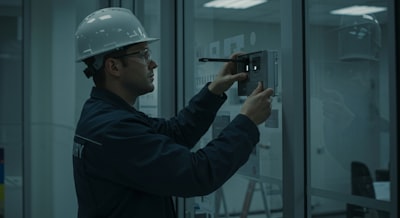
Industrial visual inspection (IVI) has evolved rapidly in recent years, driven by the need to ensure product quality in increasingly automated manufacturing environments. However, this field faces two fundamental challenges: the scarcity of labeled data in real environments and the need to preserve the privacy of sensitive information in production processes. In this context, federated learning has emerged as a promising solution, but its direct application in complex tasks such as label defect recognition remains limited. This is where FedTR comes in, an innovative framework that combines federated learning with transfer learning to power autonomous industrial visual inspection.
FedTR proposes a two-phase approach: first, a base model is trained using public and accessible datasets; That model is then refined collaboratively and decentrally on top of each factory's private, distributed data. This process not only overcomes the limitations of small data, but also maintains the confidentiality of industrial information, a critical requirement in industries such as automotive, electronics or component printing. Experimental results on ink cartridge datasets show that FedTR achieves accuracies of up to 95.5% in word-level text recognition in homogeneous environments and 94.2% in heterogeneous data, matching the performance of traditional centralized training. This proves that it's possible to get robust models without sacrificing privacy or scalability.
From a business perspective, the adoption of solutions like FedTR opens up new opportunities to digitize quality processes. Companies operating in the manufacturing industry typically have production lines spread across different plants, each with its own data and regulations. A federated learning system allows all facilities to collaborate on improving a global model without sharing sensitive data. In addition, the addition of transfer learning accelerates model convergence, reduces training time, and minimizes the need to label large volumes of data, which is often the most costly bottleneck. In this sense, FedTR is not only a technical proposal, but a strategic enabler for the digital transformation of industrial inspection.
For an architecture like FedTR to become an operational reality, companies need technology partners who are proficient in both artificial intelligence and systems integration. At Q2BSTUDIO we understand that each organization has unique needs, which is why we offer artificial intelligence services for companies that allow you to design and implement federated learning solutions adapted to real production environments. Our team combines expertise in deep learning, model optimization, and cloud infrastructure deployment. In addition, we work with platforms such as AWS and Azure cloud services to guarantee scalability and security in the processing of industrial data. We also develop bespoke applications that integrate these models into existing monitoring and quality control systems, facilitating their frictionless adoption.
One of the most relevant aspects of FedTR is its ability to handle heterogeneous data, a common situation in industrial visual inspection where cameras, lighting, and defect types vary between production lines. This heterogeneity often degrades the performance of standard federated models, but the combination with transfer learning allows the base model to acquire general representations that are then adapted with few local examples. This drastically reduces the annotation effort, which in many factories is still manual or semi-automatic. In addition, the end-to-end approach to text recognition on labels avoids the need for separate detection and classification modules, simplifying the pipeline and improving overall accuracy.
Cybersecurity also plays a key role in these systems. When working with distributed data, it is critical to protect both communications and intermediate models that are shared between nodes. At Q2BSTUDIO we integrate encryption, anonymization and access control protocols into all our AI solutions, complementing our cybersecurity and pentesting offer for industrial environments. In this way, we ensure that federated learning is not only private by design, but also resistant to adversarial attacks or information leaks. Trust is a critical asset when sharing models between competitors or between plants of the same corporation.
Another area where FedTR can make a difference is in the integration with business intelligence tools. The data generated by inspection models—defect rates, failure types, time trends—can feed Power BI dashboards to provide real-time visibility to production and quality teams. At Q2BSTUDIO, we offer business intelligence services with Power BI that transform federated learning outcomes into actionable dashboards. This allows managers to make informed decisions about predictive maintenance, process adjustments, or model retraining without relying on specialized technical teams.
The evolution towards Industry 4.0 requires machine vision solutions to be flexible, scalable and privacy-friendly. FedTR represents a step forward in that direction, but its effective implementation requires a multidisciplinary approach that combines advanced algorithms, robust cloud infrastructure, and a data strategy aligned with business objectives. At Q2BSTUDIO we work with our customers to design AI agent systems that automate visual inspection, using federated learning and knowledge transfer techniques. Our developments range from the selection of neural network architectures to the optimization of hyperparameters and deployment in edge or cloud environments, depending on the needs of each case.
Ultimately, FedTR is not just an academic framework; It is a clear example of how the combination of federated learning and transfer can solve real problems of industrial visual inspection. Companies that bet on this technology will be better prepared to face the scarcity of data, the heterogeneity of production environments and the growing privacy requirements. At Q2BSTUDIO, as a software and technology development company, we are committed to accompanying this transformation, offering tailor-made solutions that integrate artificial intelligence, cloud and cybersecurity so that the industry can manufacture with greater quality, efficiency and confidence.