Early detection of stress has become a priority in the field of digital health and well-being at work. Wrist-worn wearable devices have democratized access to physiological signals such as galvanic skin response (GSR), but their reliability remains a technical challenge due to variability in signal amplitude and lack of standardization with respect to laboratory palm measurements. In this context, the need arises to develop robust processing pipelines, independent of the unit and capable of extracting relevant characteristics even at reduced sample rates. One of the most promising metrics is the number of skin conductance responses per minute (nSCR/min), obtained from the phasic component of the GSR signal.
The traditional approach to GSR analysis has relied on high-frequency, palmar placement equipment, limiting its application in real-world and portable environments. However, current wrist sensors, such as those used in recent studies with 25 Hz rates, offer a viable alternative as long as proper cleaning and normalization techniques are implemented. The process involves breaking down the raw GSR signal into two components: the skin conductance tonic level (SCL), which reflects slow background changes, and the phasic response (SCR), which captures the rapid fluctuations associated with stressful events. From the latter, a robust normalization based on z-scores is applied and peaks are detected to calculate the nSCR/min.
The results of controlled experiments with 31 participants in baseline conditions sitting, standing, neutral speech and the Trier Social Stress Test (TSST) have shown that this metric achieves balanced accuracies greater than 82% in binary classifications between stress and rest. Even with a sample rate of 25 Hz, performance remains comparable to the original 100 Hz signals, opening the door to low-power devices and local processing. This finding is especially relevant for commercial applications where battery life and computational efficiency are critical.
From a business perspective, integrating this type of processing into occupational health solutions can transform the way organizations manage the well-being of their teams. For example, a platform that collects data from corporate wearables and applies artificial intelligence to predict stress episodes could be integrated with HR systems to offer early interventions. This is where companies like Q2BSTUDIO add value: they develop custom applications that connect sensors, process signals in real time and generate accessible dashboards. His expertise in AI for enterprise allows him to train machine learning models capable of interpreting nSCR/min along with other physiological variables.
The proposed pipeline is also independent of the unit of measurement (microsiemens, arbitrary units), which facilitates its implementation in different brands of devices. This feature is critical when working with AWS and Azure cloud services, as data can be standardized and stored in the cloud for later analysis. A service-based system, business intelligence, and power bi could visualize stress trends by department, shift, or project, aiding strategic decision-making. Cybersecurity is another pillar, as physiological data is extremely sensitive and requires encryption and regulatory compliance, something that Q2BSTUDIO addressed through security audits and secure development.
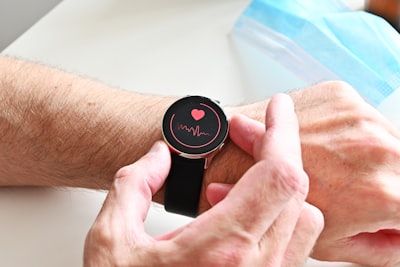
Beyond the laboratory, the practical application of this method extends to sectors such as driving, aviation, surgical environments, and remote work. Imagine a system that monitors heavy equipment operators using a 25Hz smartwatch. Upon detecting an increase in nSCR/min, you could send automatic alerts or even safely pause equipment. To do this, custom software is required that guarantees low latency and high availability. Q2BSTUDIO deploys AI agents at the edge that process the signal locally and only send relevant events to the cloud, optimizing bandwidth and privacy.
One of the key innovations of this approach is robust normalization using z-scores based on median and median absolute deviation (MAD), which reduces the influence of artifacts and interpersonal differences. This is especially useful when collecting data from heterogeneous populations, such as in global corporate wellness programs. In addition, the 25 Hz rate allows the pipeline to run on low-cost microcontrollers, opening up opportunities for disposable devices or smart patches.
From an engineering point of view, the implementation of an nSCR/min-based stress detection system requires multidisciplinary skills: digital signal processing, machine learning, backend and frontend development. Q2BSTUDIO offers teams that integrate these capabilities, using modern stacks such as Python for data science, Node.js or Go for backend services, and React or Vue for interfaces. Integration with AWS and Azure cloud services is done through serverless architectures, reducing operational costs and scaling according to demand.
Pipeline validation with actual data from 31 participants under multiple conditions is an important step towards regulatory certification (FDA, CE, MDR). To get to that level, rigorous technical documentation and clinical testing are needed. Q2BSTUDIO collaborates with healthtech startups to create bespoke applications that meet medical device requirements, including informed consent management and end-to-end encryption.
In short, low-rate wrist GSR processing for stress detection using nSCR/min is not only feasible, but represents a gateway to smart and affordable wearables. The combination of a robust pipeline, unit-independent standardization, and lightweight classification algorithms allows solutions to be deployed in real-world environments. Companies like Q2BSTUDIO are at the forefront of this transformation, integrating artificial intelligence, cybersecurity, cloud services, and business intelligence to turn a physiological signal into a truly useful stress management tool. The future of occupational health lies in continuous, non-intrusive and contextualized measurement, and this pipeline is a solid step in that direction.