In today's ecosystem of virtual assistants, chatbots, and human-machine interaction systems, the ability to accurately understand user intent has become a critical pillar for delivering seamless and efficient experiences. However, one of the most complex challenges faced by these systems is the detection of intentions that are outside the predefined scope, known as out-of-scope (OOS). When a user asks a question or request that does not correspond to any of the trained intentions, the system must be able to identify it as unknown and not force a misclassification. This seemingly simple problem hides a great technical complexity that has motivated the development of innovative approaches such as multi-cluster boundary learning combined with lightweight embedding models such as MiniLM.
Traditional methods for OOS intent detection used to treat the problem as a multiclass classification. In this scheme, the model learns to distinguish between a fixed set of known intentions and, additionally, is trained with negative examples or an 'unknown' class. However, this approach has important limitations. As the number of known intents grows, the accuracy of the classifier tends to degrade, as the decision space becomes more complex and the boundaries between classes blur. In addition, models based on large language models (LLMs) such as next-generation embeddings require a massive number of parameters, which increases computational cost and makes it difficult to deploy in resource-constrained environments. The need then arises for an efficient, lightweight and accurate solution that can operate in real time without sacrificing performance.
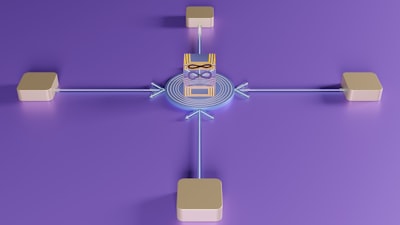
Against this backdrop, the approach known as multi-cluster boundary learning using MiniLM embeddings represents a promising alternative. Instead of trying to classify all intents within a single space, this method transforms the user's expressions into compact vector representations generated by MiniLM, a language model based on the Transformer architecture but with a small number of parameters. These representations are grouped into clusters corresponding to each known intent, and then boundaries or boundaries around each cluster are learned. During inference, any representation that falls outside all boundaries is considered an OOS intent. This approach, in essence, turns the problem into a single-class-per-cluster classification task, allowing for more robust handling of the unknown.
Experimental results on public datasets such as CLINC150, StackOverflow, and Banking77 demonstrate that this methodology achieves cutting-edge performance in OOS intent detection, outperforming both traditional and LLM-based baselines. A relevant finding is that MiniLM, despite its smaller size, is particularly well suited to this workflow thanks to its ability to generate semantically discriminating embeddings. This opens the door to its implementation in business applications where latency and resource consumption are critical, such as customer service assistants, process automation systems or e-commerce platforms.
The relevance of this technology transcends the laboratory. For companies looking to integrate intelligent conversational interfaces, having a reliable OOS intent detection mechanism not only improves the user experience, but also prevents incorrect answers that could lead to frustration or even operational risks. Imagine a banking system that receives an unintended request: if the system misclassifies it as a known intent, it could take an inappropriate action. OOS detection acts as a security and robustness filter.
From a practical implementation perspective, organizations can benefit greatly from enterprise AI solutions that integrate these types of lightweight models. At Q2BSTUDIO, as a software and technology development company, we understand that innovation should not only be powerful, but also accessible. That's why our enterprise AI offerings incorporate both frontier models and efficient architectures, adapting to the specific needs of each client. Whether it's deploying virtual assistants with OOS intent detection, developing AI agents capable of handling complex interactions, or designing process automation systems that minimize errors, our approach combines state-of-the-art research with real-world deployment expertise.
In addition, the flexibility of these models allows them to be integrated into diverse cloud environments. When we work with AWS and Azure cloud services, we can scale these OOS sensing systems efficiently, ensuring that performance is maintained even under fluctuating loads. Cybersecurity also plays a role: a system that does not correctly distinguish intentions could be vulnerable to injection or spoofing attacks. That's why our cybersecurity solutions include penetration testing on conversational interfaces to ensure that decision boundaries are not exploitable.
We cannot forget the value of business intelligence in this context. OOS detection is not only used to reject unknown queries, but can also feed into service systems, business intelligence and power bi, capturing patterns of unanswered questions that indicate new market needs or areas for improvement in products and services. This feedback allows companies to proactively evolve their offerings.
In terms of development, the possibility of creating custom applications that incorporate this technology is enormous. A custom software can include an OOS detection module trained with the company's own data, optimized for its domain and language. The resulting AI agents don't just answer expected questions, they elegantly manage the unexpected, redirecting the user to human channels or gathering information for future iterations of the model.
The final reflection points out that, in the race to build increasingly natural systems of dialogue, the real challenge is not to recognize what we already know, but to handle what we do not know with intelligence and elegance. Multi-cluster boundary learning with MiniLM is not just another technique; It is a paradigm shift that prioritizes efficiency and generalization. And at Q2BSTUDIO we are committed to bringing these innovations into practice, transforming research concepts into robust and scalable business solutions.
If your organization is exploring how to improve interaction with its users, reduce false positives or simply want to be at the forefront of the use of artificial intelligence, we invite you to learn more about our work in custom software development and conversational platforms. Because in a world where every interaction counts, knowing how to detect what you don't know is the first step to learning.