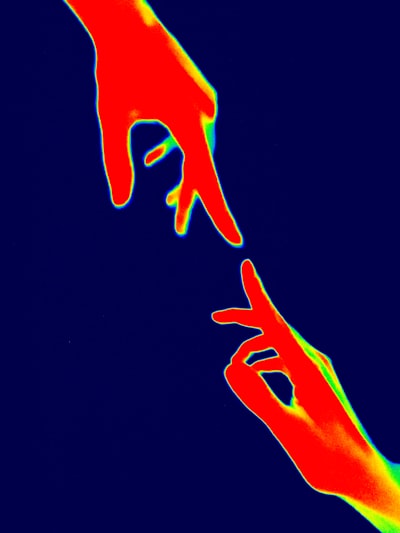
Traditional thermography has allowed us to see heat for years, but its potential goes far beyond generating thermal images. Behind every temperature variation lies a universe of physical properties that define how materials conduct, store, and dissipate heat. Understanding these thermophysical properties—such as thermal diffusivity, conductivity, or specific heat—is key for industries ranging from infrastructure monitoring to advanced robotics. However, current methods either reconstruct temperature fields without identifying the underlying properties, or estimate parameters under controlled laboratory conditions. The challenge is to unite both capabilities in complex and dynamic 3D environments. This is where artificial intelligence and custom software are marking a before and after.
Inferring thermophysical properties from thermal observations is not just a scientific problem; It has huge economic and security implications. Imagine being able to estimate the thermal diffusivity of a metal bridge just by analyzing how it cools down after a sunny afternoon. This would allow material fatigue, corrosion or weak points to be detected without the need for destructive testing. Or think of a factory where robots handle parts at high temperatures: if they know in real time the thermal properties of each material, they can adjust their movements and cooling times with millimeter precision. This kind of capability requires combining sensors, physical models, and learning algorithms, and it's right at that intersection that enterprise AI is finding fertile ground.
The traditional approach to solving this problem relied on analytical or numerical solutions of the heat equation, but with simplified geometries and known boundary conditions. In practice, real scenarios are anything but simple: irregularly shaped objects, variable lighting, wind, humidity, and multiple heat sources. Conventional thermography gives us a picture of the surface temperature, but it tells us nothing about what's going on inside or about the materials that make up the scene. To overcome this limitation, a new paradigm emerges that integrates the differentiable simulation of heat transfer with neural representations. Instead of explicitly modeling each property, a continuous field is learned that assigns temperature values and thermophysical properties to each point in three-dimensional space. Physics acts as a constraint, ensuring that predictions are consistent with reality.
From a technical perspective, this implies building a differentiable heat solver, that is, one that allows the calculation of gradients of the output variables with respect to the parameters of the model. Thus, a neural network can be trained that simultaneously optimizes the geometry of the scene, the variable thermal diffusivity in space and the temporal evolution of temperature. The results are impressive: the system is able to predict how an object will behave thermally under never-before-seen environmental conditions, such as a sudden change in outdoor temperature or sudden airflow. These types of predictive capabilities are pure gold for sectors such as energy efficiency, predictive maintenance or industrial safety.
But taking this technology from the lab to the factory floor requires more than just advanced algorithms. You need an AWS and Azure cloud services infrastructure to process large volumes of thermal data and train complex models. It also demands bespoke applications that integrate these models into existing workflows, from SCADA systems to real-time dashboards. A company that wants to adopt this type of solution cannot simply buy a thermal camera and expect magical results; You need a complete technology ecosystem that spans from data capture to automated decision-making. This is where the ability to develop custom applications that connect sensors, AI models, and visualization dashboards comes into play.
Cybersecurity is also a critical factor. Thermal data can reveal sensitive information about industrial processes, production patterns, or even trade secrets. Whether that data is processed in the cloud or shared between systems, its integrity and confidentiality must be ensured. Therefore, any solution that involves transferring data to cloud platforms must be accompanied by robust cybersecurity measures, such as end-to-end encryption or the use of AI agents to detect anomalies in network traffic. In addition, AI models trained on proprietary data can be a valuable asset to protect against cyberattacks or leaks.
Another aspect that is often overlooked is business intelligence. Once you have reliable estimates of thermophysical properties and thermal predictions, the next step is to integrate that information into strategic decision-making processes. For example, in an additive manufacturing plant, knowing the thermal diffusivity of each batch of metal powder can help adjust printing parameters and reduce waste. This information, if combined with production and cost data using business intelligence tools such as Power BI, allows you to generate dashboards that alert on deviations and optimize overall performance. The connection between the physical world (temperatures) and the digital world (business data) is at the heart of the so-called digital twin, and thermophysical properties are a fundamental link that is often forgotten.
In practice, the implementation of a thermophysical property inference system involves several phases. First, the capture of thermal data with high-resolution cameras and, if possible, with multiple views to obtain 3D information. Second, the calibration of the physical-neural model, which needs an initial set of labeled data or previous simulations. Third, production deployment, where models must be run in real-time or in batches, depending on the application. For all this, companies often turn to technology consultancies that offer process automation solutions and custom software development. Q2BSTUDIO, for example, has experience building platforms that integrate IoT sensors, cloud processing, and business intelligence dashboards, all with a focus on security and scalability.
From a research perspective, the unified approach of differentiable simulation and neural representations is opening doors that previously seemed closed. It is no longer necessary to choose between having an accurate thermal reconstruction of a scene or obtaining interpretable physical parameters; Now you can have everything at once. This ability to physically interpret what we see in a thermal image transforms thermography into a first-rate diagnostic tool. For example, in the field of smart buildings, it is possible to detect not only where there is heat loss, but also whether the insulation has lost properties due to humidity or aging. In the food industry, the thermal conductivity of a packaged product can be identified to optimize pasteurization processes.
However, the mass adoption of these techniques still faces barriers. One of them is the need for significant computational power, especially if you want to process high-frequency thermal sequences or scenes with thousands of dots. Here, AWS and Azure cloud services provide the elasticity to scale from pilots to large-scale operations. Another barrier is the lack of labeled datasets to train models; Physical simulation can help generate synthetic data, but it requires expert knowledge to define the correct parameters. Finally, there is the human factor: engineers and technicians must be trained in interpreting results and integrating these tools into their daily processes.
The immediate future points to the creation of specialized AI agents that are capable of managing the entire inference cycle: from sensor selection to corrective action recommendation. These agents could operate autonomously in industrial environments, adjusting process parameters according to the thermal evolution detected. The combination of AI agents with physical neural models will enable predictive control systems that reduce energy consumption, improve product quality and extend the useful life of assets.
In short, the inference of thermophysical properties from thermal observations represents a qualitative leap compared to simple thermography. It's not just about seeing the heat, but about understanding why it's distributed a certain way and what that tells us about the materials and their condition. This emerging field combines physics, artificial intelligence and custom software development, and is set to revolutionize sectors such as construction, manufacturing, energy and transportation. Companies that want to get ahead of the competition will need to invest in R+D capabilities and partnerships with technology experts who can take these solutions from the lab to the market. At Q2BSTUDIO, we accompany our clients on that journey, providing everything from custom applications to complete cloud platforms, always with a focus on innovation and technical excellence.
.jpg)