
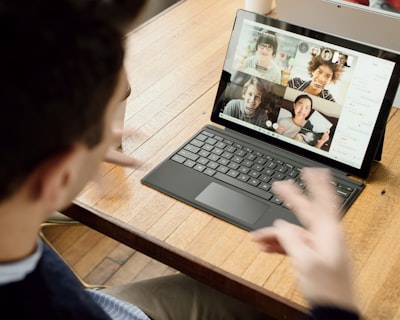
The transformation towards remote and hybrid work models has generated a growing demand for flexible, secure and accessible digital infrastructures from anywhere. In this context, content management systems are evolving to adapt to modern architectures where presentation is decoupled from business logic. Headless CMS emerges as an ideal solution to power custom applications that require consistent content distribution across multiple channels: websites, mobile apps, virtual assistants, or IoT devices. But is a headless CMS really ready to withstand the demands of remote and hybrid work? The answer is yes, as long as it's configured with the right layers of security, collaboration, and scalability.
To understand scope, it's worth remembering that a headless CMS separates content management from its visual representation. This allows content teams to work independently of developers, while the frontend—whether a website, app, or display—consumes information through REST or GraphQL APIs. This architecture is inherently favorable for distributed environments, because content is stored in the cloud and served on-demand without relying on a monolithic interface. However, the mere use of a headless CMS does not guarantee effectiveness in remote scenarios; Careful integration with custom applications is required to address specific needs for collaboration, secure access, and real-time visibility.
When we talk about remote and hybrid work, employee experience and governance need to be balanced. A well-implemented headless CMS can offer centralized repositories of documentation, policies, and procedures accessible from any device, with multi-factor authentication controls and session management. This is made possible by integration with AWS and Azure cloud services, which provide elastic and highly available infrastructure. Q2BSTUDIO, a specialist in custom software development, designs headless solutions that are deployed on these public clouds, guaranteeing 99.9% uptime and regulatory compliance. In addition, the separation between back-end and front-end allows content teams to update manuals, guides, or corporate announcements without impacting developers, while developers are continuously rolling out new functionality.
Security is a fundamental pillar in remote environments, where endpoints can be as varied as a home laptop, a corporate mobile or a kiosk in a store. A headless CMS for custom applications should implement role-based access control policies, encryption of data in transit and at rest, and anomaly detection. Cybersecurity becomes a non-negotiable requirement; That's why Q2BSTUDIO incorporates pentesting practices and continuous monitoring into its headless developments, ensuring that sensitive content – such as contracts, customer data or intellectual property – is only accessible by authorized users. In addition, remote device management and the ability to revoke sessions immediately strengthen protection against potential breaches.
Another decisive aspect is real-time collaboration. Distributed teams need digital spaces where they can share ideas, make decisions, and document progress. A headless CMS can serve as a backend for built-in collaboration tools: discussion forums, task managers, dynamic wikis, or follow-up dashboards. These functionalities are built as custom applications, consuming the content from the same headless repository. The advantage is that the information remains consistent: if a team updates a technical specification, the change is instantly reflected across all channels, whether it's on the intranet, in a mobile app, or in a Power BI dashboard that shows key indicators. Precisely, business intelligence services such as Power BI benefit from this architecture by being able to consume structured data from the headless CMS, combining it with productivity or engagement metrics.
Artificial intelligence is redefining how companies manage and distribute content. A headless CMS can integrate AI agents that automate repetitive tasks, such as categorizing documents, automatic translation, or personalizing content according to the user's profile. For example, an AI agent can analyze a remote employee's browsing patterns and suggest relevant manuals or courses. This ability to dynamically adapt is crucial in hybrid environments, where information needs vary by role, time zone, or ongoing project. Q2BSTUDIO develops solutions that incorporate AI for enterprises directly into the headless ecosystem, allowing content to not only be delivered, but to anticipate the user's needs. AI agents can also act as virtual assistants within the platform, answering frequently asked questions or guiding onboarding processes without human intervention.
Process automation is another dimension that powers the headless CMS in remote work. Using scheduled or event-triggered workflows, organizations can orchestrate content publishing, assigning review tasks, or synchronizing with other systems such as ERPs or CRMs. AWS and Azure cloud services offer serverless functions that allow you to run these automations without maintaining your own infrastructure, reducing costs and complexity. This way, a geographically dispersed team can collaborate on the creation of a document, with automatic revisions and notifications tailored to each member's time zone. Built-in analytics, based on business intelligence, provides visibility into who accesses what content and when, helping to identify bottlenecks or areas for improvement, always respecting employee privacy.
Q2BSTUDIO's approach to implementing a headless CMS in remote and hybrid environments focuses on full customization. It's not about installing a generic product, but about building a bespoke software solution that fits into the organization's existing culture, processes, and tools. This includes defining flexible content models, integrating with corporate authentication systems such as Azure AD or Okta, and creating management interfaces that are intuitive for non-technical teams. The employee experience improves when relevant content arrives at the right time and through the preferred channel, whether it's an email, internal chat, or corporate mobile app.
From a technical point of view, headless architecture facilitates the adoption of agile methodologies and DevOps, allowing continuous deployments and automated testing. Developers can work on the frontend without interfering with the CMS, while content editors update information independently. This separation reduces conflict and speeds up delivery cycles, which is critical when teams work on overlapping schedules. In addition, the horizontal scalability offered by AWS and Azure cloud services ensures that the system responds latency-free even in peak demand, such as product launches or global corporate events.
In conclusion, a headless CMS for custom applications not only works with remote and hybrid work, but becomes a strategic enabler. By separating presentation content, providing secure APIs, and enabling integrations with artificial intelligence, cybersecurity, cloud services, and business intelligence tools, companies can build content platforms that adapt to the new work reality. Q2BSTUDIO accompanies its clients in this process, designing and implementing headless solutions that transform content management into a competitive advantage. The key is to understand that content is not static; It's a living asset that must flow frictionlessly through diverse channels, and that your governance must balance the flexibility of remote work with the security and control that modern organizations demand.
.jpg)
.jpg)
.jpg)