
In today's digital ecosystem, where user experience and multi-channel consistency are critical success factors, adopting a headless CMS has become a strategic decision for many organizations. However, separating the content layer from the presentation introduces new operational challenges, especially when it comes to system reliability. When it comes to custom applications, where each component must align with specific business needs, ensuring that the headless CMS runs without interruption is not a luxury, it is a necessity. Reliability is no longer an isolated technical aspect but a strategic pillar that sustains user trust, brand reputation and operational continuity.
Understanding what makes a headless CMS reliable in custom software environments involves going beyond basic definitions. It's not just about availability, it's about resiliency – the system's ability to maintain predictable performance even under adverse conditions, such as traffic spikes, infrastructure failures, or cyberattacks. Traditional metrics such as uptime are necessary, but insufficient. Modern reliability demands an architecture that responds, adapts, and recovers autonomously, and that can only be achieved with intentional design from day one.
One of the first pillars of reliability in a headless CMS for custom applications is the high-availability architecture. This involves deploying redundant clusters across multiple Availability Zones, or even different geographic regions, using cloud services such as those offered by AWS and Azure cloud services. The key is to automate failover: if one node or data center fails, another must take over the load without the user perceiving interruption. At this point, integration with cloud providers is not a mere technical detail, but a business decision that directly impacts the ability to scale and protect the investment.
But redundancy alone is not enough. It is necessary to implement intelligent load balancing that distributes requests equitably, avoiding bottlenecks and optimizing the use of resources. A well-configured balancer not only improves performance, but also acts as a first line of defense against unexpected spikes in demand, such as those generated by a viral marketing campaign or product launch. Custom applications often have unpredictable traffic patterns, so an elastic approach—where resources are dynamically adjusted—is especially valuable. This is where cloud services offer flexibility: from auto-scaling groups to managed databases with automatic replication.
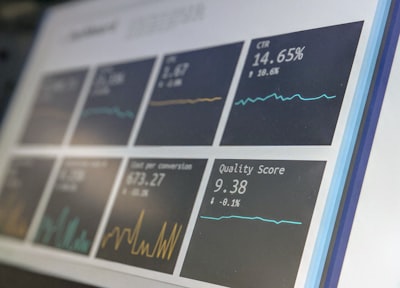
Proactive monitoring is another fundamental pillar. It is not enough to know that the system is down when it no longer responds; you have to anticipate problems. The combination of synthetic monitoring – simulating user transactions on a regular basis – with real user monitoring (RUM) provides a comprehensive view of the status of the headless CMS. Real-time dashboards allow operations teams to detect anomalies before they impact the user experience. In addition, the implementation of intelligent alerts based on dynamic thresholds reduces noise and allows you to focus on what is really critical. In this context, artificial intelligence and AI agents can help identify recurring failure patterns, correlate events and suggest corrective actions autonomously, raising the operational maturity of the system.
We can't talk about reliability without mentioning the stress tests. A headless CMS for custom applications should undergo extensive performance testing before every significant release. This includes load, stress, and long-term strength testing (soak testing). The objective is not only to verify that the system can withstand the expected traffic, but also to discover its limits and breaking points. Often, applications grow organically and the headless CMS becomes an unexpected bottleneck if its capacity is not regularly reviewed. Here, collaboration with a technology partner like Q2BSTUDIO makes all the difference, as custom software expertise allows you to design tests that faithfully reflect the actual usage patterns of the business.
One advanced practice that has gained traction in recent years is chaos engineering. It consists of introducing controlled failures into the system (such as shutting down a server, saturating the network or injecting latency) to observe how the architecture responds. This discipline, popularized by high-performance companies such as Netflix, allows resilience to be validated empirically and to discover weaknesses that would go unnoticed under normal conditions. For a headless CMS that serves multiple channels (web, mobile, IoT, etc.), chaos engineering is especially revealing, because it exposes hidden dependencies between services and helps build a truly antifragile system. Q2BSTUDIO integrates these types of exercises into its reliability programs, ensuring that custom applications not only meet SLAs, but exceed them by margin.
Cybersecurity is another inseparable aspect of reliability. A reliable system must also be a secure system, because a successful attack can lead to a complete downtime or degradation of service. Cybersecurity measures must be built into the architecture by design: strong authentication, encryption of data in transit and at rest, identity management, and role-based access control for the content API. In addition, monitoring should include real-time threat detection, such as code injection attempts or DDoS attacks. Regular penetration testing is a best practice for identifying vulnerabilities before attackers do. Q2BSTUDIO offers specialized cybersecurity services that can be integrated with the headless CMS, protecting both the content and the underlying infrastructure.
Another key element for long-term reliability is the management of external dependencies. A headless CMS typically consumes third-party services (CDNs, authentication providers, search engines, etc.). Each of these dependencies introduces a potential point of failure. Therefore, it is important to design the system with tolerance to external faults: implement circuit breakers, local caches, and graceful degradation strategies so that, if an external service does not respond, the user experience is not drastically affected. In bespoke applications, these decisions are made based on the specific context of the business, and a partner like Q2BSTUDIO can help evaluate trade-offs and design robust solutions.
Reliability is also closely related to observability. It's not enough to monitor metrics; You have to understand what is happening inside the system at all times. This means having structured logs, distributed tracing, and detailed metrics that allow you to reconstruct the flow of a request through all components. When an incident arises, a good observability system drastically reduces the mean time to detection (MTTD) and the mean time to resolution (MTTR). In this sense, the integration of tools such as Power BI or business intelligence services can provide an additional layer of analysis: visualize performance trends, correlate failures with business events, and generate executive reports that help make informed decisions about infrastructure investments.
We cannot forget the human factor. Even the best architecture fails if there are no clear operational processes and trained teams. The reliability of a headless CMS in custom applications requires a DevOps or SRE (Site Reliability Engineering) culture where development and operations collaborate closely. Deployment automation, infrastructure versioning, and faultless post-mortem incident management are practices that build long-term reliability. Q2BSTUDIO, as a software development company, not only builds the system, but also transfers knowledge to internal teams so they can operate it with confidence.
The trend toward enterprise AI is transforming the way we manage reliability. For example, AI agents can analyze historical logs and predict when a node is about to fail, or recommend configuration adjustments based on traffic patterns. They can also automate responses to common incidents, such as restarting services or scaling resources, reducing the burden on the human team. In the content space, artificial intelligence can help optimize the delivery of personalized content without compromising performance, dynamically adapting caching strategies based on user behavior. All of this reinforces the reliability of the headless CMS by making it smarter and more autonomous.
Finally, reliability must be measured and communicated. Establishing key performance indicators (KPIs) such as average response time, error rate, availability percentage, and restoration time is critical to aligning the technical team with business expectations. These indicators should be visible on executive dashboards, and a tool like Power BI can be the ideal vehicle to democratize that information. In addition, service level agreements (SLAs) must be realistic and auditable, and the company must be prepared to be accountable on a regular basis. Q2BSTUDIO manages reliability programs that ensure compliance with those SLAs, offering transparency and confidence to its customers.
In short, the reliability of a headless CMS in custom applications is a multi-dimensional concept that spans everything from infrastructure architecture to operational culture, security, observability, and artificial intelligence. It is not a one-off project, but a continuous commitment to improvement and adaptation. Companies that invest in building reliable systems not only protect their day-to-day operation, but build a sustainable competitive advantage. With the support of an experienced partner like Q2BSTUDIO, organizations can navigate this complex path and ensure that their headless CMS is a growth driver, not a risk.
.jpg)

.jpg)
.jpg)