
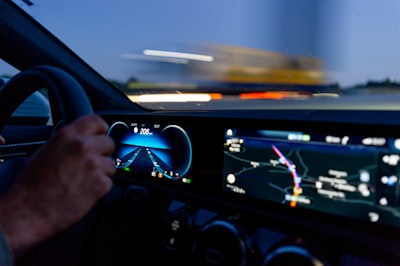
The advancement of autonomous driving has brought to the table a previously unexplored challenge: how do motion planners behave when faced with entirely new urban environments? Most current systems are trained and evaluated on closed datasets, such as nuPlan, that collect driving patterns from specific cities. However, the real litmus test comes when these algorithms must operate in cities with different topologies, pedestrian densities and regulations without ever having seen these scenarios. This is precisely the gap that the new Shift & Drift benchmark aims to fill, a dual-track tool designed to test the robustness of motion planners in conditions of distribution displacement.
To understand its relevance, it is worth remembering that a motion planner is the module that decides, step by step, the trajectory of the autonomous vehicle. Traditionally, approaches based on imitation learning have dominated the leaderboards thanks to their ability to replicate human behaviors from large volumes of data. But imitation has an Achilles' heel: when the environment changes, the model tends to fail because it simply reproduces learned patterns rather than understanding the physics or intentions of the agents. Shift & Drift exposes just that fragility through two key mechanisms.
The first is the so-called Semantic Shift Track. Rather than being limited to typical North American or Singapore scenarios, this track uses an innovative conversion pipeline that transforms aerial data from the DeepScenario Open 3D suite into the nuPlan simulation framework. This allows planners to be zero-shot in 1,182 scenarios spanning four German cities and San Francisco, with a high density of interactions between pedestrians and cyclists. The results are revealing: imitation methods that score high in their source benchmarks plummet in environments with dense pedestrians, showing an almost total dependence on training distributions.
The second mechanism, the State-Distribution Drift Track, introduces stochastic disturbances into the vehicle's dynamics to simulate cumulative execution errors. Here the resilience of the planner to temporally correlated action noise is measured. While imitation systems tend to drift progressively off track, reinforcement learning-based planners show smoother degradation while maintaining acceptable safety and progress metrics. This suggests that resilience doesn't come from data alone, but from an architecture capable of real-time replanning.
From a business perspective, these findings have direct implications for bespoke software development in the autonomous mobility sector. Companies looking to implement autonomous driving solutions in diverse urban environments need systems that not only perform well under ideal conditions, but maintain robust performance in the face of the unexpected. This is where artificial intelligence for business becomes a critical enabler. At Q2BSTUDIO we understand that every vehicle automation project requires an adaptive approach, combining imitation and reinforcement techniques depending on the operational context.
The Shift & Drift benchmark also highlights a fundamental trade-off: imitation fidelity versus closed-loop resilience. Systems that best mimic the human driver tend to be fragile in the face of unforeseen changes, while those that learn through trial and error (such as reinforcement learning) sacrifice some fluency in exchange for a greater ability to adapt. For companies developing bespoke applications in the field of mobile robotics, this trade-off must be carefully managed. It's not just about choosing the best algorithm, but about designing an architecture that combines the best of both worlds, supported by flexible cloud platforms such as AWS and Azure cloud services to scale simulations and training.
Another relevant aspect is the need to incorporate cybersecurity layers into these systems. A motion planner that receives noisy sensor inputs or malicious disturbances can be compromised. Cybersecurity is no longer an optional add-on; It is an integral part of the software lifecycle for autonomous vehicles. At Q2BSTUDIO we offer cybersecurity and pentesting services to ensure that critical modules withstand attacks or sensor failures.
In addition, efficiently managing the data generated by simulations and field tests requires business intelligence tools. With business intelligence and Power BI services, companies can monitor the performance of their planners in real time, identify failure patterns, and adjust training parameters. This visibility is key to quickly iterating to a more robust product.
On the horizon, AI agents specialized in motion planning will begin to integrate with more advanced perception systems, creating an increasingly autonomous decision loop. However, benchmarks such as Shift & Drift remind us that validation under realistic conditions is irreplaceable. The research community is already working on extending this type of evaluation to other domains, such as internal logistics or urban drone navigation.
For companies committed to digital transformation in mobility, the lesson is clear: it is not enough to achieve high performance under controlled conditions. Systems need to be stress tested to reflect real-world complexity. And here, having a technology partner who masters both algorithm development and cloud infrastructure and cybersecurity makes all the difference. At Q2BSTUDIO we help companies build tailor-made software solutions that integrate artificial intelligence, process automation and data analysis, always with a pragmatic and results-oriented approach.
The future of autonomous driving will not be decided in closed laboratories, but on streets that the vehicle has never seen before. Benchmarks like Shift & Drift are the thermometer that indicates whether our systems are really ready for that jump. And although there is still a long way to go, having tools to measure the gap between the ideal and the real is the first step to closing it.
.jpg)
.jpg)
.jpg)
.jpg)