
In today's digital ecosystem, content management has become a strategic pillar for companies looking to offer consistent and personalized experiences to their users. Traditional content management systems, which tie the backend to the presentation layer, are being replaced by more flexible and scalable architectures. The headless CMS model, which separates the creation and storage of content from its final rendering, allows organizations to serve information across multiple channels—web, mobile apps, voice assistants, IoT devices—without having to duplicate efforts. However, implementing a technology of this caliber in the day-to-day running of a company is not automatic: it requires a decisive push from management, a cultural change and a well-orchestrated adoption strategy. This article explores how senior management can lead that process, integrating concepts such as custom applications and cloud platforms, with the goal of turning a headless CMS into the engine of digital transformation.
To understand the role of management, you first need to situate the technical context. A headless CMS is not a black box; it is a piece of infrastructure that manages structured content and exposes it through REST or GraphQL APIs. This allows developers to build applications as they consume that content without frontend restrictions. But the real power of this architecture unfolds when the organization adopts it across the board: marketing, product, sales, and development teams need to align on workflows. This is where management makes a difference. It's not enough to just buy a license or deploy a server; You have to communicate the purpose, allocate resources, remove barriers, and recognize achievements. Q2BSTUDIO, as a company specialising in software and technology development, has accompanied numerous companies on this path, providing both the technical platform and the strategic support necessary so that adoption does not remain a pilot project.
One of the first steps that management must take is to articulate a clear vision. Why adopt a headless CMS? The answer can range from the need to launch real-time content in multiple languages to the urgency of integrating omnichannel sales channels. Management must translate these benefits into language that is understandable to all levels: not only for the technical team, but also for creatives, business analysts, and finance executives. For example, it should be noted that separating content from presentation reduces the time to market for new functionalities, which directly impacts competitive advantage. In addition, by integrating AWS and Azure cloud services as the underlying infrastructure, scalability, high availability, and end-to-end security are guaranteed — a critical aspect in an environment where cybersecurity is a non-negotiable priority. Management should communicate that migrating to a headless CMS is not a technological whim, but a strategic decision that protects data integrity and facilitates innovation.
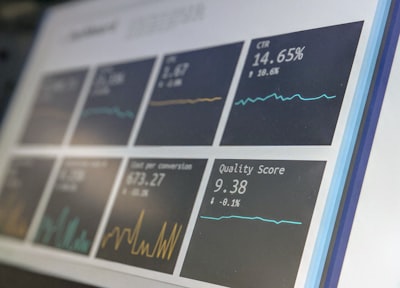
Another determining factor is the alignment of incentives. In many organizations, teams are used to working with monolithic systems where the flow of content is linear and predictable. The headless CMS introduces a more modular and decentralized logic, which can generate resistance. Management must recognize that cultural change takes time and positive reinforcement. For example, you can set adoption milestones—such as publishing the first piece of content from the new system or successfully integrating with a mobile app—and celebrate those accomplishments publicly. It's also helpful to include headless CMS usage metrics in performance review meetings, showing how publishing time has been reduced or how content has been repurposed across more channels. Q2BSTUDIO recommends its clients to create custom dashboards, often built on Power BI, that monitor CMS activity in real time. These dashboards not only measure productivity, but also reinforce the idea that the tool is an integral part of the business strategy.
Continuous training is another pillar. Management must ensure that teams have the resources they need to master the new platform. This includes not only technical sessions on APIs and data models, but also workshops on content best practices, SEO, and personalization. An additional advantage is that, as it is a headless CMS, it can be integrated with artificial intelligence to automate tasks such as content classification, automatic translation or personalized recommendation. For example, AI for business can analyze consumption patterns and suggest what content to post next. Even AI agents can take care of comment moderation or metadata generation. Management must encourage controlled experimentation with these capabilities, promoting a culture of innovation that goes beyond mere technical implementation.
One aspect that is often underestimated is integration with the existing ecosystem. A headless CMS does not live in isolation; it must connect with customer relationship management (CRM) systems, e-commerce platforms, marketing automation tools, and of course, with cloud infrastructure. Management should prioritize building an architecture that facilitates these connections, avoiding data silos. This is where business intelligence services come into play, which allow value to be extracted from content and user interactions. For example, combining browsing data with sales records can reveal what type of content converts best. The company Q2BSTUDIO offers solutions that unify these layers, from designing APIs to implementing data pipelines in the cloud. In addition, security must be present in every integration: access policies, data encryption, and regular audits are shared responsibility between the technical team and management. Not surprisingly, cybersecurity is one of the factors that most concerns boards of directors when addressing a digital transformation.
For adoption to be sustainable, management must act as an active sponsor, not a mere supervisor. This means being visibly engaged: attending demonstrations, participating in sprint planning meetings (if agile is used), and answering questions about the direction of the project. A common mistake is to delegate all responsibility to the IT area; the headless CMS should be understood as an initiative of the entire organization. For this reason, Q2BSTUDIO works side by side with the management committees, offering coaching and internal communication strategies that maintain the focus beyond the initial launch. When management shows that they value the platform—for example, by using their own dashboards or asking for reports based on CMS data—the rest of the company replicates that attitude.
Another common challenge is change management in teams that are unfamiliar with concepts such as API-first or microservices. Management should invest in training programs ranging from basic to advanced, and consider having internal ambassadors to act as role models. These ambassadors, often developers or product managers, can demonstrate case studies: how a marketing campaign was launched in record time thanks to the headless CMS, or how content errors were reduced by centralizing management. They can even share experiences about integrating with applications as they consume CMS APIs, showcasing the flexibility the architecture offers.
We cannot forget the dimension of measuring results. Management must define clear KPIs from the beginning: reduction of publication time, increase in content reuse, improvement in the conversion rate of digital channels, etc. These indicators must be visible and updated in real time. Business intelligence tools, such as Power BI, allow you to create dashboards that correlate CMS usage with business metrics. Thus, for example, it can be seen how an increase in the frequency of content updates (made possible by the headless CMS) translates into an increase in organic traffic or greater user retention. Management can use this data to justify additional investments in the platform, such as hiring more cloud services or implementing advanced AI capabilities.
Finally, the evolutionary aspect: headless CMS technology is not static. Business needs change, new channels emerge (such as voice assistants or augmented reality), and user expectations rise. Management must ensure that the team has room to iterate and improve. This may involve updating APIs, migrating to newer versions of the CMS, or exploring capabilities such as AI agents that automate the creation of content from structured data. Adoption doesn't end with the first pitch; It's a continuous cycle of learning and optimization. Therein lies the real digital maturity: when the headless CMS ceases to be a project and becomes the backbone of business communication.
In short, management holds the key to making a headless CMS not just a technology decision, but a strategic asset. Through constant communication, incentive alignment, training, outcome measurement, and unwavering support, leaders can transform the way their organization creates, manages, and distributes content. Companies like Q2BSTUDIO facilitate this journey, not only with technical solutions such as custom software and cloud integrations, but also with support in change management. The effective adoption of a headless CMS is ultimately a reflection of the vision and commitment of senior management. When the company understands that technology is a means – not an end – and is actively involved in its implementation, the results exceed any initial expectations.

.jpg)