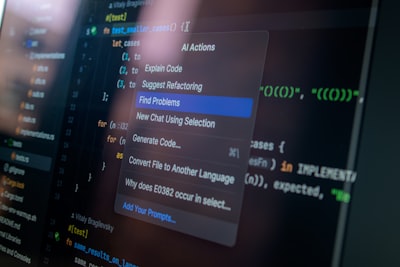
Artificial intelligence has transformed the way developers write code, but until recently coding agents operated with one fundamental limitation: they couldn't see what's happening in the real environment where web applications are running. While models like GPT-4 or Claude can generate flawless snippets from textual descriptions, the real challenge comes when a perfectly visually valid CSS breaks the design, a React component hydrates late, or an API request returns the wrong structure. That's where the next big breakthrough in AI coding won't come from a new benchmark, but from something more tangible: browser shortcut.
AI agents have improved their ability to read repositories, edit files, generate tests, and summarize differences. However, in daily front-end work, most of the glitches do not manifest themselves in the source code, but in the browser runtime. A button that only appears after a state transition, a layout that fails exclusively in Safari, a form inaccessible by keyboard... These are issues that until now required the developer to take screenshots, describe the behavior, or share logs. That translation between the error and the model wastes precision and time.
With the advent of MCP (Model Context Protocol) servers such as the Safari MCP Server introduced in WebKit, agents can finally connect to a browser window and inspect its state live: the DOM, consoles, network requests, screenshots, even execute JavaScript and simulate user interactions. This removes the intermediation layer. Instead of asking the agent to guess what's wrong from an image, the workflow now becomes something like: open the local page, inspect the broken state, explain what you find, and propose the smallest correction possible. That change of contract is enormously more productive.
For companies developing custom applications, this level of integration represents a quantum leap. An agent that can see the browser not only accelerates debugging, but also allows you to automate visual tests, detect regressions in different browsers and verify accessibility autonomously. However, this power comes with cost and safety challenges.
From an economic point of view, access to the browser multiplies calls to tools: the agent will make captures, read logs, compare statuses, execute edits and reload pages. That's good if you save hours of work, but it can make API bills more expensive if it's not measured. Organizations that scale these agents successfully won't use the largest model for every step. They'll implement intelligent routing: powerful models for complex planning and reasoning, lighter models for extracting summaries and logs, and techniques like stable context caching or selective queries instead of pouring entire pages into the context window. This is where services such as AWS and Azure cloud services offer the necessary infrastructure to manage these flows efficiently and scalably, with batch processing, work queues and controlled costs.
Cybersecurity is another pillar that cannot be overlooked. Safari's MCP server runs locally and doesn't make network calls of its own, or access personal data like Autofill. But the information on the captured page travels to the agent you're using. If that page contains secrets, internal APIs, customer data, or sensitive console outputs, the risk is moved from the browser to the agent's workflow. That's why companies that adopt these capabilities should start in controlled environments: local development, staging with test data, isolated browser profiles, and observation-only tasks. It's a matter of engineering hygiene, not paranoia. At Q2BSTUDIO, we integrate cybersecurity practices from the design of these solutions to ensure that AI agents operate within secure perimeters.
Beyond debugging, this pattern leads the way to agents that not only generate code, but operate within a bounded development loop. The browser is just the first surface. Soon we will see agents connected to terminals, test runners, incident managers, design files, API monitors, databases and deployment systems. The winning workflows will be those that connect these systems without turning the agent into an out-of-control operator. And this is where artificial intelligence for companies comes in as a strategic lever.
In the realm of business intelligence, for example, AI agents can combine real-time dashboard inspection with the ability to generate automatic reports. An agent viewing a chart in Power BI through the browser could detect anomalies in the data, propose advanced filters, or even write DAX queries on the fly. In fact, the business intelligence services we offer directly benefit from this evolution, as agents can visually audit dashboards and suggest improvements without manual intervention.
The trend is clear: AI-assisted coding is moving from code generation from a prompt to operation within a development loop with visual and contextual feedback. Companies that design reliable, affordable, and secure agent architectures will be the ones that truly take advantage of this advancement. At Q2BSTUDIO, we develop AI solutions for companies that integrate AI agents, process automation, and access to real-world environments, helping our clients make the leap from theory to practice without compromising quality or safety.
Browser access is not just another feature; It is the first step towards a new generation of tools that understand software not as static text, but as a living system that runs, paints and behaves. And that understanding radically changes what we can ask of an AI agent.