
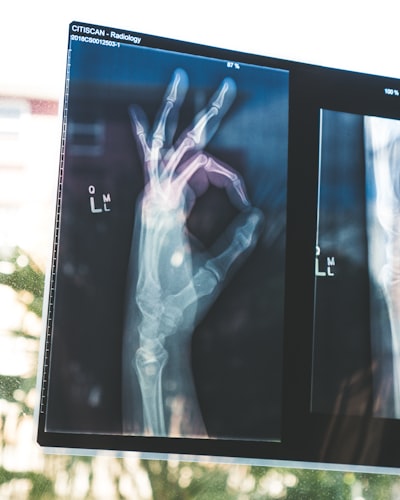
Artificial intelligence is transforming the way models for medical imaging are developed. Until recently, each task—whether it's tumor segmentation on MRI scans or detecting abnormalities on chest X-rays—required a handcrafted process: architecture selection, hyperparameter tuning, training, debugging, and clinical validation. Not only does this flow consume time and specialized resources, but it's error-prone and difficult to audit. However, a new paradigm based on autonomous agents promises to automate much of this work, while maintaining the traceability and rigor needed in healthcare environments.
Multi-agent systems for machine learning engineering (MLE) have demonstrated their ability to plan, execute code, and debug iteratively. Applied to the field of medical imaging, they must face additional challenges: each modality (ultrasound, CT scan, PET, etc.) imposes specific requirements for preprocessing, data augmentation and validation protocols. In addition, prediction artifacts—such as heat maps, segmented volumes, or ROC curves—must be accurately generated and fully auditable to comply with regulations such as HIPAA or GDPR. This is where an approach based on data-driven planning and two-stage optimization becomes relevant: first broad families of methods are explored, then the most promising ones are exploited under strict verification.
This approach, which we could call autonomous and audited model development, not only accelerates research, but democratizes access to cutting-edge techniques. Small laboratories or clinics without data science equipment can benefit from systems that propose, test and validate models automatically. The key is in the ability to define search spaces based on the analysis of the input data itself, and then apply optimizations that ensure that each iteration meets clinical standards. In practice, this means that the same framework can be adapted to multiple tasks—from retinopathy classification to organ segmentation—without manual intervention.
For tech companies developing AI solutions for enterprises, this is a field of enormous potential. At Q2BSTUDIO we work on building custom applications that integrate these autonomous agents into real workflows. Our team combines expertise in custom software with deep knowledge in AWS and Azure cloud services, allowing us to deploy scalable and secure infrastructures for the processing of large volumes of medical images. In addition, cybersecurity is a fundamental pillar: we protect sensitive data through security audits and pentesting, ensuring that the trained models do not expose patient information.
A differentiating aspect of autonomous systems is their ability to generate detailed audit reports. Every design decision, every hyperparameter tested, and every validation result is recorded, facilitating the transparency required by regulatory bodies. This level of control is especially valuable when combined with business intelligence services such as Power BI, allowing managers and clinicians to visualize model performance, quality metrics, and data breaches in real-time. Thus, AI for business not only improves diagnostic accuracy, but also provides solid governance.
The AI agents that power these frameworks are able to learn from previous iterations and adapt their search strategy without human intervention. This is possible thanks to reinforcement learning techniques and Bayesian optimization, but also to the correct definition of validation constraints. In the medical field, incorrect validation can lead to false positives or negatives with serious consequences. Therefore, guided verification, which checks not only the final metric but also the consistency of the prediction artifacts, becomes a prerequisite. Our developments in Q2BSTUDIO incorporate these verification mechanisms natively, ensuring that each model complies with clinical protocols before deployment.
From a business perspective, automating the development of medical imaging models dramatically reduces operational costs. It is no longer necessary to maintain teams of data scientists dedicated exclusively to one task; A single framework can cater to multiple projects simultaneously. This accelerates innovation and allows organizations to respond more quickly to new needs, such as detecting viral variants on X-rays during a pandemic. In addition, the scalability offered by AWS and Azure cloud services allows you to process terabytes of images without investing in your own infrastructure, while cybersecurity solutions ensure that data remains encrypted and accessible only to authorized personnel.
In short, the path towards the autonomous and audited development of medical imaging models is paved by the convergence of multiple technologies: intelligent agents, cloud computing, BI platforms and security services. Companies that adopt this approach will not only improve the quality of their diagnoses, but will gain a significant competitive advantage. At Q2BSTUDIO we are aware of this potential and offer tailor-made applications that integrate all these components in a coherent way. We work closely with our customers to design solutions that transform their data into clinical and business value.
The AI revolution in medical imaging isn't limited to more accurate algorithms; It's about creating complete systems that continuously automate, audit, and improve. With the right support in custom software and AI agents, any organization can make the leap to a more efficient, secure, and scalable development model. The next few years will witness these frameworks become the standard for research and clinical practice.
