
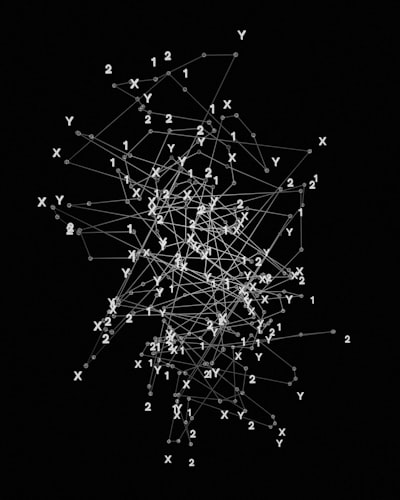
In today's world, where data is generated at an exponential rate, the analysis of functional information – such as curves, continuous time series or signals – has become a critical challenge for companies and research centers. Clustering functional data allows you to discover hidden patterns in behavioral trajectories, but the presence of outliers can completely distort the results. This is where funOCLUST comes in, a robust extension of the OCLUST algorithm designed to group curves while also identifying and isolating anomalous observations. This article explores this technique in depth, its applicability in business environments, and how custom application solutions can integrate these advances to improve decision-making.
To understand the relevance of funOCLUST, we must first remember that functional data is inherently infinitely dimensional; Each curve represents a continuous function observed in a dense set of points. Traditional clustering methods, such as k-means or hierarchical, do not handle this structure well because they rely on Euclidean metrics that ignore continuity. In addition, they are very sensitive to outliers: an outlier curve can shift cluster centers and generate erroneous partitions. The challenge is multiplied when we work with large volumes of time series, such as those generated by IoT sensors, financial transactions or biomedical data.
What is funOCLUST and how does it work?funOCLUST takes the core of the OCLUST (Outlier Clustering) algorithm, which has already proven itself in tabular data, and adapts it to the functional space. The central idea is to perform an iterative process of assigning curves to clusters while detecting and treating outliers in an integrated way, not as a subsequent step. It uses base functions (e.g., splines or wavelets) to represent curves and a distance metric based on the L2 standard or the derivative, capturing both shape and trend. Each iteration reestimates the clusters' hubs and recalculates membership, but with a "pruning" mechanism that discards curves that deviate excessively from any model. This makes it a particularly robust method for applications where dirty data is the norm, not the exception.
From a technical perspective, funOCLUST is supported by modern artificial intelligence and mathematical analysis tools. For example, functional decomposition makes it possible to reduce dimensionality and work with parsimonious representations, which speeds up computation. In addition, the algorithm can be run in cloud environments to scale to millions of curves, which is essential in AWS and Azure cloud service projects. Companies that handle vehicle fleet telemetry or industrial production data benefit greatly from this capability.
Real use cases in the enterpriseLet's imagine a logistics company that records delivery routes as position curves in time. Detecting anomalous routes (due to detours or delays) is vital for efficiency. Functional clustering with outlier detection allows you to group typical routes and point out those that go out of the pattern, possibly due to incidents or fraudulent behavior. Similarly, in the health sector, patient evolution curves (glucose, blood pressure) can be grouped to identify risk profiles, while outliers can indicate erroneous measurements or exceptional conditions that require clinical attention.
To implement these solutions at scale, many organizations turn to custom software that integrates algorithms like funOCLUST into their information systems. This is where the experience of companies like Q2BSTUDIO comes into play, which develop customized platforms capable of ingesting functional data, applying robust clustering and visualizing results in Power BI dashboards. Combining business intelligence with advanced analytics allows managers to make decisions based on real patterns, not misleading averages.
Running funOCLUST over large volumes of functional data can be CPU and memory intensive. Each curve requires a mathematical representation, and comparing pairs of curves is expensive. However, parallelization is possible. By deploying the algorithm in cloud infrastructures, using containers and orchestration, near-linear performance can be achieved. Q2BSTUDIO offers business intelligence and consulting services to optimize these deployments, ensuring that real-time analytics is feasible even with continuous data flows.
In addition, cybersecurity is an aspect that should not be neglected when handling sensitive functional data, such as medical or financial information. Curves can contain identifiable information if they are reconstructed in sufficient detail. That's why implementing a clustering pipeline must be accompanied by protection measures such as encryption at rest and in transit, access controls, and auditing. Q2BSTUDIO integrates cybersecurity practices into its developments, offering pentesting and hardening of applications.
From theory to practice: automation with AI agentsAn emerging trend is the incorporation of AI agents that automate the execution and adjustment of algorithms such as funOCLUST. These agents can monitor the quality of clusters in real time, retrain the model when new patterns appear, and trigger alerts for significant outliers. The combination of AI for companies with functional clustering opens up possibilities such as dynamic recommendation systems or predictive maintenance based on wear curves.
From a strategic perspective, organizations that adopt these technologies gain a competitive advantage by being able to segment their data more accurately and robustly. For example, in marketing, user navigation curves can be grouped together to identify buying behaviors, and outliers could represent bots or fraudulent users. Implementing this requires not only the algorithm, but a robust data architecture and AWS and Azure cloud services to scale. Q2BSTUDIO advises on choosing the right cloud and integrating with legacy systems.
Final Thought: The Value of RobustnessfunOCLUST isn't just incremental improvement; represents a paradigm shift in functional data analysis. By treating outliers as part of the clustering process, distortion is avoided and more interpretable partitions are obtained. In an environment where data quality is never perfect, this robustness is invaluable. Companies that invest in applications as they incorporate these algorithms will be better prepared to extract insights from their functional data streams.
In short, the combination of solid mathematical foundations, cloud infrastructure, and software development expertise allows funOCLUST to be taken from the lab to production. And this is where Q2BSTUDIO makes a difference, offering comprehensive solutions that cover everything from initial consulting to deployment and maintenance. If your organization handles curves, time series, or any functional data and needs to group them by identifying anomalies, the way forward is a robust and personalized approach.
To learn more about how to implement functional clustering with outlier detection in your company, do not hesitate to contact specialists who understand both the technical and business part. Artificial intelligence and advanced data analytics are powerful tools, but only if they are applied with the right context. Find out how AI for business Q2BSTUDIO integrated into its developments, or explore its capabilities in process automation and business intelligence. The era of functional data is just beginning, and being prepared makes all the difference.

.jpg)