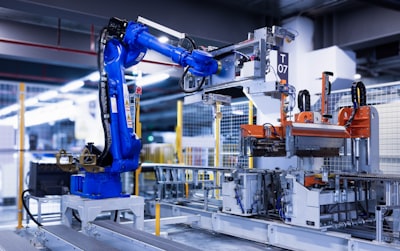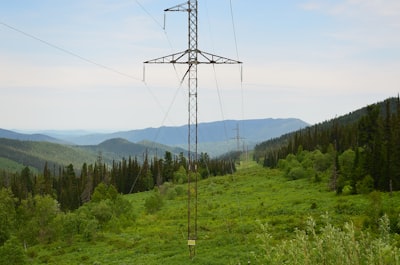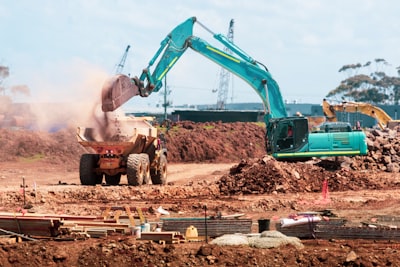
Commercial construction has historically been one of the sectors lagging behind in the adoption of digital technologies. However, the convergence of artificial intelligence and the Internet of Things – known as AIoT – is beginning to transform every phase of a construction site's lifecycle, from earthmoving to building delivery. Building an AIoT platform for a construction site is not simply installing sensors and connecting a cloud; It involves designing a backend capable of operating in extreme conditions, integrating dozens of communication protocols, and making decisions in milliseconds when security is at stake.
Unlike the controlled environments of a smart office or connected home, a construction site is a dynamic and hostile system. Dust, rain, vibrations from heavy machinery, and the continuous reconfiguration of physical space demand a robust and flexible connectivity infrastructure. In addition, the population on the construction site changes daily: temporary workers, subcontractors, material suppliers. To manage all this, an AIoT platform must combine multiple identification and location technologies: passive RFID tags for access and material control, BLE beacons for low-power tool tracking, UWB sensors for submeter positioning in high-risk areas, and GPS modules for crane and truck fleets. In storage areas where cellular coverage is poor, LoRaWAN technology allows temperature or humidity data to be sent with minimal power consumption.
However, the real challenge is not in the selection of sensors, but in the backend architecture that processes all that information. On a typical construction site, the internet connection is intermittent during the early stages, and sending each sensor reading to the cloud is unfeasible due to latency and bandwidth. That's why edge computing becomes a must-have. An on-site edge gateway can run AI models locally to detect perimeter intrusions, alert on a worker's proximity to a danger zone, or predict impending failures in critical equipment, without relying on the cloud. Only relevant events and aggregated data are transmitted to the cloud infrastructure, optimizing network usage and reducing costs.
Integration with legacy business systems is another challenge that makes this domain a particularly interesting field for software professionals. Each construction project has its own ecosystem of tools: cost management ERP, site scheduling platforms, occupational safety systems, and BIM modeling software. An effective AIoT platform must be able to connect with all of them through modern APIs or integration buses, transforming raw data into actionable information for site managers and safety managers. This is where a strategy of custom applications and custom software makes the difference compared to generic solutions that do not adapt to the specific workflows of each company.
In this context, artificial intelligence is not an ornament, but an operational necessity. AI models can analyze historical patterns of machinery use to schedule preventive maintenance, avoiding unplanned shutdowns that delay the work. They can also process surveillance camera footage to count people, identify personal protective equipment, or detect accumulations of hazardous material. Beyond predictive analytics, AI agents are beginning to be used to automate repetitive tasks such as verifying access permissions or generating compliance reports. Companies such as Q2BSTUDIO offer AI for companies that integrate these agents in a modular and scalable way, allowing each construction site to benefit from automation without the need for a dedicated team of data scientists.
The data and analytics layer also plays a critical role. The information generated by the sensors, combined with construction records and financial data, can be visualized through business intelligence dashboards. A Power BI-based dashboard allows project managers to monitor in real-time indicators such as labor performance, fleet fuel consumption, or physical vs. planned progress. This type of business intelligence services turn scattered data into strategic decisions, reducing cost overruns and improving security. And the cloud is the backbone of this platform: AWS and Azure cloud services provide the scalability needed to store petabytes of historical data, run AI model training, and ensure global availability of information, even when the site is in remote locations.
We cannot forget cybersecurity. An AIoT system on a construction site handles sensitive data: building plans, safety schedules, worker information. An attack could paralyze activity for days. That's why access controls, end-to-end encryption, and network segmentation must be implemented from the outset. Regular pentesting audits help identify vulnerabilities before they are exploited. Q2BSTUDIO offers specialized services in cybersecurity and penetration testing, adapted to industrial environments where criticality is maximum.
In short, building an AIoT platform for commercial construction is a demanding project that combines resilient hardware, edge computing, artificial intelligence, enterprise integration, and cloud analytics. Far from typical consumer use cases, this realm represents a real laboratory for testing scalable, fault-tolerant architectures. Companies that manage to master this complexity will not only improve the efficiency of their construction sites, but also raise occupational safety standards. And for those who develop the backend of these platforms, the challenge is as stimulating as it is rewarding: each work is a new living system to learn to listen to and control.