
Working time registration has become a central axis of the digital transformation that European companies are experiencing. From 2026, the mandatory nature of a digital registry – driven both by European directives and by regulatory developments in Spain – requires organizations to abandon manual methods and adopt reliable, auditable and automated systems. This change isn't just a matter of legal compliance; It represents an opportunity to rethink talent management, optimize processes, and strengthen internal transparency. In this article we analyse the regulatory context, the technological challenges and the keys to implementing a time control system that goes beyond what is required, becoming a lever for efficiency and competitiveness.
The starting point is the European directive on transparent and predictable working conditions, which has been transposed in Spain through Law 10/2021 and Royal Decree 713/2024, among other regulations. Although the registration of working hours had already been mandatory since 2019, the lack of a clear digital standard generated a casuistry of hybrid systems – spreadsheets, manual clocking, basic apps – that made real supervision difficult. The new regulations that will come into full force in 2026 require that the register be digital, accessible to the Labour Inspectorate and kept for at least four years. This means that solutions must ensure data integrity, traceability, and immutability, something that traditional methods cannot deliver.
The impact does not only affect Human Resources departments. Schedule management has a direct impact on information cybersecurity (by handling sensitive employee data), business intelligence (by crossing hours with productivity and costs), and strategic decision-making. For this reason, the most advanced companies are already integrating time recording into broader business management platforms, where time data becomes an input for process automation, project planning and profitability analysis.
One of the great advantages of digitizing the time record is the possibility of applying artificial intelligence to detect absenteeism patterns, predict workload peaks or recommend more efficient schedules. For example, AI agents can analyze clocking histories and suggest shift redeployments that minimize unplanned overtime. Or, combined with business intelligence services such as Power BI, they allow real-time compliance by department, project or work center to be visualized, facilitating data-based decision-making.
However, technology alone does not solve the challenge if it is not accompanied by a solid implementation strategy. Companies need bespoke applications that adapt to their specific processes, not generic solutions that force them to change the way they work. Tailor-made software allows, for example, to integrate clocking in with payroll systems, holiday schedules and access control tools, all under the same interface and with the assurance that the data complies with data protection regulations (GDPR). At Q2BSTUDIO we develop this type of modular, scalable solutions aligned with European regulations.
The choice of infrastructure where to host these systems is another critical point. The regulations require that the data be available to the Inspection throughout the retention period, which implies having a robust cloud platform, with automatic backups and high availability. AWS and Azure cloud services offer the security, compliance, and scalability guarantees that a timekeeping solution needs. In addition, they allow the application to be deployed in multiple regions, which is relevant for companies with workplaces in different autonomous communities or even in other European countries.
We cannot forget cybersecurity. A clocking system stores employees' personal information (ID, location, schedules), which if compromised can lead to serious sanctions. That's why any implementation should include regular security audits, end-to-end encryption, and access controls. At Q2BSTUDIO we offer cybersecurity and pentesting services to validate that the infrastructure and software resist real attacks, guaranteeing the confidentiality and integrity of the hourly data.
Artificial intelligence for businesses also plays a transformative role. Imagine a system that not only records when you enter and exit, but also detects if you are working overtime on a recurring basis and alerts the manager to redistribute the load. Or that, integrated with project management, automatically calculates the time spent on each task and compares it with the estimated budget. This is the true promise of smart digital day registration, and to achieve it it is necessary to combine AI development for companies with a deep understanding of the business.
Implementation, however, must be done carefully. A common mistake is to impose a system without training or communication, generating rejection among the workforce. It's a good idea to involve employees in the design phase, explain the benefits (such as automating administrative processes or eliminating payroll errors), and offer feedback channels. The culture of compliance is built on trust, not on vigilance. For this reason, the solutions we develop at Q2BSTUDIO always include self-service panels so that each worker can consult their own history, report incidents and reconcile their hours autonomously.
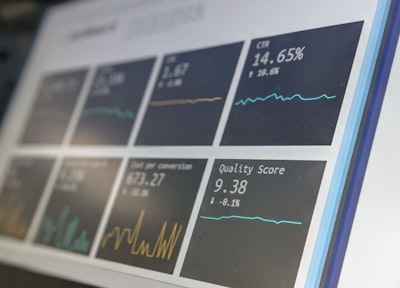
Another aspect to consider is the integration with business intelligence tools. With Power BI you can build dashboards that cross-reference working day data with indicators of productivity, absenteeism or turnover. This allows management to identify trends (e.g., teams accumulating more overtime in certain months) and make proactive decisions. The business intelligence services we offer allow you to connect time recording with internal and external data sources, creating a 360° view of human capital.
Finally, we cannot ignore the need for continuous updating. Labor and technological regulations evolve, and a static system would become obsolete. At Q2BSTUDIO we work with agile methodologies to offer evolutionary maintenance, adapting the functionalities to new legal requirements (such as possible integration with the future European digital portfolio) or to emerging business needs. The 2026 working day registration is not a one-day project, but a process of continuous improvement that, if well managed, can become a competitive advantage.
In summary, the mandatory digital registration of working hours in 2026 represents a turning point. Companies that face it as a mere bureaucratic obligation are likely to end up with rigid systems that are expensive to maintain. On the other hand, those that understand it as an opportunity to digitize processes, apply artificial intelligence and improve the employee experience, will obtain much greater benefits. At Q2BSTUDIO we accompany organizations on this path, offering customized software, cloud integration, cybersecurity and business intelligence, all with a practical approach and aligned with the reality of each company. The clock is ticking, but with the right technology, time is in your favor.
.jpg)
.jpg)
.jpg)
