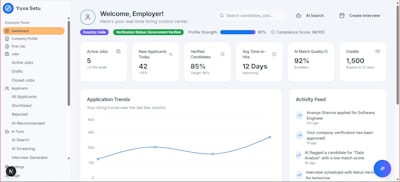
In today's enterprise software ecosystem, AI-based intelligent assistants have become a centerpiece of SaaS platforms. Dashboards are brimming with eye-catching metrics: increased number of interactions with AI, increased adoption of features, increased daily usage. However, these figures can generate a false sense of success. The question that really defines the future of a product is whether those enterprise customers will renew their subscriptions. Initial enthusiasm for an AI co-pilot does not guarantee long-term loyalty. Enterprise organizations renew only when technology delivers measurable business results, not simply because it's available. This article delves into the hidden signals behind dashboards, the risks of relying on superficial metrics, and how to build AI experiences that ensure renewal.
The main mistake many product teams make is equating usage with value. A customer may interact with an AI assistant dozens of times a day, but if those interactions don't solve real problems or integrate into everyday workflows, the perception of usefulness vanishes. Dashboards show bottom-up engagement graphs, but they don't reflect the opportunity cost of a team that spends time experimenting without realizing concrete savings. For companies, artificial intelligence is not a technological toy; It is a tool that must optimize processes, reduce errors and speed up decisions. When an AI co-pilot only solves isolated tasks instead of addressing end-to-end business problems, it becomes an expense rather than an investment.
One of the most common red flags is the disconnect between feature adoption and customer satisfaction. A product may boast high usage rates of its AI module, but satisfaction surveys reveal stagnation or even decline. Why does this happen? Because users try the functionality, but when they don't find a tangible improvement in their daily productivity, they lose interest. Poor onboarding is another critical factor. If an AI assistant doesn't adapt to the company's existing processes—whether due to a lack of connectivity to CRM, ERP, or data platform tools—the perceived value plummets. In this context, usage metrics become a mirage that hides the true health of the product.
For engineering and product teams, the challenge is not to maximize numbers in a dashboard, but to design AI experiences that are indispensable. This involves a focus on usability, reliability, and deep integration into business workflows. A successful AI co-pilot doesn't just answer questions; It anticipates needs, automates repetitive tasks, and delivers actionable insights that previously required hours of analysis. This is where the ability of technology companies to offer robust solutions comes into play. For example, at Q2BSTUDIO we understand that the development of artificial intelligence for companies must go beyond simple conversational assistants. Our services range from the creation of specialized AI agents to integration with cloud infrastructures, ensuring that each solution responds to real needs for productivity and return on investment.
Another aspect that is often overlooked is the measurement of the actual return on investment (ROI). Corporate dashboards tend to show usage and adoption metrics, but they rarely include business impact indicators: reduced process times, decreased errors, improved end-customer satisfaction, or increased sales. Companies evaluating AI contract renewal ask, 'How much money has this system saved or made us earn?' If the answer is limited to 'users use it a lot', the renewal decision becomes fragile. That's why more and more organizations are demanding reports that link the use of artificial intelligence with business KPIs. This requires a robust data architecture, which allows you to trace from the initial interaction to the final result. In this sense, the combination of business intelligence and Power BI services with AI models offers complete visibility of the real impact, making it easier to justify spending to management committees.
The cybersecurity context is also crucial. Enterprise customers do not renew AI contracts if they perceive risks in protecting their data. A co-pilot interacting with sensitive information must comply with the highest security standards, from encryption to access control. Vulnerabilities in the AI layer can leak strategic information, jeopardizing the business relationship. That's why, when designing AI solutions for enterprises, we Q2BSTUDIO integrate cybersecurity measures from the architecture phase, ensuring that attendees are not only efficient, but also reliable. In addition, scalability on cloud platforms such as AWS or Azure allows these systems to be deployed with the flexibility required by complex corporate environments. The adoption of AWS and Azure cloud services ensures that the AI co-pilot can handle peaks in demand without compromising performance, a determining factor for users to integrate it into their day-to-day lives.
Another dimension that influences renewal is the ability to personalize. Companies don't want a generic assistant; they need it to fit their terminology, processes, and goals. This is where custom apps and custom software make all the difference. An AI co-pilot that is trained with the organization's own data and that integrates directly with its internal systems – ERP, CRM, BI platforms – generates a differential value that is difficult to replicate. Custom AI agents can anticipate inventory issues, recommend business actions based on history, or automate executive reporting. When the AI becomes an extension of the team, the probability of renewal skyrockets.
Onboarding also deserves deep reflection. Many AI projects fail not because of technology, but because of poor onboarding. Users need to see quick results to trust the system. If the first few days of use are filled with errors, irrelevant responses, or slow response times, distrust sets in. Best practices include a supervised training period, where the AI learns from real data and adjusts with human feedback. In addition, it is critical that tracking dashboards show not only usage, but also progress in accuracy and time reduction. Companies that offer ongoing support and regular updates based on customer feedback are the ones that achieve renewal rates above 90%.
On the horizon, the trend is for AI assistants to evolve into autonomous agents capable of executing complete tasks. These AI agents will not only answer questions, but will perform actions on behalf of the user: update records, send notifications, initiate approval processes. This evolution requires a more robust integration infrastructure, but it also offers immense value for companies seeking operational efficiency. Companies that are already implementing these types of solutions report significant improvements in productivity and a reduction in administrative burden. For technology providers, the key is to design these agents with a modular approach, allowing companies to choose which tasks to delegate and how to measure the impact.
Finally, it's important to remember that the success of an AI co-pilot is not measured solely by the renewal rate, but by the depth of the customer relationship. Companies that manage to make their AI a strategic partner see how renewals become automatic. To do this, it is necessary to change the mentality: from selling features to selling results. Dashboards must evolve to include ROI dashboards, end-user satisfaction indicators, and workflow integration metrics. At Q2BSTUDIO, with our expertise in software and technology development, we help organizations build these experiences, combining artificial intelligence, cloud, and business intelligence to create solutions that truly transform the customer's operation. The question is not whether the dashboard shows high usage, but whether that usage translates into a natural renewal decision. And that answer is only found when AI ceases to be a promise and becomes an indispensable tool.