
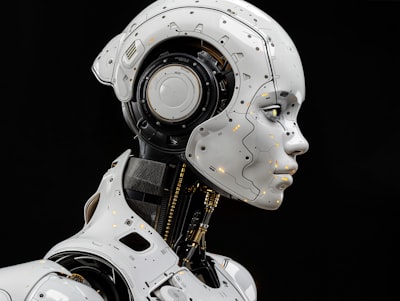
In the world of robotics, the way a machine perceives its environment largely determines its ability to act accurately and efficiently. Inspired by human biology, researchers have begun to explore active vision strategies that mimic eye movement and selective attention. This approach, known as foveated vision, allows robotic systems to concentrate computational resources only on the relevant regions of a scene, dramatically reducing the processing load and improving robustness in the face of distractions. In this article, we look at how integrating the human gaze into robot learning is opening up new frontiers, and how companies like Q2BSTUDIO can help translate these advances into practical applications in industry.
Human vision is a highly active process. Our eyes are constantly moving to direct the fovea – the area of greatest visual acuity – towards what is relevant. The rest of the visual field is processed with lower resolution, which saves neural energy. Translating this principle to machine vision systems is not trivial, but recent work in reinforcement learning and visual transformer (ViT) models shows that it is possible. By employing a foveated tokenization scheme, the number of tokens processed by the network can be significantly reduced, achieving faster inference and lower computational consumption. This is especially valuable in mobile robotics or real-time manipulation tasks, where every millisecond counts.
One of the biggest challenges in robotics today is generalization: a robot trained in a controlled environment can fail miserably when faced with changing backgrounds, new objects, or variable lighting. The foveated vision, by focusing on the essential, is more robust in the face of these disturbances. Experiments conducted with the GIAVA system (an acronym reminiscent of the combination of head and gaze movement) show that, in high-precision tasks such as assembly or welding, the use of selective attention not only reduces the computational cost, but can even improve the success rate. This suggests that inductive bias of human vision is a powerful tool that deserves to be incorporated into AI systems for enterprises.
For companies looking to adopt these technologies, the path is not always straightforward. Implementing a robotic system with foveated vision requires specialized hardware (cameras with orientation control, eye-tracking systems) and software capable of integrating attention models with motion controllers. This is where custom application development services and custom software come into play. A company like Q2BSTUDIO can design and implement customized solutions that capture the eye of a human operator during task demonstration, and then transfer that knowledge to the robot. In this way, more efficient learning by imitation is achieved, combining the best of human and computational intelligence.
Vision is not the only innovation that can benefit robotics. The integration of AI agents capable of making decisions in real time, the connection with cloud platforms for distributed training and data analysis using AWS and Azure cloud services are key components in the architecture of any modern robotic system. Q2BSTUDIO offers AWS and Azure cloud services that allow you to scale vision model training and deploy inference at the edge. In addition, business intelligence service tools such as Power BI can be used to monitor the performance of robots in the plant, generating dashboards that help managers optimize production processes.
From a business point of view, the adoption of robots that learn with a human eye represents a competitive advantage in sectors such as manufacturing, logistics or healthcare. The reduction in computational costs translates into lighter and cheaper equipment, while the improvement in robustness allows for less structured work environments. In addition, the ability to quickly transfer skills from an expert operator to a robot using eye-guided demonstrations shortens deployment cycles. All of this fits perfectly with Q2BSTUDIO's philosophy of delivering AI for businesses that solves real problems, combining technological innovation with a hands-on approach.
One of the most fascinating aspects of this line of research is how nature continues to inspire us. The human fovea is not just a filter of information; it is a mechanism of attention that prioritizes what is relevant. By replicating it in robots, we not only save resources, but also provide the machine with a way of understanding the world that is more similar to our own. This paves the way for a more fluid collaboration between humans and robots, where nonverbal communication—such as gaze direction—becomes a natural instructional channel.
Finally, we cannot forget the importance of cybersecurity in these systems. By connecting robots to the cloud and collecting gaze data, the need arises to protect both operator information and the integrity of the control system. Q2BSTUDIO integrates cybersecurity into all its solutions, from design to deployment, ensuring that sensitive data is encrypted and that access is audited. Thus, companies can adopt these technologies with the confidence that their infrastructure is protected.
In short, the fusion of human-inspired active vision with robotic learning is not a distant promise, but an emerging reality that is already being tested in laboratories and will soon reach factories. For organizations that want to get ahead of this trend, having a technology partner like Q2BSTUDIO, which specializes in custom applications and artificial intelligence, can make the difference between simply observing change or leading it. The human gaze, now also in robots, invites us to rethink how we teach machines to see and act.
