In the rapid advance of robotics and intelligent automation, one of the most critical challenges remains the reconciliation between autonomous learning capability and operational safety. Reinforcement learning algorithms have demonstrated extraordinary potential for training robots and autonomous systems in simulated environments, allowing them to develop complex behaviors without human intervention. However, when these systems must operate in the real world, the absence of security guarantees can be catastrophic. It is here that ATACOM-DC emerges, a conceptual evolution that introduces directional constraints for safe and efficient exploration, radically changing the way we understand the compromise between performance and risk prevention.
ATACOM-DC's proposal is based on a fundamental observation: in safe reinforcement learning, restrictions are traditionally applied uniformly, penalizing any action that approaches a safe boundary, even when the agent might benefit from exploring near that boundary with caution. This homogeneous approach causes a significant decrease in learning speed and often leads to suboptimal behaviors because the agent must solve a much more constrained optimization problem. The innovation of ATACOM-DC lies in distinguishing between actions that approach a security threshold and those that move away from it. Restrictions are only activated when the agent is heading towards a dangerous state, while they are relaxed when the movement is in the opposite direction. This directional distinction allows the system to explore state space much more efficiently, while maintaining an adaptive and not overly conservative level of safety.
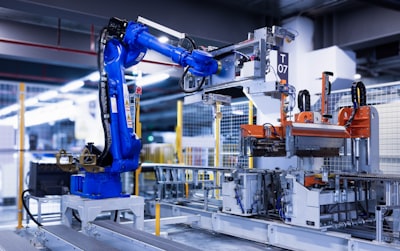
To understand its impact, imagine a robotic arm that must learn to manipulate fragile objects. A traditional restraint could prevent the arm from approaching a high-risk area, limiting its ability to learn precise maneuvers near that area. With ATACOM-DC, the arm can approach progressively, but if its speed or direction indicates that it is going to collide, the restriction is activated. This accelerates learning because the agent can experiment in the vicinity of the boundary without actually violating it, accumulating valuable experience. In business environments, where collaborative robotics and autonomous agents are increasingly present, this capability translates into shorter development time, lower risk of accidents and a smoother integration into production processes.
From a technical perspective, ATACOM-DC relies on a security layer that can be integrated with any existing reinforcement learning algorithm. That layer, often referred to as the safety layer, sits between the agent's policy and the execution of the action, filtering out those that would violate the constraints. The revolutionary thing about ATACOM-DC is that this filter is not binary: it modulates the intervention according to the direction of the movement with respect to the set of safe states. This drastically reduces the number of unnecessary interventions, allowing the agent to maintain an almost natural exploration but with intelligent safeguards. In practice, this means that a delivery drone, for example, can learn optimal flight paths in urban environments without fear of infringing on restricted zones, as the system detects when it is approaching a no-fly zone and only then acts.
The field of artificial intelligence for enterprises is absorbing these innovations at a rapid rate. More and more companies are looking to implement autonomous systems that operate in uncontrolled environments, from logistics warehouses to robotic operating rooms. Security is no longer an optional add-on, but a fundamental design requirement. ATACOM-DC represents a firm step towards trustworthy AI, where learning is not sacrificed for the sake of security, but rather both enhance each other. Companies developing AI solutions should consider these types of approaches to ensure that their systems are not only efficient, but also robust in the face of unforeseen events.
In this context, the company Q2BSTUDIO, specialized in software and technology development, offers an ecosystem of services that allows organizations to integrate these advanced capabilities in a personalized way. With our expertise in custom applications and custom software, we can build systems that incorporate secure reinforcement learning algorithms, tailored to each customer's specific needs. In addition, we combine this intelligence with other tools such as AWS and Azure cloud services to deploy these models at scale, or business intelligence services and Power BI to monitor their performance in real time. Our comprehensive approach ensures that AI for business is not just an abstract concept, but a tangible reality that drives productivity and innovation.
Practical implementation of ATACOM-DC requires in-depth knowledge of both control theory and machine learning. It is not simply a matter of applying an algorithm, but of designing the appropriate directional constraints for each domain. For example, in a mobile robot navigating between pedestrians, directional constraint could be based on distance and relative speed toward obstacles. In an automated trading system, you could define volatility limits. The flexibility of this framework makes it applicable to sectors as diverse as manufacturing, logistics, healthcare or finance. Our team at Q2BSTUDIO is trained to perform this analysis and develop the AI agents that make the most of these techniques, ensuring end-to-end cybersecurity at every stage of the software lifecycle.
In addition, integration with cloud services is critical to scaling these systems. A robot that learns in simulation can transfer its policy to the real world through rapid deployments on AWS or Azure. The telemetry generated during the operation can be analyzed with Power BI to detect risk patterns or continuously improve constraints. This holistic vision is what we offer from Q2BSTUDIO, where technology is not an end in itself, but a means to solve real business problems with tailor-made applications that make a difference.
In short, ATACOM-DC is not just an academic breakthrough; It's a practical tool that redefines the balance between exploration and safety. Its incorporation into robotics and artificial intelligence business projects can significantly accelerate development times and reduce costs associated with failures. If your organization is considering implementing autonomous systems or improving existing ones, we invite you to explore our AI solutions for enterprises, where we combine cutting-edge knowledge with flawless execution. At Q2BSTUDIO, we turn technological challenges into safe and efficient opportunities.