
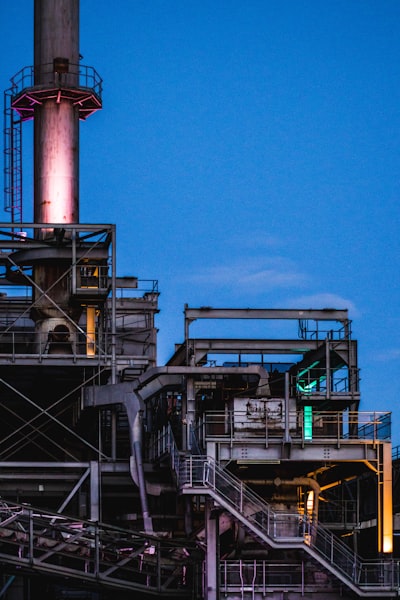
The leap from the cloud to the industrial environment is not just a change of physical location: it is a qualitative leap in the way we understand artificial intelligence. While in data centers everything is controlled, in a manufacturing plant reality imposes itself with legacy machines, vibrations, dust, network outages and protocols that seem to have survived from the last century. The promise of industrial AI is not fulfilled simply by uploading data to the cloud; It requires a modular infrastructure that is capable of processing, deciding and acting at the edge, right where the action happens.
To understand why the traditional model based solely on AWS and Azure cloud services is not enough, we must understand three forces that push us to rethink architecture: latency, autonomy and heterogeneity. A welding robot can't wait 200 milliseconds for a cloud model to decide whether it should stop. The decision must be made in milliseconds, locally. And to do this, artificial intelligence needs to be packaged in lightweight modules, deployable on varied hardware and capable of working without a permanent connection. That's the essence of modular infrastructure.
Aperture Venture Studio talks about a three-pillar framework: connectivity at the edge, predictive analytics, and scalable operations. But field experience tells us that the real challenge is in the design of the software that supports those pillars. Companies that try to build tailor-made solutions for each sensor or each machine end up trapped in a technical debt that is impossible to repay. Instead, the industry needs bespoke applications that are, paradoxically, generic at their core: containers that abstract hardware, data pipelines that normalize protocols such as Modbus, OPC-UA, or MQTT, and AI models that are retrained without manual intervention.
That's where the concept of AI agents comes in: small inference entities that operate autonomously at the edge, capable of communicating with each other and with the cloud when connectivity allows it. These agents don't just analyze vibrations or temperatures; They can also perform actions such as adjusting production parameters or alerting maintenance. The key is that its lifecycle is orchestrated from a central platform, but its execution is completely decentralized. This is reminiscent of what many companies achieve with business intelligence services like Power BI at the corporate level, where dashboards are updated with aggregated data from the edge, but the early warning logic runs locally.
At Q2BSTUDIO, as a software and technology development company, we have found that the adoption of artificial intelligence in industrial environments encounters two recurring obstacles: the complexity of integration with legacy systems and the lack of trained personnel to manage hybrid infrastructures. That's why we offer services ranging from AI for business to the cybersecurity needed to protect those critical data flows. It's not enough for a model to predict the remaining lifespan of an engine; We also have to ensure that no one manipulates this model from the outside.
Modularity is not only technical, it is also organizational. An industrial AI system must allow different teams to work on independent components: one data team trains models, another deploys containers at the edge, another monitors security. For that, custom software becomes the enabler. Each plant has its own combination of sensors, actuators, and protocols; There is no standard product that fits all. However, it is possible to build a base platform that, using modular connectors, adapts to each scenario. This is exactly what we address at Q2BSTUDIO when we design AWS and Azure cloud service and process automation solutions, combining the power of the cloud with the speed of the edge.
Let's talk about a specific case. A bottling plant needs to detect anomalies on conveyor belts before they stop production. A naïve approach would be to send each event to the cloud, process it with a deep learning model, and return the decision. The result would be unacceptable: high latency, bandwidth saturation, and connection dependency. On the other hand, with a modular architecture, an industrial computer is installed on the same line, with a lightweight model trained to detect vibration patterns. That model is regularly updated from the cloud, but the inference is on-premises. If the model detects an anomaly, you can stop the machine in milliseconds and also send a summary to a Power BI dashboard that the shift supervisor uses. This combines edge intelligence with the centralized visibility offered by business intelligence services.
This approach is not free. It requires investing in a model orchestration platform, in data pipelines that standardize protocols, in security mechanisms that prevent a compromised agent from stopping the entire line. Cybersecurity at the industrial edge is radically different from that of a data center: devices are physically vulnerable, patches are not applied every week, and network segmentation is complex. That's why, when designing an industrial AI solution, security should be part of the module's DNA, not a later add-on.
Another aspect that is often underestimated is version management and continuous retraining. A model that predicts the wear of a cutting tool can become obsolete as soon as the material of the part is changed. Modular infrastructure should allow AI agents to be retrained with local data without disrupting production, and for those new models to be validated before being deployed globally. This is where tools such as Kubernetes at the edge or MLOps adapted to industrial environments play a crucial role. At Q2BSTUDIO we work with technologies that facilitate this cycle, integrating AWS and Azure cloud services for training and the edge for inference, all within a tailor-made application architecture that respects the idiosyncrasies of each customer.
In short, industrial AI is not just a problem of algorithms; It's a systems engineering problem. The cloud is still essential for training, aggregation, and global vision, but real-time decision-making needs to happen closer to the machine. To achieve this, we need modular infrastructure, software that abstracts hardware, and multidisciplinary teams that understand both machine learning and field protocols. At Q2BSTUDIO we are committed to that balance, offering AI for companies that really works in the mud of the factory, with software that adapts, not imposes. Because, in the end, the most powerful artificial intelligence is the one that knows how to shut up when the connection fails and continue doing its job.
