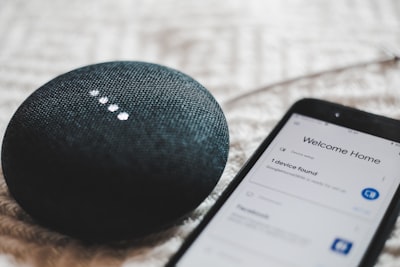
The smart speaker ecosystem has undergone a peculiar transformation in recent years. What began as a promise of efficient home assistance and frictionless connectivity has become, for many users, an experience marked by planned obsolescence, loss of privacy and an almost absolute dependence on large providers. Google and Amazon, the two giants that dominate this market, have been worsening their proposals: updates eliminate functions, assistants increasingly listen to more announcements than commands, and integration with third parties becomes a closed garden. But all is not lost. There is an alternative trend that not only keeps the original essence of these devices alive, but also enhances it: open source software applied to intelligent audio.
When we talk about open source speakers, we are referring to platforms such as Mycroft, Rhasspy or Snowboy, which allow us to build voice assistants that are completely controllable by the user. Unlike commercial products, these systems don't send your conversations to remote servers without your consent, insert ads, or change their usage rules overnight. All code is auditable, modifiable and deployable on own hardware. This represents a paradigm shift: the user ceases to be the product to become the real owner of the device. And in a world where cybersecurity and data sovereignty are increasingly critical, this alternative takes on an indelible strategic value.
Google and Amazon's business model relies on massive data collection to fuel their advertising and cross-selling engines. That's why its speakers are designed to always listen, even when they shouldn't. The open source alternative, on the other hand, prioritizes privacy by design: voice recognition processes can be executed locally using hardware such as a Raspberry Pi, or supported by self-managed cloud services that guarantee that no data goes out without encryption or authorization. Not only does this architecture protect the user, but it opens the door to deep enterprise integrations that tech giants will never offer without tying to their platforms.
This is precisely where companies like Q2BSTUDIO find fertile ground for innovation. It's not just about making a better speaker, it's about designing voice ecosystems that are tailored to the specific needs of each organization. With our development team, we help create custom software that turns any device into a corporate assistant: capable of managing inventories, responding to customer queries, controlling industrial equipment or facilitating accessibility in public spaces. All this on open source pillars, avoiding the locks of traditional providers.
The potential of smart speakers goes far beyond playing music or reading the weather. In a business context, these devices can act as natural interfaces for AI systems. Imagine a warehouse where operators give voice instructions to the management system, or a boardroom where an assistant generates real-time reports from conversations. These capabilities are already made possible by AI agents that process natural language and integrate with corporate knowledge bases. And when combined with AWS and Azure cloud service platforms, the result is a scalable, secure, and manageable infrastructure from anywhere.
The key is not to depend on a generic assistant, but to build your own. Q2BSTUDIO has extensive experience in developing AI for enterprises, designing voice solutions that understand the particular context of each business. For example, an open source speaker installed in a clinic can remember appointments, manage prescriptions, and alert on emergencies, all without sending sensitive data to external servers. This is a growing demand in regulated sectors such as health or finance, where cybersecurity is not optional but a legal requirement.
Another differential aspect of the open source alternative is the possibility of integrating business intelligence systems. While commercial speakers offer only superficial information cards, a corporate assistant can query databases in real time and return key metrics via voice. With Power BI as a backend, for example, a manager could ask about sales for the last quarter and receive a spoken summary with the most relevant trends. This synergy between voice and data makes the loudspeaker an interactive business intelligence service tool, much more natural than any dashboard.
The fragmentation reported by consumers on streaming services or Google search is reflected in smart speakers. Each manufacturer imposes its own ecosystem, its subscriptions and its limitations. Faced with this, the open source community has developed open standards such as Hermes (for local recognition) or wake word techniques that work offline. This allows any developer to build their own assistant without paying for licenses or relying on third parties. And when it comes to bespoke apps, the margin for personalisation is absolute: from language and accents to emotional responses and safety protocols.
However, the path to maturity of these systems requires investment and specialization. It's not enough to just download a GitHub repository and expect it to work in a productive environment. You need to design your network architecture, manage latency, train your own language models, and ensure high availability. This is where Q2BSTUDIO offers its differential value: we accompany companies throughout the project life cycle, from initial consulting to deployment in production, including integration with legacy systems and cloud cost optimization. Our multidisciplinary teams combine expertise in digital audio, machine learning, and cybersecurity to deliver robust and maintainable solutions.
A recent case study illustrates this approach well. We worked with a hotel chain that wanted to offer its guests a voice assistant to order room service, find out about spa hours or control the climate control. The most affordable business solution involved sharing data with the speaker provider, which clashed with their privacy policy. We chose to develop custom software on an open source basis, deploying recognition services on AWS and Azure instances. The result was a multilingual assistant that not only respected privacy, but was also updated without additional licensing costs. In addition, the aggregated data fed into a Power BI dashboard that helped management identify usage patterns and improve the customer experience.
Beyond the hotel sector, applications are multiplying. In industrial environments, open source loudspeakers can act as voice interfaces for machinery, reducing the need for touchscreens in dirty or hard-to-reach environments. In logistics, they allow you to confirm hands-free deliveries while handling packages. In offices, they serve as smart switchboards that direct calls or schedule meetings. Even at home, DIY enthusiasts have gotten assistants capable of controlling lights, blinds, and irrigation systems without sending a single piece of data to Google or Amazon's servers.
The trend is clear: dissatisfaction with tech giants is driving a shift towards open solutions. More and more businesses and power users are wondering why they should give up control of their digital environment in exchange for basic features. The answer lies in the open source movement, which not only offers a functional alternative, but also restores the freedom to innovate. And that freedom, channeled through technology partners such as Q2BSTUDIO, translates into products and services that truly adapt to the needs of each customer, without impositions or arbitrary changes.
The future of smart speakers isn't written by Google or Amazon. The open source community, with the support of committed development companies, is charting a path where quality, privacy, and personalization are the pillars. If you're considering making the leap to a corporate voice assistant or just want to stop being the product in your own home, the door is open. You just need the right technology and the support of a team that understands both the technical and strategic parts. At Q2BSTUDIO we are ready to help you build that voice of your own, connected to your systems, secure and future-proof.