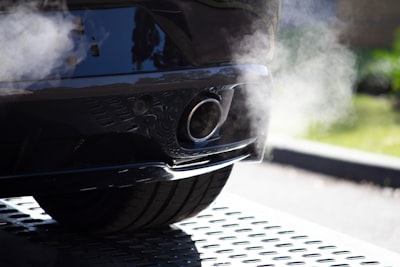
Living in one of the most polluted cities in the United States means facing everyday challenges that go far beyond visual discomfort. The persistent mist, loaded with fine particles from forest fires or urban activity itself, not only affects visibility, but also seriously compromises respiratory health. In this context, protecting the air inside the car's cabin becomes a technical priority that combines sensors, advanced filtration and, increasingly, artificial intelligence solutions to anticipate and manage air quality in real time. This article explores how technology is transforming the driving experience in harsh environments, and how companies like Q2BSTUDIO offer key tools to develop intelligent systems that respond to this need.
When the city wakes up shrouded in a thick fog, the first instinct is to close the windows and activate the recirculation of the air conditioning. However, that measure alone is insufficient. Standard cabin filters retain large particles, but the most dangerous particles (PM2.5 and PM1) pass through easily. To combat them, a multi-layer system is necessary: activated carbon pre-filters, medical-grade HEPA filters and, above all, constant monitoring of the indoor air. This is where custom software development comes in to integrate IoT sensors, prediction algorithms, and custom dashboards. A mobile app that alerts you when the filter needs to be changed or automatically adjusts ventilation based on external pollution levels is no longer science fiction, but a reality that can be implemented with the right platforms.
The key is in the data connection. Many modern vehicles already include air quality sensors, but the information usually remains in the car's control unit unexploded. Using AWS and Azure cloud services, it is possible to collect this data in real time, process it and offer personalized recommendations to the driver. For example, if the haze worsens in a particular area, the system may suggest an alternative route or intensify filtration before reaching the contaminated area. This anticipation capability is based on artificial intelligence models trained on thousands of historical records and weather data. In addition, cybersecurity becomes critical: any connected device must be protected against vulnerabilities that could expose the user's location or habits. Pentesting audits and IT security solutions are an indispensable part of the ecosystem.
Beyond the individual car, a vision of a smart city emerges where vehicles act as mobile monitoring nodes. Taxi, delivery or utility fleets can be equipped with low-cost sensors that send data to a central platform. With business intelligence services tools such as Power BI, city managers visualize pollution heat maps and make informed decisions about traffic restrictions or health alerts. This approach requires a robust backend and bespoke applications that integrate multiple data sources. Q2BSTUDIO, with its expertise in cross-platform software development, offers precisely such solutions: from the creation of interactive dashboards to the implementation of AI agents that automate responses (e.g., automatically closing a building's ventilation dampers when outdoor pollution exceeds a threshold).
The protection of the air in the car is not limited to passive filtration. AI agents can learn the user's driving patterns and predict when they are most likely to encounter clean or polluted air. Combined with real-time traffic and air quality data, these systems are able to suggest the best time to leave or the route with the least exposure. They can even coordinate the operation of the air conditioner with the opening of windows to renew the air when the outdoor quality is good. All of this is achieved through a bespoke software ecosystem that orchestrates sensors, actuators, and cloud services. The company has Q2BSTUDIO developed similar projects for transport fleets and private users, demonstrating that artificial intelligence for companies is not a luxury, but an accessible tool to improve quality of life.
From a technical point of view, the challenge lies in interoperability. Automakers use proprietary protocols, but with open platforms like AWS IoT Core or Azure IoT Hub, it's possible to connect any modern vehicle. Once the data is centralized, machine learning algorithms are applied to detect anomalies (such as a clogged filter or a faulty sensor) and generate preventive alerts. In addition, integration with navigation systems allows the driver to be offered a 'clean air index' for each route. This index is calculated by combining the quality of the outdoor air, the efficiency of the vehicle's filtration system and the estimated travel time. For this information to be useful, it must be clearly presented in a user interface designed with usability and accessibility principles in mind. This is where the design of custom applications comes into play, which Q2BSTUDIO approached with agile methodologies and iterative prototyping.
Cybersecurity, as mentioned, is not a complement but a pillar. A system that controls ventilation and filtration can be manipulated to create hazardous conditions if it is not properly protected. Therefore, any software development for this area must include penetration testing and comply with standards such as ISO 21434 for connected vehicles. Q2BSTUDIO offers specialized cybersecurity and pentesting services in the automotive sector, ensuring that user data and system integrity are safe. In addition, identity and access management is crucial when multiple drivers share the same vehicle (fleets). Solutions such as Azure Active Directory or AWS IAM allow you to control who can modify air conditioning settings or access air quality histories.
In the business world, air protection in fleet vehicles can translate into significant savings. Fewer respiratory illnesses among drivers, less wear and tear on HVAC systems due to smarter use, and compliance with increasingly stringent environmental regulations. Business intelligence services tools (Power BI, Tableau) allow managers to measure the return on investment of these technologies. For example, a delivery company that equips its vans with PM2.5 sensors and high-efficiency filters can correlate indoor air quality with driver productivity. If it is detected that on routes with high pollution the performance is low, the routes can be redesigned or additional purifiers can be installed. All of this is supported by a data backend managed by AWS and Azure cloud services that scale with demand.
In parallel, artificial intelligence is making its way into the prediction of air quality at the macro level. AI models trained on satellite data, weather stations, and traffic patterns can anticipate haze episodes hours in advance. This information, integrated into the vehicle's applications, allows the driver to prepare: activate the maximum filtration mode, close the windows before the pollution cloud arrives, or even reschedule the trip. To do this, AI is required for companies that offer predictive models and APIs that are easy to integrate. Q2BSTUDIO develops custom AI agents that connect with the car's on-board systems through standard protocols such as MQTT or HTTP/2, ensuring low latency and high reliability.
Another relevant aspect is the user experience. Living in the foggiest city means that people are used to checking air quality apps before leaving home. Bringing that same information to the car's dashboard, with a clean interface that doesn't distract the driver, is a design challenge. Today's infotainment screens allow for custom widgets to be overlayed, such as an indoor/outdoor AQI indicator, ventilation recommendations, and an auto-purify button. Behind that interface, there is custom software that manages communication with sensors (CO2, particles, volatile organic compounds), data history, and automation rules. Q2BSTUDIO has implemented similar solutions for automotive customers, combining frontend development with scalable backend in the cloud.
For those looking to protect the air in their car without changing vehicles, there are aftermarket kits that include sensors, filters, and a control module with 4G connectivity. These devices connect to an app that, through cloud services, offers recommendations in real time. The trend is towards personalization: each driver has a different sensitivity profile, and the system must learn this. Here AI agents play a key role, adjusting fan speed, recirculation, and purifier power according to the user's preferences and reaction to changes in temperature or noise. All of this is managed through bespoke applications that integrate the Internet of Things with artificial intelligence.
In short, living in a city with high levels of air pollution forces us to rethink the vehicle's air conditioning as an active and connected system. Current technology makes it possible to go beyond passive filters, incorporating sensors, cloud computing, artificial intelligence and cybersecurity to create an ecosystem that protects the health of occupants. Companies like Q2BSTUDIO, with their knowledge in cross-platform software development, cloud service integration and AI-based systems, offer the necessary tools for manufacturers, fleets and end users to implement these solutions efficiently and safely. The next time the haze blankets the city, you'll not just close the windows: your car will know exactly when and how to do it.