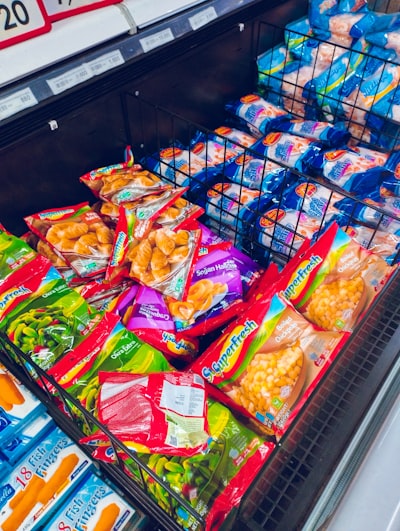
The food industry, especially the frozen industry, depends on highly synchronized supply chains and real-time inventory management systems. Any technological interruption can stop production, block distribution and generate millions in losses. Recently, the Japanese giant Nichirei, one of the largest processors and distributors of frozen foods in the world, suffered a cyberattack that forced its systems to be disconnected on July 13, temporarily paralyzing its operations. Although the company has begun to gradually restore its services, the incident exposes the fragility of digital infrastructure in a critical sector and the urgent need to adopt robust cybersecurity strategies, as well as to have tailored applications that integrate protection by design.
The attack on Nichirei is not an isolated case. In recent years, businesses of all sizes, from local producers to multinational corporations, have been targeted by ransomware, data breaches, and denial-of-service attacks. The food industry, with its tight margins and just-in-time processes, is particularly vulnerable. When a warehouse management system stops working, trucks can't load, orders pile up, and fresh or frozen product spoils. In Nichirei's case, the preemptive shutdown of its systems was a containment measure, but it delayed the resumption of logistics and production. The company has not yet revealed the exact nature of the cyberattack, but experts suggest that it could be ransomware or an attack aimed at compromising the cold chain.
This type of incident highlights the importance of not only reacting, but anticipating. Businesses need cybersecurity solutions that include vulnerability scanning, penetration testing, and incident response plans. But they also require a comprehensive approach that spans everything from software architecture to staff training. This is where custom software development plays a fundamental role. A system developed specifically for a company's needs can incorporate tighter security controls, network segmentation, and early detection mechanisms that standard systems do not offer. Q2BSTUDIO, as a software and technology development company, understands that security is not an add-on, but a pillar of the development lifecycle. That's why, when building custom applications, DevSecOps practices, encryption of data at rest and in transit, and multi-factor authentication are integrated from the design phase.
Beyond safety, the Nichirei outage also highlights the need for operational resilience. Companies must have business continuity plans in place that include redundant infrastructure, offline backups, and the ability to migrate workloads to the cloud quickly. AWS and Azure cloud services offer scalability and disaster recovery options that can minimize downtime. For example, if a company has its critical systems hosted on AWS with periodic snapshots and cross-region replication, an attack affecting a data center will not paralyze the entire operation. Q2BSTUDIO helps organizations design cloud-native architectures that ensure high availability, combining AWS and Azure cloud services with automated backup policies and continuous monitoring.
Another key aspect is visibility into the data. During a cyberattack, a lack of real-time information on the status of production and logistics can exacerbate the crisis. Business intelligence tools, such as Power BI, allow you to consolidate data from multiple sources and generate dashboards that alert on anomalies. In a scenario like Nichirei's, a dashboard showing systems performance, inventory level, and lead times could have helped managers make more informed decisions during the outage. In addition, by integrating Power BI with IoT sensor data sources in cold rooms, the cold chain can be monitored and deviations that could indicate a cyberattack can be detected. The business intelligence services offered by Q2BSTUDIO allow companies to convert raw data into actionable information, facilitating the early detection of incidents and the optimization of processes.
Artificial intelligence is also revolutionizing cybersecurity. AI agents can analyze network traffic patterns, identify suspicious behavior, and autonomously respond to threats. For example, an AI-based system could have detected anomalous activity on Nichirei's systems before the attack materialized, allowing for a controlled disconnect. AI solutions for enterprises are increasingly within reach of medium and large companies, and their implementation does not have to be complex. Q2BSTUDIO develops custom machine learning models that adapt to each customer's specific workflows, helping to predict failures, optimize logistics routes, and strengthen perimeter security. The combination of AI agents with cloud platforms ensures a fast and scalable response.
The case of Nichirei serves as a reminder that digital transformation brings new risks, but it also offers tools to mitigate them. In an environment where cyberattacks are becoming more sophisticated, Japanese and global companies must invest in technologies that not only protect, but also add value to the business. Developing custom applications with a focus on cybersecurity, adopting AWS and Azure cloud services with redundancy, and implementing business intelligence services are essential steps. But in addition, artificial intelligence and AI agents can automate detection and response, freeing up IT teams for strategic tasks.
From a business perspective, operational continuity is not just a technical issue, but one of reputation and trust. Nichirei's customers, which include large supermarket chains and restaurants, hope that the supply of frozen foods will not stop. A prolonged outage can damage the relationship with distributors and open the door to competition. That's why companies should look at cybersecurity as an investment, not an expense. Deploying custom software with secure and resilient architectures is one of the best ways to protect your business. Q2BSTUDIO works closely with its customers to analyse their risks, design customized solutions and ensure that no matter what, the operation can continue.
In conclusion, the cyberattack on Nichirei is a symptom of a global problem. The food industry, like other critical sectors, needs to take a proactive approach to cybersecurity, combining technology, processes, and people. Tailored application solutions, AWS and Azure cloud services, Power BI, artificial intelligence, and AI agents are part of an ecosystem that can prevent, detect, and respond to threats. Companies that act now will not only avoid costly disruptions, but gain a competitive advantage in an increasingly digitized marketplace. Technology is there to serve the business, and with the right allies, such as Q2BSTUDIO, any organization can build a safer and more efficient future.