
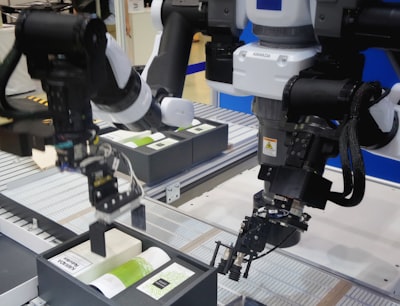
In the world of robotics, the ability to generalize manipulation policies has advanced significantly thanks to training with large diverse data sets. However, one of the biggest challenges remains the rigorous evaluation of these systems in real-world environments. The combinatorial complexity of factors such as object position, camera angles, or lighting conditions makes comprehensive validation unfeasible. Traditional methods, based on random testing or fixed sets of scenarios, often overlook critical failure modes, creating a false sense of readiness for deployment. Faced with this problem, an innovative approach emerges: active evaluation.
Active evaluation treats the validation process as a problem of sequential experimental design. Instead of trying all possible combinations, a surrogate probabilistic model is employed that learns the relationship between variable factors and robot performance. From this model, evaluation configurations that maximize information gain are adaptively selected. This makes it possible to characterize the behavior of the system under unseen conditions and, more importantly, to identify failure-prone regions with a fraction of the tests that would require a random test. This paradigm not only saves time and resources, but offers a much more realistic view of the robustness of the system.
To understand its impact, imagine a robotic policy designed for grabbing and placing tasks in warehouses. Variables that affect success include object orientation, texture, lighting, and the position of the robotic arm. With active evaluation, an engineer can run only 60% of the tests they would do with a random design and yet get a detailed map of failure zones. This is especially valuable in industrial environments where every actual test involves machine time, wear and tear and risk to the equipment.
The application of this approach goes beyond robotics. In software development, for example, custom application testing faces a similar problem: the combinatorial explosion of configurations, operating systems, and hardware versions. Adopting an active evaluation strategy, supported by artificial intelligence models, allows prioritizing the most informative scenarios. Companies like Q2BSTUDIO integrate these philosophies into their quality assurance methodologies. By developing custom software, the test cycle is optimized by reducing the necessary tests by up to 40%, without sacrificing risk coverage.
In the field of cybersecurity, active assessment also finds a natural niche. An intrusion detection system must be validated against a huge space of attacks and anomalous traffic. Instead of simulating millions of vectors, a model can be used that identifies the most critical combinations, saving resources and speeding up certification. This is aligned with the services offered by many technology consultancies, including AI solutions for enterprises that enable security teams to make data-driven decisions.
Another important dimension is integration with the cloud. Mass testing often requires scalable infrastructure. This is where AWS and Azure cloud services come in, providing elastic environments for launching parallel experiments. An active evaluation pipeline can run on ephemeral instances, reducing costs and enabling rapid iterations. Companies that adopt this combination – AI + cloud models – achieve results that would be impossible with on-premise data centers.
The concept of AI agents also benefits from this methodology. Autonomous agents, whether physical robots or virtual assistants, need to learn from their interaction with the environment. Active evaluation not only measures performance, but can guide the reinforcement learning process, selecting the scenarios that provide the most information to improve policy. It is a symbiosis between evaluation and training.
From a business point of view, efficiency in validation translates into lower development costs and faster time-to-market. Companies that invest in business intelligence services such as Power BI can visualize the results of active assessments interactively, detecting failure patterns at a glance. Dashboards allow managers to understand the maturity of the system without the need to dive into technical data.
In short, the active evaluation of real factors represents a qualitative leap in how we validate complex systems. It is not only applicable to robotics, but to any domain where the test space is combinatorial and resources are limited. The combination of probabilistic models, adaptive experimentation, and the right infrastructure—supported by specialists like Q2BSTUDIO—enables organizations to deploy technology with confidence. Whether developing custom applications, strengthening cybersecurity or implementing AI agents, this philosophy of intelligent evaluation points the way to more robust and reliable systems.



