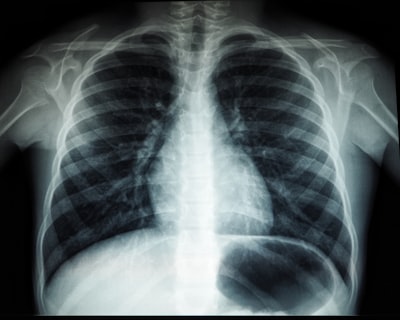
Artificial intelligence is transforming diagnostic imaging, and one of the most promising fields is the interpretation of chest X-rays (CXRs). Traditionally, deep learning models have focused on specific tasks such as detecting nodules or classifying pneumonia, but their ability to adapt to new clinical scenarios and complex reasoning is still limited. In this context, agents based on large language models (LLMs) emerge, which integrate multiple tools, planning and collaboration between virtual experts. CXRAgent is an example of this new generation of systems: a multi-stage agent orchestrated by a central director who coordinates tool invocation, diagnostic planning, and collaborative decision-making. Its architecture includes a visual evidence-based validator (VSD) that verifies the reliability of each output, and a team of experts who interact dynamically depending on the task. This allows diagnostic conclusions to be drawn that are supported by concrete evidence, which is essential in clinical settings where credibility is critical.
From a technical perspective, CXRAgent represents a significant advancement in integrating AI agents into medical workflows. Its modular design allows components to be replaced or updated without affecting the rest of the system, making it easier to adapt to new requirements. This flexibility is especially relevant for hospitals and diagnostic centers that need bespoke applications that fit into their local protocols and databases. In this sense, companies such as Q2BSTUDIO are working on the development of custom software that incorporates artificial intelligence modules, whether for image analysis, natural language processing or process automation. CXRAgent's capabilities can also be extended through integration with AWS and Azure cloud services, allowing you to scale the processing of large volumes of X-rays and ensure availability in distributed environments.
The cybersecurity challenge cannot be overlooked when handling healthcare data. Deploying agents like CXRAgent requires securing both infrastructure and cross-tool communications. Q2BSTUDIO offers cybersecurity solutions adapted to cloud environments, ensuring that patient data complies with regulations such as GDPR or HIPAA. In addition, the performance analytics of these agents can benefit from business intelligence services such as Power BI, which allow you to visualize metrics of diagnostic accuracy, response times and usage patterns. All of this contributes to a safer and more efficient adoption of AI for businesses in the healthcare sector.
CXRAgent's multi-stage approach also opens the door to future applications in other areas of medicine, such as MRI or CT scanning. The ability to combine sequential reasoning with collaboration between specialized agents is a replicable model for any task that requires multimodal analysis and evidence-based decision-making. At Q2BSTUDIO we are committed to this type of modular and adaptable architectures, offering our customers tailor-made applications that integrate the latest innovations in artificial intelligence, cloud computing and security. If your organization is looking to implement AI solutions for diagnostic imaging or any other critical process, we invite you to learn more about our artificial intelligence services for companies and how we can help you build the future of digital health.