
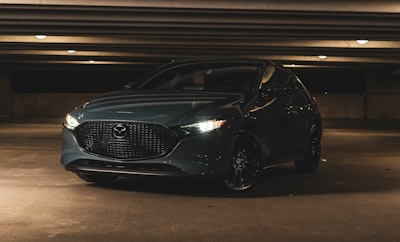
The three-row SUV segment has undergone a remarkable transformation in recent years. Brands traditionally focused on practicality and family space are now competing to offer driving experiences that were previously exclusive to premium manufacturers. Mazda, with its CX-90, has taken a bold step by attempting to merge accessible luxury with driving dynamics that many critics directly compare to BMW's. This commitment, however, is not without commitments and challenges that deserve a detailed analysis.
From the first glance, the CX-90 imposes presence. The flowing lines and prominent grille reflect the Kodo design language, but with a maturity that seeks to compete on a higher echelon. The interior is where the Japanese brand has made its greatest qualitative leap: soft-touch materials, genuine wood details and a minimalist layout that evokes the saloons of German sedans. However, when you look at it with a magnifying glass, you notice small cost savings, such as hard plastics in less visible areas or the central display which, while sharp, lacks the intuitive touch integration offered by systems such as BMW's iDrive. Here's the first catch: the infotainment interface relies too heavily on rotary control, a system that, while accurate, feels outdated in an era where users expect immediate tactile feedback and seamless connectivity.
In the dynamic section, the CX-90 pleasantly surprises. The all-wheel-drive platform with option to all-wheel-drive, combined with the turbocharged inline six-cylinder engine, offers linear power delivery and unusual agility for a vehicle of its size. The steering is precise, the body roll is contained and the overall feel is that of a car that enjoys on the back road. Mazda's engineers have struck an almost BMW balance, but with one key difference: the powertrain, while smooth, lacks the instant punch of competing diesel or plug-in hybrid engines. The eight-speed automatic transmission, meanwhile, prioritises efficiency over sportiness in normal mode, leaving the driver craving a more aggressive response when putting the pedal to the metal.
The downsides don't end there. The third row of seats, although usable, is reserved for children or short journeys; in a market where the Kia Telluride or Hyundai Palisade offer real space for adults, the CX-90 is halfway there. In addition, fuel consumption, despite Skyactiv technology, is not in its class, and the absence of a pure electric option limits its appeal to corporate fleets or environmentally conscious buyers. These defects do not negate the virtues of the vehicle, but they do prevent it from dethroning established leaders.
Behind these comparisons lies a technological reality that transcends the automotive world. The software industry plays an increasingly critical role in defining user experience. Infotainment systems, autonomous driving, and connectivity require complex developments that go beyond hardware. In this context, having technology partners capable of offering custom applications and custom software becomes a competitive advantage. Companies such as Q2BSTUDIO, which specialise in software development, can help manufacturers and dealers customise interfaces, integrate artificial intelligence services for virtual assistants or improve the cybersecurity of connected vehicles. For example, a dealership that wants to optimize the sale of this model could implement a business intelligence services system with Power BI to analyze customer preference patterns, or migrate its platforms to AWS and Azure cloud services to ensure scalability and security in data management.
AI for business is no longer a luxury, but a necessity. AI agents can automate customer service, recommend custom CX-90 configurations, and even predict maintenance needs. Q2BSTUDIO has developed solutions in this area that allow automakers to integrate intelligent capabilities without having to build huge development teams. The synergy between Mazda's hardware and cutting-edge software could bridge the gap that separates the CX-90 from its German rivals, especially in areas such as user interface, mobile connectivity or personalisation of the driving experience.
On the other hand, cybersecurity is another critical point. Modern vehicles are, in essence, computers on wheels. A connected SUV like the CX-90 must protect itself against cyberattacks that can compromise critical systems. Automotive cybersecurity is a field in which pentesting and auditing services Q2BSTUDIO offered, helping brands ensure that their systems are robust. If Mazda wanted to bolster customer confidence, it could collaborate with technology companies to implement advanced safety protocols, something that is already becoming standard in the industry.
In conclusion, the Mazda CX-90 represents a commendable effort to democratize luxury and sportiness. Its driving, design and value for money make it a very attractive option for those looking for something different from traditional proposals. However, the drawbacks in interior space, efficiency and digital technology reveal areas for improvement that the brand could address with the help of specialized technological allies. In a market where user experience is increasingly defined by software, companies like Q2BSTUDIO are ready to offer tailored applications, artificial intelligence and cloud services that raise the bar for products like the CX-90. Perhaps the next step for Mazda is not just to imitate BMW, but to surpass it through a deep technological integration that only bespoke software can provide. And for that, the path is mapped out: to combine mechanical excellence with digital intelligence, a binomial that, well executed, could redefine the concept of affordable luxury.
If you want to know how Q2BSTUDIO can help your company develop AI solutions for enterprises, AI agents, or migrate your systems to the cloud with AWS and Azure cloud services, feel free to explore our AI services or see how we apply Power BI to transform data into strategic decisions.

