
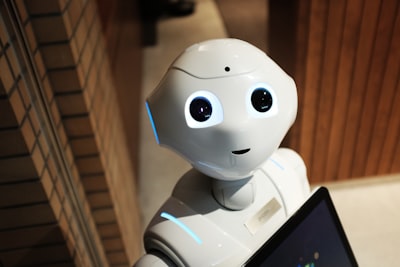
Autonomous navigation in indoor environments has been one of the biggest challenges in robotics and artificial intelligence for years. Traditional systems require an agent to traverse an unknown space to find a specific object, but each new attempt usually starts from scratch, without taking advantage of the experience gained in previous episodes. This episodic approach limits efficiency and adaptability in dynamic environments, such as warehouses, hospitals, or smart offices. Faced with this limitation, a revolutionary paradigm emerges: navigation between episodes, where the agent persistently preserves and reuses knowledge. In this context, hierarchical visual-topological memory (VTM) is presented as an innovative solution that organizes information into two levels: rooms and objects, allowing efficient retrieval through coarse to fine matching. This approach not only improves the success rate in locating objects, but significantly reduces the oscillation and blockages typical of non-memory agents.
The key to VTM lies in its ability to maintain a persistent map of the environment, updated with each new experience, without the need to retrain the model's parameters. Rather than relying on textual databases or fragile symbolic representations, visual-topological memory stores visual descriptors of rooms and objects, linked by spatial relationships. When the agent is faced with a new task, it performs a hierarchical search: first it identifies the most likely room using coarse visual matching, then it refines the search for the object within that room with fine matching. This process, guided by a conservative execution module that avoids erratic behavior, allows a much more natural and robust navigation, even in scenarios with changing lighting or rearranged furniture.
The relevance of this research transcends the academic field. For companies developing service robots, inspection drones or autonomous indoor vehicles, the ability to learn and reuse experience over time means substantial savings in operational and maintenance costs. However, implementing such an architecture in production environments requires a deep knowledge of artificial intelligence systems, integration with cloud platforms and custom software design that adapts to the specific needs of each client. This is where companies like Q2BSTUDIO offer differential value, combining their expertise in custom applications with cutting-edge technologies in AI and cloud services.
From a technical perspective, hierarchical visual-topological memory can be replicated in business systems by AI agents that manage inventories, monitor facilities, or assist operators in real time. For example, a logistics warehouse could implement an agent that, after several picking routes, builds a semantic map of aisles and racks, optimizing future trajectories without human intervention. This type of solution directly benefits from Q2BSTUDIO's enterprise AI , where modular and scalable architectures capable of processing visual data and decisions in real-time are designed. In addition, integration with AWS and Azure cloud services ensures memory persistence and availability across multiple sessions, while cybersecurity measures protect sensitive information in the environment.
Another crucial aspect is performance analytics. To evaluate the effectiveness of a navigation system between episodes, it is necessary to collect metrics such as success rate, execution time, and number of collisions. This data, processed with business intelligence tools such as Power BI, allows managers to make informed decisions about workflow optimization. Q2BSTUDIO, through its business intelligence services, helps to visualize these indicators and detect patterns of continuous improvement. The combination of autonomous navigation with interactive dashboards opens the door to proactive resource management, reducing downtime and increasing productivity.
In the field of collaborative robotics, agents with persistent memory can interact with human workers in a safer and more predictable way. By keeping a map of obstacles and passageways, the robot anticipates movements and avoids conflicts. This behavior requires fine synchronization between on-premises sensors and cloud infrastructure, which must be supported by a robust cybersecurity architecture. Q2BSTUDIO's expertise in AWS and Azure cloud services ensures that transmitted data is encrypted and endpoints are managed with advanced security protocols. In addition, custom software development allows you to customize navigation logic for specific environments, such as operating rooms or large shopping malls.
A specific use case would be the implementation of a guidance system for the visually impaired in shopping centres. The agent, equipped with a camera and a VTM module, would learn the layout of shops, elevators, and emergency exits after a few initial walks. From that point on, it could provide accurate, up-to-date instructions in real-time, without the need for external infrastructure. To develop such a solution, it is imperative to have a team that is proficient in both computer vision and software engineering. Q2BSTUDIO brings together this multidisciplinary profile, offering consulting and development services in artificial intelligence, custom applications and cloud integration.
The trend toward cross-episode navigation is also driving the evolution of AI agents in enterprise environments. Instead of relying on predefined maps or manual labels, systems learn autonomously and generalize to new configurations. This drastically reduces commissioning and maintenance costs. However, the real challenge is in managing uncertainty: when to rely on memory and when to prioritize current observations. The VTM solution uses a control gate that only activates memory when there is sufficient visual matching, minimizing false positives. A similar approach can be applied in business decision processes, where a recommendation system must balance historical data with recent information. Q2BSTUDIO implements this type of logic in its business intelligence solutions, combining Power BI with predictive models based on machine learning.
From a strategic planning perspective, the adoption of technologies such as VTM-Nav represents a quantum leap in intelligent automation. Companies that invest in agents with persistent memory not only optimize their operations, but build a data-driven competitive advantage. However, for this transition to be successful, it is necessary to have a technology partner who understands both theory and practice. Q2BSTUDIO, with its track record in custom software development and cloud services, is positioned as the ideal ally for companies that want to explore the potential of autonomous AI agents. In addition, its cybersecurity offering ensures that stored and transmitted information is protected from external threats.
In short, navigating between episodes with visual-topological hierarchical memory is not just an academic breakthrough, but a practical tool that can transform the way organizations manage spaces and resources. From logistics warehouses to hospitals to smart offices, the ability to reuse accumulated expertise reduces errors, speeds up processes, and improves security. To implement these solutions effectively, it is essential to rely on experts such as Q2BSTUDIO, who offer comprehensive services in artificial intelligence, custom applications, cloud and business intelligence. The convergence of these disciplines is setting the course for the next generation of autonomous systems, and companies that embrace it will be better prepared for the challenges of the future.
.jpg)

.jpg)
.jpg)