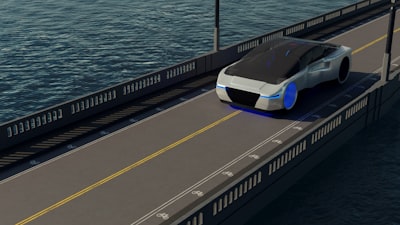
The mobility of the future is written with algorithms, high-resolution sensors, and hyper-realistic digital environments that replicate the complexity of the physical world. Autonomous driving, far from being a distant promise, is already in an industrial maturity phase where the precision of perception systems, the robustness of control policies, and the ability to generalize to unseen scenarios define the pace of commercial adoption. However, training and validating these systems exclusively on real roads presents economic, road safety, and logistical scalability limitations that hinder innovation. This is where three-dimensional reconstruction of driving scenarios acquires an irreplaceable strategic role, enabling manufacturers, technology providers, and software developers to generate high-fidelity digital twins from multi-view logs captured by instrumented fleets with calibrated cameras and complementary sensors.
Historically, three-dimensional simulation platforms for autonomous vehicles relied on complex pipelines that required constant manual intervention, scene-specific tuning, and prohibitive rendering times for agile development cycles. These traditional methods, although functional in controlled environments, drastically slowed end-to-end validation processes and made each algorithmic iteration more expensive by requiring physical test fleets, safety drivers, and costly liability insurance. The industry urgently demanded a technological alternative capable of translating minutes of real driving into immediately navigable virtual worlds, without sacrificing photometric quality, geometric coherence of the reconstructed environment, or the ability to simulate variable atmospheric conditions.
In this evolutionary context, three-dimensional Gaussian Splatting emerges as a disruptive technology that redefines the paradigms of neural representation and computer graphics. Unlike previous approaches that modeled scenes through computationally dense implicit functions slow to optimize, Gaussian splatting represents space through differentiable primitives that capture detail, illumination, depth, and sky appearance with unprecedented efficiency. This approach not only accelerates rendering by orders of magnitude but also facilitates subsequent editing, explicit separation of static and dynamic elements, inclusion of cubemaps for ambient lighting, and native integration with closed-loop simulation engines, all of them critical components for the modern automotive industry.
The recent evolution toward feed-forward reconstruction models marks a decisive inflection point in the productivity of research teams. Instead of optimizing scene parameters for hours or even days for each new stretch of road, advanced neural reconstruction systems can infer a complete and simulable representation in a single forward pass, transforming short sequences from calibrated cameras into fully operational three-dimensional scenarios in a matter of seconds. This inference speed is not merely an academic advance; it is a tangible business asset that reduces research and development costs, shortens time-to-market for new embedded software versions, and allows organizations to iterate driving policies with a competitive agility that until very recently was unimaginable in the sector.
For companies in the mobility ecosystem, adopting these instant simulation capabilities requires a solid, scalable technological infrastructure adapted to their specific productive processes. It is not enough to have cutting-edge algorithms if the underlying software architecture does not scale horizontally, does not integrate with existing data ecosystems, or does not respond to regulatory requirements for functional safety and homologation standards. This is where the development of custom software becomes an essential strategic differentiator, as it allows designing customized simulation platforms that align exactly with business metrics, proprietary sensor formats, vehicular communication protocols, and internal workflows of each manufacturer, Tier-1 supplier, or commercial fleet operator.
Q2BSTUDIO operates precisely at this intersection between cutting-edge algorithmic innovation and robust business execution. As a company specialized in software development and technology, it accompanies organizations in the automotive, logistics, and intelligent transportation sectors in the definition, construction, and deployment of advanced digital environments that maximize the potential of 3D reconstruction. Its expertise ranges from designing cloud AWS/Azure architectures capable of storing, processing, and distributing petabytes of multi-view logs captured by camera rigs, to implementing rigorous cybersecurity layers that protect digital assets, trained models, and telemetry data against external attack vectors and unauthorized access. The comprehensive protection of these ecosystems is as relevant as the geometric precision of the virtual worlds they host, especially when managing critical transportation infrastructure scenarios and personal location data.
Artificial intelligence permeates every layer of this digital transformation and is fundamental to extracting value from virtual twins. Beyond mere geometric reconstruction of streets and objects, modern AI models are applied to precise semantic segmentation of dynamic elements such as pedestrians, cyclists, and other vehicles, to predicting the behaviors of road agents at complex intersections, and to proactively generating adversarial and edge-case scenarios for exhaustive training of safety policies. Organizations that integrate advanced AI capabilities into their simulation pipelines not only improve the fidelity and realism of their digital twins but also automate anomaly detection, virtual sensor calibration, and the generation of labeled synthetic data, freeing engineering teams for creative and higher strategic value tasks.
The business value of these virtual driving environments is exponentially multiplied when intelligently connected with advanced business analysis and data visualization capabilities. The logs generated during thousands of hours of simulation contain strategic information of enormous potential about energy efficiency of route planning algorithms, simulated congestion patterns, perception error rates under adverse weather conditions, and predictive fleet behaviors in incidents. Through BI/Power BI solutions, companies can transform these massive data volumes into intuitive executive dashboards that facilitate operational, R&D investment, and risk management decision-making. Visualizing algorithmic performance metrics alongside indicators such as cost per simulated kilometer or obstacle detection rate allows management to adjust budgets, reallocate resources, and prioritize development routes with tangible, quantifiable evidence.
Looking toward the technological horizon, AI agents represent the next evolutionary step in the intelligent automation of autonomous system validation. These agents, deployed and orchestrated within reconstructed three-dimensional environments, can autonomously execute thousands of varied test scenarios, systematically identify high-risk limit conditions, propose refined adjustments to control policies, and generate regulatory compliance reports without continuous human intervention. The synergy between high-fidelity virtual worlds and intelligent agents capable of learning and adapting completely redefines the concept of a software factory for mobility, where the quality, safety, and reliability of the final product are exhaustively verified in the digital domain long before any physical prototype touches real asphalt.
The widespread adoption of 3D Gaussian reconstruction platforms for the development and validation of autonomous driving is, in short, not merely a punctual technological update but a profound redefinition of the operational and competitive model of the entire mobility industry. Companies that decisively bet on integrating high-speed neural simulation, scalable cloud architectures, robust enterprise-level cybersecurity, advanced artificial intelligence, and sophisticated business analytics into their R&D and validation processes will undisputedly position themselves as leaders in the next decade of intelligent transportation. Having an experienced technology partner specialized in translating these disruptive capabilities into productive, secure, and scalable solutions is essential to successfully navigate the complexity of this transition and lead the market from responsible innovation.