
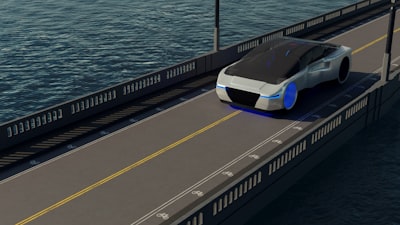
The transition toward fully autonomous mobility has ceased to be a distant promise and has become a technological and commercial race where every millisecond of processing and every pixel of fidelity counts. In this scenario, three-dimensional simulation environments have become the undisputed core of intelligent driving system development, as they allow end-to-end control policies to be validated without exposing real users to risky situations. For too long, the automotive industry and its technology partners relied on traditional graphics engines that, while visually appealing, demanded per-scene manual configuration, prolonged rendering times, and iterative adjustments that drastically slowed innovation cycles. The advent of neural reconstruction techniques has broken that paradigm, demonstrating that it is possible to generate photorealistic digital worlds directly from driving logs captured by real fleets. Within this revolution, feed-forward architectures constitute an inflection point by consolidating the complete creation of navigable scenes based on three-dimensional Gaussian Splatting into a single forward pass, eliminating the need for lengthy per-environment optimization processes.
From a business perspective, the difference between a system that requires specific adjustments for each new location and one capable of operating in real time is abysmal. Companies developing autonomous vehicles need to iterate thousands of critical scenarios —from adverse weather conditions such as snowstorms or dense fog, to unpredictable behaviors by pedestrians, cyclists, and other drivers, through complex intersections and improvised roadworks— without tolerating waits of hours between each reconstruction. The ability to transform a brief multi-camera log of just ten or twenty seconds into a fully functional three-dimensional world in a matter of seconds is not merely an academic achievement; it represents a direct competitive advantage that reduces research costs and shortens time-to-market. In this context, the integration of advanced AI agents within closed-loop simulation platforms acquires strategic relevance, because only through intelligent automation and autonomous decision-making is it possible to scale the validation of driving policies with the rigor and exhaustiveness demanded by a sector where the margin for error is practically nonexistent.
The technical design behind these solutions reveals architectural decisions of enormous depth. The explicit separation between static and dynamic layers within a Gaussian Splatting environment does not respond to a mere aesthetic whim, but to a deep functional necessity. Fixed elements of the urban landscape —roads, sidewalks, buildings, vertical and horizontal signage, street furniture— are represented by differentiated structures that allow their independent manipulation, while moving objects —vehicles, pedestrians, animals, vegetation susceptible to wind movement— have their own layers to facilitate subsequent editing, the insertion of new synthetic actors, and the application of specific photometric corrections for each camera sensor. This modularity is essential when seeking to accurately replicate changing lighting conditions throughout the day or simulate the visual wear of lenses. Likewise, native support for non-pinhole camera models decisively expands compatibility with the calibrated multi-camera rigs used by automotive manufacturers, eliminating optical distortions that previously compromised training data fidelity and guaranteeing millimetric geometric coherence between captured reality and the reconstructed digital world.
At Q2BSTUDIO we understand that technologies of such complexity do not unleash their true potential without a robust, scalable enterprise software layer adapted to each specific operational context. Our track record in designing and developing custom software allows us to build complete pipelines that ingest multi-view logs from heterogeneous fleets, process them in highly optimized cloud environments, and return simulable scenarios ready to be audited, versioned, and deployed in continuous integration environments. The transition from a real driving log to an explorable three-dimensional space in less than two seconds constitutes a notable algorithmic milestone, but its translation into business value requires sustaining it on cloud AWS/Azure infrastructures designed for high availability, fault tolerance, and massive parallel processing. Only through a well-designed cloud architecture is it possible to distribute computational load across multiple nodes, accelerate neural model inference, and ensure that engineering teams anywhere in the world simultaneously access the same simulation environments without critical latencies.
The intelligent management of the huge volumes of information generated by these platforms represents a parallel challenge of equal magnitude. Reconstruction quality metrics, perception errors detected during simulations, vehicle telemetry data, and algorithmic decision logs in closed loop constitute a strategic asset of the first order. Through the deployment of BI/Power BI solutions, organizations can transform this raw data into interactive dashboards that visualize performance trends over time, identify critical scenarios requiring priority attention, and facilitate evidence-based decision-making to prioritize improvements in control and route planning algorithms. Converting massive information into actionable knowledge is precisely the differential value provided by a technology consultancy specialized in digital transformation, capable of designing data architectures that feed both technical teams and executive management.
However, in an ecosystem where technical speed and precision usually capture attention, it is imperative not to lose sight of an equally determining variable: cybersecurity. When manipulating real commercial fleet logs, high-definition maps, neural models trained with sensitive information, and sensor calibration parameters, the attack surface expands exponentially. Any vulnerability in the data supply chain, model repositories, or remote access points to the simulation infrastructure can translate into severe operational risks, from intellectual property leakage to malicious manipulation of training scenarios. Therefore, in the development of platforms of this magnitude, it is essential to adopt end-to-end cybersecurity protocols, conduct periodic pentesting audits, implement zero-trust models, and apply robust encryption both in transit and at rest, thereby guaranteeing the integrity, confidentiality, and traceability of all involved digital assets.
The horizon of autonomous mobility is further enriched by the convergence between real-time 3D reconstruction and advances in generative artificial intelligence systems. Contemporary feed-forward models do not merely faithfully replicate the geometry of a captured scene, but learn deep representations about the statistical distribution of objects, ambient lighting conditions, material properties, and surface textures. This capability opens the door to the programmatic synthesis of hyperrealistic synthetic scenarios that effectively complement real datasets, drastically reducing dependence on millions of physically driven kilometers to train perception networks. For software development companies, this paradigm represents an extraordinary market opportunity: designing custom software modules that orchestrate automated synthetic data generation, execute automatic validation pipelines against partial ground truth, and integrate results with standard neural network training frameworks, all under industrial quality standards.
Native compatibility with closed-loop simulation platforms further elevates the operational value of these reconstructions. Engineering teams can evaluate end-to-end driving policies without ever leaving the digital environment, introducing controlled perturbations that would be inadmissible in the physical world. It is possible to simulate abrupt LiDAR or thermal camera sensor failures, evaluate system responses to real-time cyber intrusions, and measure vehicle behavior in limit situations —such as the sudden closure of a pedestrian or loss of grip on icy surfaces— that would be dangerous or impossible to replicate on open roads. The ability to close the loop between perception, planning, and actuation within a faithful Gaussian Splatting world marks a qualitative insurmountable difference from traditional simulators based on simplified polygonal meshes, whose lack of photometric realism limited learning transfer to the real world.
Adopting these technologies from a strategic perspective requires a holistic technology architecture that transcends the mere deployment of cutting-edge algorithms. It is not enough to have the most advanced reconstruction model if the organization lacks the proper channels to implement it, monitor it in production, and scale it as fleets grow and regulatory requirements evolve. Cloud AWS/Azure solutions provide the necessary computational and object storage scaffolding, but their configuration must be strictly aligned with internal data governance policies, sectoral privacy regulations, and business profitability objectives. In this sense, having an experienced technology partner like Q2BSTUDIO facilitates the convergence between algorithmic innovation and flawless operational execution, ensuring that every component of the technology stack —from raw video stream ingestion to final rendering, passing through data normalization and perimeter security— is finely optimized for performance, scalability, and resilience.
The future of autonomous driving is written, to a large extent, in the source code of its simulators and in the data architecture that supports them. The ability to transform minutes of real driving into explorable digital worlds in a matter of seconds completely redefines development timelines, validation standards, and functional safety expectations. Organizations that successfully integrate real-time 3D reconstruction, advanced analytics through BI/Power BI, elastic cloud infrastructures, and solid, demonstrable cybersecurity safeguards will undisputedly position themselves at the forefront of an industry that tolerates neither errors nor improvisation. At Q2BSTUDIO we accompany our clients at every stage of this transformative journey, translating technological complexity into tangible business solutions that accelerate the arrival of safer, more efficient, more sustainable, and more intelligent collective and individual transportation.


