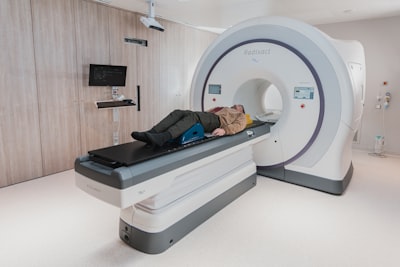
Medical imaging diagnosis is at an unprecedented technological crossroads. On one hand, radiology departments generate massive volumes of narrative reports capturing clinical nuances of enormous value; on the other, automated analysis systems still rely heavily on structured annotations or rigid anatomical term catalogs. This dissonance between the richness of natural language and the rigidity of traditional algorithms slows the adoption of truly intelligent workflows in hospitals and clinics worldwide. The need for robust bridges between clinical text and visual interpretation is not merely academic, but an urgent operational demand to improve diagnostic accuracy and reduce response times.
From a business perspective, the challenge lies not only in training more accurate segmentation models, but in designing technological ecosystems that adapt to the heterogeneous reality of healthcare centers. Each institution manages its own vocabulary, distinct capture protocols, and varying levels of digital maturity. Therefore, generic solutions often fall short when facing regional medical synonyms, institutional abbreviations, or descriptions of rare pathologies. In this scenario, developing custom software becomes a strategic differentiator. At Q2BSTUDIO, we address these challenges from a comprehensive technology consulting perspective, understanding that the medical software of the future must merge with clinical processes without friction or forced reengineering.
The logical evolution to close this gap lies in hybrid architectures capable of simultaneously processing medical images and their associated textual descriptions. Instead of resorting to fragile rule-based extractions or static organ dictionaries, the most advanced approaches bet on dynamic semantic repositories. These systems learn deep vector representations from large clinical corpora, establishing robust correspondences between linguistic terms and visual anatomical entities. Through contrastive learning techniques, each medical concept anchors in a latent space where synonyms, terminological variants, and diverse descriptive contexts coexist. The result is a model that interprets radiological language with the same flexibility as an experienced specialist, overcoming the limitations of classical systems.
A key component of these new platforms is extreme modularity. During inference, the free-form report transforms into a numerical signal that selectively activates specialized subsystems. This philosophy, close to Mixture-of-Experts architectures, allows each module to manage a specific anatomical or functional domain without interfering with the accumulated knowledge of others. The practical advantage is immense: hospitals can incorporate new specialties, organs, or study protocols without needing to retrain the entire system or alter previously consolidated experts. This functional isolation guarantees operational stability, a non-negotiable requirement in environments where a segmentation error can lead to serious clinical consequences.
In this environment, AI agents emerge as fundamental orchestration actors. One agent may handle the semantic normalization of the radiological report, validating terms and highlighting ambiguities before the segmentation process begins. Another agent supervises the quality of generated masks, comparing them with historical volumetric statistics or reference anatomical atlases. A third agent integrates with the patient's electronic record to contextualize findings. This multiplicity of intelligent actors, coordinated through automated workflows, elevates the reliability of the global system and reduces the cognitive load of healthcare staff. Building these ecosystems responds to the logic of enterprise custom software, where each component adjusts to governance, traceability, and performance rules defined by the client.
The scalability of these multimodal solutions inevitably depends on top-tier computational infrastructure. Training and deploying models that fuse computer vision and natural language processing demand high-performance clusters, object storage for massive datasets, and real-time inference capacity. Cloud AWS/Azure platforms provide the ideal scaffolding for these workloads, offering elastic computing services, managed containers, and operationalized machine learning pipelines. At Q2BSTUDIO we design cloud-native architectures that optimize costs through automatic scaling, ensuring that a regional hospital can access the same technological power as a major referral center without incurring unsustainable capital expenditures.
However, computational power cannot overshadow the importance of data protection. Radiological reports and diagnostic images constitute sensitive information subject to strict regulations such as GDPR in Europe or HIPAA in other jurisdictions. Cybersecurity must be inserted into the software lifecycle from its conception, not as a subsequent add-on. This implies robust encryption at rest and in transit, multi-factor authentication mechanisms, hospital network segmentation, and continuous access audits. Any language-guided segmentation solution must demonstrate complete traceability: who consulted which report, when a segmentation expert was activated, and what data was processed by each node of the system. Only then is it possible to generate the trust necessary for widespread clinical adoption.
Beyond algorithmic precision, the tangible value of these platforms manifests when structured results feed business intelligence systems. BI/Power BI tools allow hospital managers to transform segmentation metrics into operational insights: MRI occupancy times, radiologist efficiency, early detection of bottlenecks in emergency departments, or predictive planning of surgical resources. When a textual report becomes not only a segmentation mask but also a quantifiable data point, the hospital evolves toward an evidence-based management model. This synergy between medical AI and business analytics is precisely the terrain where cutting-edge technologies generate measurable return on investment.
As a software and technology development company, Q2BSTUDIO positions healthcare innovation at the center of its value proposition. We understand that the next generation of diagnostic systems will not be limited to detecting edges in a CT scan, but will comprehend the narrative context accompanying each image. The integration of medical vision models with deep clinical language understanding, deployed on secure infrastructures and governed by advanced analytics, represents the standard we aspire to establish alongside our healthcare clients. Exploring the potential of artificial intelligence applied to radiology is, today, an investment in care quality and institutional competitiveness. Organizations that bet on this technological convergence will be better prepared to face the demographic and clinical challenges of the coming decades.