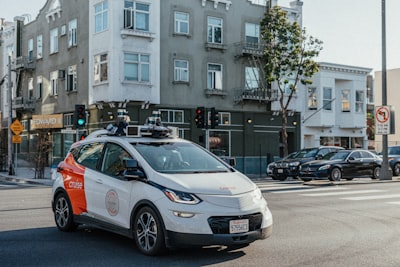
In the world of autonomous systems, the ability to perceive the environment in real time is a complex challenge that goes beyond simply processing images. The variability in scene complexity—from an empty highway to a crowded urban intersection—demands that the perception module adapt dynamically. Traditionally, perception strategies operate with a fixed frames per second (FPS) rate and a static allocation of models to hardware clusters. This leads to wasted energy in simple scenes while failing to meet performance requirements in complex ones, jeopardizing system safety and efficiency.
Addressing this limitation, TAPAS (Throughput-Adaptive Perception for Autonomous Systems) introduces a revolutionary approach: adapting the frame rate in real time based on scene complexity, and dynamically reassigning perception models to available resources. This article analyzes in depth how TAPAS uses reinforcement learning (RL) with a Reward Reasoning Model (RRM) and a GRU (Gated Recurrent Unit)-based agent to orchestrate perception tasks on mobile or edge platforms, maximizing performance without sacrificing energy efficiency.
The need for adaptive perception is especially critical in applications such as autonomous vehicles, inspection drones, or logistics robots. In these scenarios, performance requirements are not constant: a vehicle driving on an empty highway requires fewer updates than one maneuvering in a parking lot with pedestrians. However, current systems assume a fixed number of FPS, leading to over-provisioning—and thus unnecessary energy consumption—or dangerous under-provisioning. TAPAS solves this dilemma by integrating scene complexity awareness with dynamic model-to-cluster mapping.
The core of TAPAS is a reinforcement learning agent trained to decide, at each instant, which FPS rate to use and which perception model to assign to each computing unit. The agent receives as input scene features (extracted via computer vision techniques) and the current resource state, and produces a policy that maximizes a reward function balancing target throughput compliance and energy consumption. The RRM allows the agent to reason about the consequences of its decisions, learning from experience. The GRU architecture provides the ability to model temporal sequences, crucial for understanding scene evolution.
Experimental results on the KITTI dataset—a standard for autonomous driving perception—show that TAPAS maintains a throughput met rate between 93% and 100%, while reducing energy consumption by up to 76% compared to conventional strategies. Even on unseen scenarios, such as the nuScenes dataset, TAPAS achieves 97% throughput compliance with 64% energy savings over state-of-the-art (SOTA) approaches. These figures demonstrate the robustness and generalization capability of the method, even when the context changes drastically.
Beyond academic results, TAPAS paves the way for a new generation of smarter and more sustainable autonomous systems. The ability to adapt the perception workload in real time not only improves energy efficiency but also enables deployment on resource-constrained platforms, such as edge devices or embedded vehicle systems. For companies developing autonomous mobility, robotics, or applied artificial intelligence solutions, adopting an approach like TAPAS offers a competitive advantage.
In this context, partnering with a specialized technology provider is key to implementing these strategies in real environments. Custom software development allows adapting perception architectures to each client's specific needs, integrating modules for RL, computer vision, and resource management. At Q2BSTUDIO, as a software and technology development company, we have experience creating cross-platform applications that incorporate cutting-edge artificial intelligence, including autonomous AI agents and decision-making systems based on reinforcement learning.
Furthermore, deploying solutions like TAPAS requires a robust and flexible cloud infrastructure. Cloud services on AWS and Azure provide the scalability needed to train complex models and deploy agents in production, whether in the cloud or at the edge. Cybersecurity also plays a fundamental role: an autonomous system that communicates real-time perception data must ensure data integrity and confidentiality. At Q2BSTUDIO we integrate cybersecurity practices from design, protecting both data and AI models against adversarial attacks.
Another important pillar is data analytics. Autonomous systems generate huge volumes of telemetry and performance metrics. With Business Intelligence (BI) tools like Power BI, we can visualize the perception agent's behavior in real time, identify bottlenecks, and optimize decision policies. The combination of BI with artificial intelligence enables creating intelligent dashboards that facilitate business decision-making.
Finally, the trend toward autonomous AI agents—capable of planning, executing, and learning from their environment—is revolutionizing sectors such as logistics, precision agriculture, or industrial inspection. TAPAS represents a step forward in creating these agents, endowing them with the ability to self-manage their own performance. At Q2BSTUDIO we develop custom AI agents that integrate reinforcement learning, computer vision, and adaptive control, all packaged in custom applications that run efficiently on edge or cloud platforms.
In conclusion, throughput-adaptive perception is a promising field that is transforming how autonomous systems interact with the world. TAPAS proves that it is possible to achieve high compliance rates with minimal energy consumption, even under changing conditions. For companies seeking to implement these capabilities, having a technology partner like Q2BSTUDIO—specialized in software development, artificial intelligence, cloud, cybersecurity, and BI—is the key to turning innovation into real operational advantage.