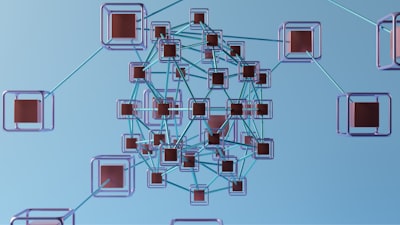
In the fast-paced world of graph machine learning, Graph Neural Networks (GNNs) have demonstrated extraordinary potential for modeling complex relationships in data such as social networks, molecular interactions, or technological infrastructures. However, one of the most persistent challenges is adaptation across heterogeneous domains: a model trained on chemical compound graphs does not generalize well to biological networks due to severe distribution shifts. Traditional approaches often focus on intra-domain patterns, contaminating invariant knowledge with domain-specific noise, leading to negative transfer and catastrophic forgetting. To address this, DIB-OD emerges as an innovative framework that preserves the invariant core through Decoupled Information Bottleneck and Online Distillation, combining orthogonal decomposition of representations with teacher-student distillation.
The key to DIB-OD lies in the explicit separation of representations into two orthogonal subspaces: an invariant one, capturing stable and transferable properties across domains, and a redundant one, absorbing idiosyncratic variations of each domain. To achieve this isolation, the Hilbert-Schmidt Independence Criterion (HSIC) is used as a measure of independence between subspaces, ensuring the invariant core remains uncontaminated by noise. Additionally, an online distillation mechanism is introduced where a teacher (trained on the source domain) guides the student (on the target domain) to retain only essential knowledge, avoiding catastrophic forgetting. A self-adaptive semantic regularizer dynamically adjusts the influence of labels based on predictive confidence, thus protecting the core during adaptation.
From a technical and business perspective, this advance has profound implications. Organizations handling heterogeneous relational data—from streaming platforms to pharmaceutical labs—need models that adapt without retraining from scratch. This is where expertise in custom software becomes crucial: implementing DIB-OD requires modular architecture, robust data pipelines, and the ability to integrate cutting-edge artificial intelligence components. At Q2BSTUDIO, as a software development and technology company, we offer personalized solutions that incorporate these algorithms to ensure your system not only learns but also transfers knowledge efficiently across environments.
The heterogeneous adaptation process greatly benefits from advanced artificial intelligence, but also requires solid infrastructure. Public clouds like AWS or Azure provide the scalability needed to train GNN models with large data volumes, while cybersecurity ensures that sensitive information (e.g., patient networks or financial transactions) remains protected during transfer. Therefore, at Q2BSTUDIO we combine cloud AWS/Azure, cybersecurity, and business intelligence (Power BI) to offer a complete ecosystem. Moreover, process automation through AI agents allows the model to dynamically adjust to new domains without manual intervention.
Imagine a concrete scenario: a biotech company developing drugs uses GNNs to predict molecular interactions. Their model trained on organic compounds must adapt to viral proteins. With DIB-OD, the invariant core (basic electronic properties) is preserved, while noise (solvents, lab conditions) is discarded. Implementing this requires custom application development that manages data flows, cloud orchestration, and result visualization. At Q2BSTUDIO we design pipelines integrating these components, from ingestion on AWS to dashboard generation in Power BI, allowing data scientists to focus on innovation.
Another relevant use case is cybersecurity in social networks. A fraud detection system trained on patterns of one platform may fail when applied to another with different topology. DIB-OD extracts invariant behavior (e.g., patterns of fraudulent accounts) and discards network-specific features. Here, cybersecurity and cloud play a dual role: on one hand, the infrastructure must be secure; on the other, the model itself must be robust against adversarial attacks. Our team at Q2BSTUDIO integrates pentesting techniques and real-time monitoring to ensure adaptation does not introduce vulnerabilities.
The DIB-OD methodology represents a qualitative leap in heterogeneous graph adaptation, but its success depends on careful implementation. The orthonormal decomposition, online distillation, and semantic regularizer require a fine balance of hyperparameters, something only achievable with experience in AI and software development. At Q2BSTUDIO we offer consulting and development services to help you apply these concepts to your specific domain, whether in biomedicine, finance, or social networks. Our approach combines technical excellence with a practical business vision, ensuring that R&D investment translates into real competitive advantages.
In conclusion, DIB-OD is not just an academic advancement; it is a practical tool for companies seeking to scale their graph models across domains without losing performance. Preserving the invariant core is now possible thanks to the combination of information bottleneck and distillation techniques. At Q2BSTUDIO we are ready to help you implement this and other cutting-edge algorithms, integrating custom applications, cloud, cybersecurity, and BI into a coherent solution. Contact us to discover how we can transform your relational data into transferable, robust knowledge.