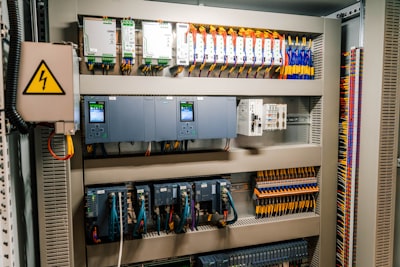
A new denial-of-service (DoS) vulnerability has been discovered in the Rockwell Automation 1718-AENTR and 1719-AENTR remote I/O adapters, specifically in firmware version 3.011. Identified as CVE-2026-9140, this flaw allows an attacker to overload the device through a UDP unicast packet storm, disrupting communication and forcing a physical power cycle to restore operation. With a CVSS v3.1 score of 7.5 (HIGH) and v4.0 of 8.7 (HIGH), the risk is significant for critical infrastructure sectors such as manufacturing, where these devices are essential for industrial process control.
The issue stems from improper resource management (CWE-770: Allocation of Resources Without Limits or Throttling). When receiving an intense flow of UDP datagrams directed at the device\'s unicast address, the system exhausts its processing capabilities, blocking all other legitimate communication. This type of attack is particularly dangerous in OT (operational technology) environments where availability is paramount, as a simple network attack can render an entire plant inoperable until an operator performs a manual power cycle.
Rockwell Automation has recommended upgrading to firmware version 3.012 or later of the 1718/1719 Ex I/O product. For those unable to apply the patch immediately, the company suggests following its standard security practices, including isolating control networks and using firewalls. However, the best defense is a comprehensive industrial cybersecurity strategy that combines updates, continuous monitoring, and advanced technology solutions.
In this context, companies like Q2BSTUDIO, specialized in custom software development, offer a multidisciplinary approach to protect and optimize industrial systems. Custom software enables the integration of security mechanisms tailored to each environment, such as network traffic anomaly detection or the implementation of throttling policies to prevent packet storms. Additionally, Q2BSTUDIO\'s expertise in cybersecurity helps organizations perform penetration testing and audits that identify vulnerabilities before they are exploited.
The cloud plays a key role in the resilience of control systems. Through cloud services on Azure and AWS, it is possible to centralize patch management, store event logs, and deploy backup environments that minimize downtime. Likewise, integrating Business Intelligence with Power BI enables real-time visualization of performance and security indicators, facilitating data-driven decision-making. On the other hand, artificial intelligence (AI) and AI agents are revolutionizing industrial cybersecurity by automating the detection of anomalous patterns, such as unusual UDP traffic spikes that could indicate an ongoing DoS attack.
Q2BSTUDIO also develops solutions based on AI agents that continuously monitor OT networks, learning normal communication patterns and alerting on any deviation. These tools, combined with a hybrid cloud architecture, offer proactive defense against threats like CVE-2026-9140. Adopting custom applications along with cloud and BI strategies not only mitigates security risks but also improves operational efficiency by providing complete visibility of industrial assets.
For companies in the manufacturing sector, this vulnerability underscores the need for a technology partner that understands both the peculiarities of OT environments and the latest IT trends. The combination of expertise in automation, cybersecurity, cloud computing, and artificial intelligence enables the design of robust systems that withstand attacks and continue operating without interruption. Investing in a custom software ecosystem and specialized cybersecurity services is not an expense but a strategic investment to ensure business continuity.
In conclusion, the DoS vulnerability in Rockwell Automation 1718-AENTR and 1719-AENTR adapters is a reminder that security in critical infrastructure must be addressed from multiple fronts. Upgrading to the corrected version is the first step, but lasting protection requires the implementation of advanced solutions like those offered by Q2BSTUDIO: custom software development, cloud services on AWS/Azure, business intelligence with Power BI, AI agents, and proactive cybersecurity. Only then can organizations face the challenges of an ever-evolving threat landscape.