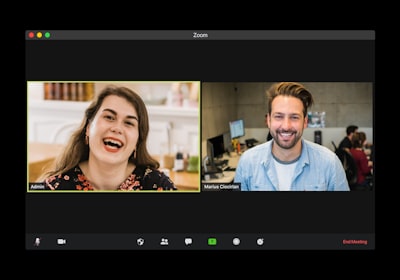
In today's technology ecosystem, hiring top-level executives like VPs of product, engineering, or sales has become a challenge that blends intuition, analysis, and speed. Many business leaders admit that after failed investments in senior talent, the most reliable signal does not come after multiple interviews or exhaustive reference checks, but within the first twenty minutes of an honest conversation. This '20-minute test' is not a whim but a filter that mature startups and software companies are rediscovering in a market where efficiency is key.
Recruitment dynamics have changed dramatically. It is now possible to apply to thousands of positions using artificial intelligence without real knowledge of the role. Video calls have replaced in-person interviews, often with minimal candidate preparation. Reference checks carry less weight, and many professionals accept positions with no intention of staying more than a year while managing multiple income streams. In this context, technology companies, especially those in B2B SaaS or hyper-growth AI, need to be twice as efficient in their headcount per dollar of revenue. The pressure is enormous, and hiring mistakes cost time, resources, and culture.
This is where the twenty-minute test makes sense. When a CEO or founder interviews a potential VP, they must ask themselves: do I truly believe, with full conviction, that this person can perform the role within the first twenty minutes? Common excuses — 'they'll learn the product', 'they're good at process', 'they have a good track record' — are often rationalizations of an initial doubt. In practice, when a VP doesn't work out, the leader almost always admits they were never sure from the start.
This principle applies not only to executive roles. In software development, for instance, hiring technical architects or team leads requires a quick assessment of their ability to solve complex problems and align with company culture. Organizations that invest in custom software applications know that the right talent makes the difference between a successful project and a costly delay. That's why companies like Q2BSTUDIO, specialized in software development and technology, understand that agility in hiring decisions is a competitive driver.
Moreover, the twenty-minute test gains strength when integrated with modern tools. For example, during an interview for a cybersecurity director role, the ability to articulate a defense strategy against current threats should be immediately evident. If the candidate does not convey confidence and deep knowledge in that brief window, they likely won't later. Companies offering cybersecurity services like Q2BSTUDIO know that trust in technical leadership is built from the first exchange.
Another key aspect is fluency in artificial intelligence. Today, any executive is expected to understand AI's impact on their area. In an interview, a VP of product candidate must demonstrate how they would integrate AI agents into the roadmap. The twenty-minute test reveals whether they truly master the topic or just repeat common places. Q2BSTUDIO, with its experience in artificial intelligence and AI agents, values this ability as essential for leading teams that develop innovative solutions.
Cloud infrastructure is also part of the equation. A VP of engineering must be able to evaluate architectures on AWS or Azure almost instinctively. During a video call, if they cannot explain how to migrate a monolith to microservices in the cloud in twenty minutes, they likely lack the necessary depth. Companies offering cloud services on AWS and Azure like Q2BSTUDIO understand that technical leadership requires immediate comprehension of these platforms.
Similarly, business analytics is an area where the twenty-minute test is revealing. A BI director must be able to describe how they would transform raw data into Power BI dashboards that drive strategic decisions. If their explanation is not clear and compelling within that time, it will hardly be so later. Q2BSTUDIO, expert in Business Intelligence with Power BI, knows that effective communication of insights is as important as the technique.
Process automation is another field where initial intuition is critical. An automation leader must show in twenty minutes how they would design a flow that reduces operational costs without sacrificing quality. Companies seeking software process automation like Q2BSTUDIO offers need executives who can quickly identify improvement opportunities.
Of course, the test does not replace the depth of the process. It is a first filter, not a substitute for due diligence. But in a market where time is money and every hire carries a high opportunity cost, trusting that initial visceral impression can save months of frustration. Companies that adopt this approach tend to be more agile and resilient.
Q2BSTUDIO, as a software development and technology company, applies similar principles not only in its own hiring but also in how it advises its clients. Helping organizations build high-performance technical teams is part of its value proposition. From implementing automation solutions to integrating AI agents, through cloud migration and cybersecurity, every project begins with the confidence that the right team can make a difference. And that confidence, often, is decided in the first twenty minutes.