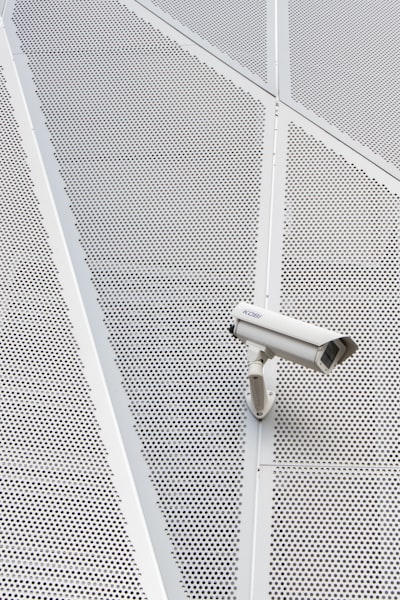
The Massachusetts Institute of Technology (MIT) has launched an ambitious mass video surveillance project that includes the installation of over 500 artificial intelligence (AI) cameras in academic buildings, student residences, and outdoor areas along Memorial Drive. The investment exceeds three million dollars, and work began in November 2025 with completion expected by September 2026. These cameras, part of Hanwha’s Wisenet AI line, are capable of real-time face and object classification, detecting motion, loitering, crowds, mask usage, and device tampering. Additionally, they can identify individuals by clothing color, gender, and age up to 11 meters away. Collected data is retained for a maximum of 30 days, unless exceptions are authorized.
The scale of this deployment raises fundamental questions about the balance between security and privacy in educational environments. While video surveillance is not new on university campuses, the scale and analytical capability of these systems represent a qualitative leap. The cameras employ deep learning algorithms to recognize multiple objects simultaneously, from license plates to behavioral patterns. The centralized management system, based on Ai-RGUS software, enables continuous monitoring with zoom, pan, and tilt functionalities. All this generates a massive volume of data that must be processed, stored, and adequately protected.
From a technical perspective, the challenge lies not only in hardware installation but also in the software architecture underpinning the entire infrastructure. Companies developing technology solutions, such as Q2BSTUDIO, offer key services to address these challenges. For instance, creating custom software allows integration of video surveillance systems with other institutional platforms, such as student databases or access control systems. A tailored software can orchestrate real-time data ingestion, apply specific business rules, and generate intelligent alerts that minimize false positives.
The artificial intelligence powering these cameras also opens opportunities for AI agents that automate incident responses. For example, an AI agent could analyze video feeds to detect suspicious behavior and automatically notify security personnel, or even trigger emergency protocols. However, for these systems to operate ethically and efficiently, a robust cybersecurity layer is essential. Network-connected cameras are potential attack vectors; periodic pentesting, firewall implementation, and network segmentation are measures every institution should consider.
Managing the collected data—images, metadata, movement patterns—requires scalable and secure storage solutions. Cloud computing comes into play here. Q2BSTUDIO offers cloud AWS/Azure services that centralize surveillance data in high-availability, encrypted environments, complying with data protection regulations like GDPR or FERPA. Furthermore, data analysis can be enhanced with BI/Power BI tools. A Business Intelligence dashboard could display real-time metrics on space occupancy, people flow, or recurring incidents, facilitating data-driven decision-making.
Nevertheless, installing 500 cameras with facial recognition capability sparks significant social and legal debate. Civil rights associations have expressed concern about potential mass surveillance and algorithmic bias. MIT has stated that data is retained only for 30 days, but the technology allows longitudinal tracking if exceptions are stored. Transparency in AI use, algorithm auditing, and community participation in governing these systems are aspects that cannot be overlooked.
From a business standpoint, this project exemplifies a growing trend: the convergence of physical surveillance with artificial intelligence and data analytics. Software development companies play a fundamental role in creating modular platforms that adapt to the changing needs of institutions. Q2BSTUDIO works precisely in this field, offering process automation solutions that integrate video surveillance, access control, and alarm systems into a unified ecosystem. Customization is key: each campus has its own regulations, geographic layouts, and traffic volumes, so a one-size-fits-all approach is not viable.
In conclusion, MIT’s deployment of 500 AI cameras is a technological milestone that highlights both the capabilities and dilemmas of modern surveillance. For technology companies, it represents an opportunity to offer services that ensure operational efficiency, data security, and regulatory compliance. The combination of custom software, cybersecurity, cloud AWS/Azure, and BI/Power BI constitutes a complete ecosystem that can be replicated in other universities, corporations, or cities. The challenge lies in implementing these technologies with a human-centered design, where privacy protection is not sacrificed for security.