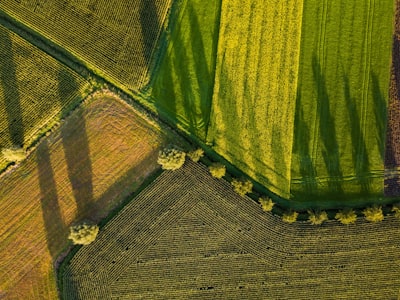
In precision agriculture, monitoring crops with artificial intelligence faces a recurring challenge: real-world datasets exhibit extreme class imbalance and high labeling costs. This data scarcity has driven the development of few-shot learning techniques, but many of them use artificially balanced training sets, causing a distribution shift that limits generalization in real conditions. Dirichlet Prior Augmentation (DirPA) emerges as an innovative solution to mitigate this prior bias, enabling models to learn more robustly even under long-tail distributions like those found in nature. Recent studies have extended its validation to multiple European Union countries, showing that DirPA not only stabilizes training but also significantly improves per-class performance regardless of geographical region.
Modern agriculture increasingly relies on intelligent systems capable of identifying diseases, pests, or water needs from images with few labeled examples. However, collecting labeled data is expensive and often concentrates on specific crops or regions, generating long tails where a few classes dominate. DirPA addresses this by simulating prior distributions through Dirichlet processes, allowing the model to anticipate biases and prevent the lack of representation of certain classes from degrading overall performance. This approach is especially relevant for crop classification in heterogeneous environments like European fields, where climate, soil types, and farming practices vary widely.
From a technical perspective, implementing DirPA requires solid computational infrastructure and efficient integration with computer vision systems. This is where companies like Q2BSTUDIO play a crucial role, offering custom artificial intelligence solutions that adapt few-shot learning models to the specific needs of each farm. Furthermore, deploying these systems on the cloud — whether through AWS or Azure cloud services — ensures scalability, security, and low operational cost, facilitating real-time processing of large image volumes.
Cybersecurity is another fundamental pillar in this ecosystem, as agricultural data is sensitive and can be targeted by cyberattacks. Platforms integrating DirPA must be protected through pentesting and continuous monitoring strategies, services that Q2BSTUDIO also offers. Likewise, generating visual reports on crop performance and early problem detection is enhanced with Business Intelligence tools like Power BI, enabling farmers to make data-driven decisions. Autonomous AI agents can even be incorporated to act in real time, for example, activating irrigation systems or alerting about pests, all orchestrated through custom software applications developed by the company.
The validation of DirPA across different EU countries confirms that the method is robust against geographical, climatic, and crop variations. This opens the door for agricultural cooperatives, agri-food companies, and public administrations to adopt few-shot classification systems without fear of losing precision under real conditions. The combination of advanced data augmentation techniques with flexible cloud infrastructure and personalized AI solutions is the key to overcoming prior bias and achieving reliable large-scale monitoring.
In short, DirPA represents a significant advance for crop classification with few data, but its potential is only realized when integrated into a complete technological ecosystem. Q2BSTUDIO's experience in custom software development, artificial intelligence, cloud computing, cybersecurity, and business intelligence allows agricultural organizations to fully leverage techniques like DirPA, transforming scattered data into precise and timely decisions. The agriculture of the future is built on algorithms that understand the reality of the field, and DirPA is a firm step toward that goal.