In the fast-paced world of fine-tuning large language models (LLMs), training data selection has become a critical factor in balancing performance and computational cost. Not all examples contribute equally: some are redundant, others noisy, and only a fraction truly drives improvement on specific tasks. This is where PPL-Factory emerges, a task-aware and budget-aware perplexity-based data selection framework that promises to revolutionize fine-tuning efficiency. This approach goes beyond fixed heuristics —such as quality, diversity, or reasoning trace length— which, though intuitive, fail to generalize across domains. PPL-Factory offers a simple, interpretable, and scalable solution: score each sample according to its perplexity in the specific context of the target task, then apply a selection criterion that adapts to the available data budget.
To understand its impact, we must first recall that perplexity measures how 'surprised' a network is by a sequence. In traditional fine-tuning, it is usually computed over the entire sequence, ignoring that the learning objectives of language modeling and reasoning are fundamentally different. PPL-Factory corrects this by introducing a task-aware perplexity score: for example, in mathematical problems like those in GSM8K, difficulty lies not in syntax but in intermediate logical steps. By segmenting the score by relevant parts, it identifies samples that truly challenge the model and thus drive improvement.
But the real innovation lies in integrating budget awareness. In enterprise environments, computational resources are not unlimited. PPL-Factory allows selecting, for instance, just 1% of the training set and achieving results that surpass state-of-the-art methods, and even with 10% of the data it improves full-data fine-tuning accuracy by 0.9 points on GSM8K and 4.8 on MATH. This is not merely an academic achievement; it opens the door to real-world applications where labeling and computation costs are barriers.
From a technical and business perspective, such techniques align perfectly with the needs of companies like Q2BSTUDIO, which offer custom software integrating artificial intelligence. Instead of training generic models with tons of data, smart selection can be applied to build lighter and more accurate AI agents tailored to specific business processes. For example, a customer service virtual assistant can be fine-tuned using only the most representative and challenging queries, drastically reducing training time and cloud consumption.
Cloud infrastructure is another fundamental pillar. AWS/Azure cloud provides the computing power needed to run these processes, but costs can skyrocket if data usage is not optimized. Here, PPL-Factory's budget-aware selection becomes an ideal partner: one can train with 10% of the data and still outperform the full dataset, translating into direct savings on cloud bills. At Q2BSTUDIO we manage cloud environments that allow scaling these workloads efficiently.
Cybersecurity also benefits. Language models are vulnerable to adversarial attacks and sensitive data leakage. By training on a carefully selected subset, the attack surface is reduced and exposure to unwanted information is minimized. Moreover, the interpretability of PPL-Factory —based on perplexity scores— facilitates auditing which data influence model decisions, a requirement increasingly common in data protection regulations.
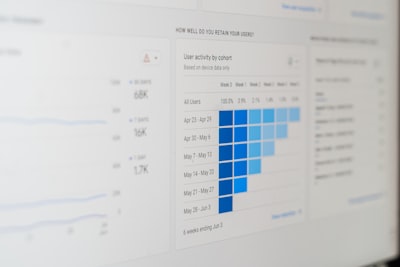
In the business intelligence realm, integration with BI / Power BI allows visualizing the impact of data selection. For instance, reports can be generated showing how data reduction affects performance metrics, helping data teams justify investments in selection algorithms. Companies adopting these techniques not only optimize their models but also make more informed decisions about resource allocation.
Although born in academia, PPL-Factory has a clear path to industry. Its simplicity —a task-adjusted perplexity score and a budget cutoff criterion— makes it easy to implement in existing fine-tuning pipelines. It requires no additional labels or complex clustering processes. It is a tool that any software development team, such as that of Q2BSTUDIO, can adopt to deliver more efficient automation and AI agent solutions.
Ultimately, task-aware and budget-aware data selection represents a paradigm shift. It leaves behind generic heuristics and embraces an adaptive, measurable, and business-aligned approach. At a time when LLM scalability is both an opportunity and a challenge, tools like PPL-Factory enable extracting maximum value from each sample, proving that sometimes less is more.
Strategically, companies that invest in these methodologies —whether through internal teams or by partnering with technology providers— gain a competitive edge: models that are faster to train, cheaper to operate, and more accurate in their domains. And all without sacrificing quality or security. Efficiency is not just a luxury; it is the key to democratizing access to advanced artificial intelligence.